Wall Street loves the word "transitory." It’s a sedative. When JPMorgan tells you that an attack on Iran's Kharg Island export hub would lead to a "temporary" and "precautionary" price spike, they aren't just being optimistic; they are ignoring the structural decay of global energy flexibility. They want you to stay calm so the liquidity doesn't dry up. I’ve watched analysts play this game for twenty years, and the script never changes: assume the status quo has a magical ability to heal itself.
It doesn’t. If you found value in this post, you should look at: this related article.
The consensus view—that the world can just "work around" a massive disruption in the Strait of Hormuz—is a dangerous fairy tale. We aren't dealing with a simple supply-demand equation anymore. We are dealing with a fragile, over-optimized logistical nightmare where a single kinetic strike doesn't just "pause" exports; it shatters the insurance and shipping architecture that keeps the lights on in Asia.
The Kharg Island Fallacy
JPMorgan’s thesis rests on the idea that Saudi Arabia’s spare capacity is a "get out of jail free" card. It isn't. Kharg Island handles roughly 90% of Iran’s crude exports. If that infrastructure goes dark, you aren't just losing 1.5 to 2 million barrels per day (bpd). You are triggering a permanent shift in the risk premium that no "spare capacity" in Riyadh can offset. For another look on this event, refer to the recent update from Financial Times.
Here is what the "temporary" crowd misses: Logistical Inertia.
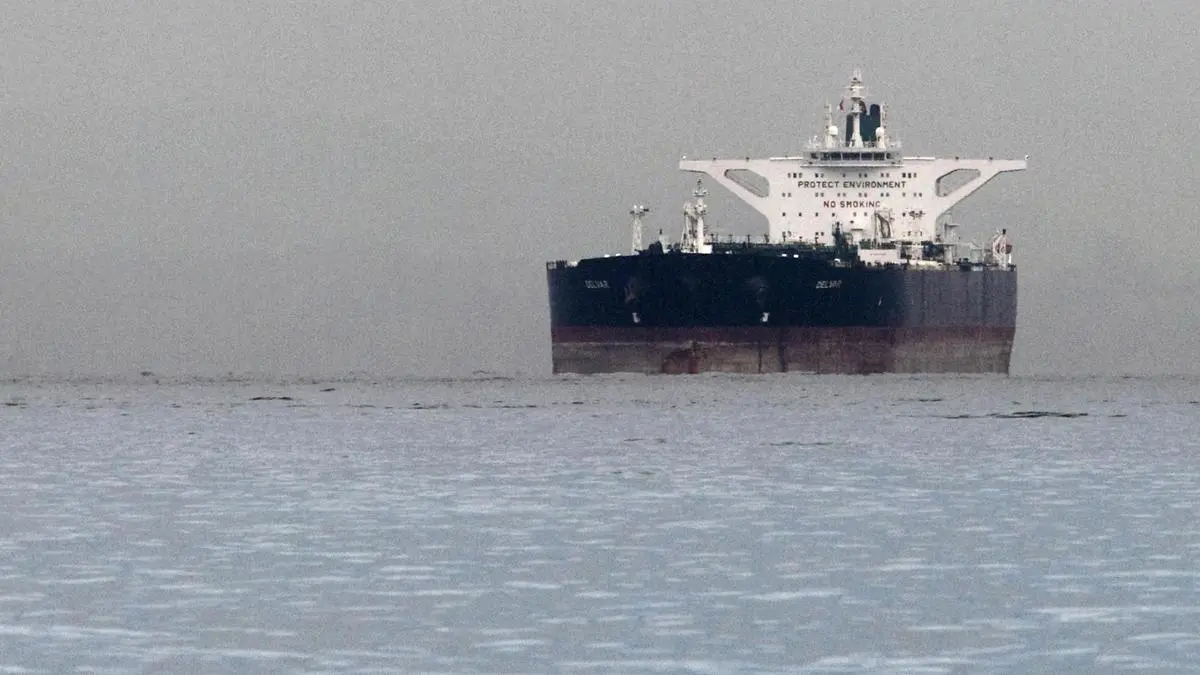
Oil isn't a digital asset. You can't just click a button and reroute a VLCC (Very Large Crude Carrier) mid-ocean without incurring astronomical costs and delays. If Iranian exports vanish, the scramble for replacement barrels creates a bullwhip effect.
- The Insurance Death Spiral: The moment a missile hits a terminal, War Risk Insurance premiums for the entire Persian Gulf don't just "tick up." They go vertical. We saw this in the "Tanker War" of the 1980s, but today’s market is leaner and more leveraged.
- The Grade Mismatch: Not all oil is created equal. Refineries in China are tuned for specific Iranian grades. You can't just shove light sweet crude into a heavy sour diet and expect the same yield.
- The Shadow Fleet Collapse: Much of Iran's oil moves via the "shadow fleet"—older vessels with questionable documentation. A hot conflict wipes this fleet off the map. These ships won't risk seizure or destruction for a shrinking margin.
Stop Asking if Prices Will Spike
The question "will oil go to $100?" is the wrong question. It’s a lazy question. The real question is: How long can the global economy survive a sustained disruption to the flow of maritime energy?
The "People Also Ask" sections on search engines are littered with queries about whether the US Strategic Petroleum Reserve (SPR) can save us. Let’s be brutally honest: The SPR is at its lowest level in decades. Using it to suppress prices during a hot war in the Middle East is like using a water pistol to put out a forest fire. It provides a psychological floor, not a physical ceiling.
When analysts call a disruption "precautionary," they are suggesting that traders are overreacting. I argue they are underreacting. We have spent a decade underinvesting in upstream production because of the rush toward ESG (Environmental, Social, and Governance) metrics. We have no margin for error.
The Myth of the "Symmetric Response"
The status quo assumes that if the US or Israel strikes Iranian energy assets, the response will be contained. This is tactical blindness. In my time analyzing geopolitical risk, I’ve learned that asymmetric warfare is the only move left for a cornered regional power.
Imagine a scenario where it isn't just Kharg Island that goes down. Imagine the placement of "smart" mines in the Bab el-Mandeb and the Strait of Hormuz simultaneously. Suddenly, it’s not just an Iranian export problem; it’s a global transit problem.
- 20% of global petroleum liquids pass through the Strait of Hormuz.
- The alternative routes (like the East-West Pipeline in Saudi Arabia) have limited capacity and are themselves targets.
- China’s reaction is the wildcard. As the primary buyer of "distressed" Iranian barrels, any disruption to that flow is an existential threat to their industrial base. They won't sit on their hands while their energy security is liquidated.
The Tech Debt of Global Energy
We talk about "technology" as if it’s only about AI and chips. But the technology of energy—the pumps, the SCADA systems, the loading arms—is aging and specialized. If you blow up a specialized loading terminal at Kharg, you don't just "fix it" in a weekend. These are long-lead items. We are talking months, if not years, to return to nameplate capacity in a high-threat environment.
The "temporary" narrative assumes a world of infinite spare parts and willing contractors. In reality, no Western engineering firm is sending a team into a combat zone to repair a terminal while drones are still in the air.
Why You Should Ignore the "Cooling Off" Narrative
Every time there is a flare-up, the media cycle follows a predictable pattern:
- Panic (Prices jump 10%).
- Normalization (Analysts say "the flow hasn't stopped yet").
- Apathy (Prices drift back down).
This pattern has conditioned investors to "buy the dip" and ignore the underlying rot. But we are nearing the end of that cycle. The buffer is gone. The US shale patch is no longer the "swing producer" it was in 2014; companies are focused on returning cash to shareholders, not drilling unprofitably to save the global economy from a price spike.
If you are waiting for a "temporary" blip to pass, you are missing the fact that the floor has permanently moved. We are entering an era of "Geopolitical Scarcity."
The Brutal Reality of Your Portfolio
If you are holding traditional "diversified" assets and ignoring the tail risk of a total Persian Gulf blackout, you aren't diversified. You are a hostage to luck.
A strike on Iran's export hub isn't a "precautionary" event. It is the definitive end of the era of cheap, reliable energy transit. The "consensus" is built on 1990s logic in a 2026 world. They think the market is a physical mechanism that can be repaired. It’s not. It’s a psychological construct that is one explosion away from a total nervous breakdown.
Don't buy the "temporary" lie. The disruption is the new baseline.
Stop looking at the price of Brent and start looking at the cost of the ships that carry it. When the tankers stop moving, the price of the oil they aren't carrying becomes irrelevant. The only thing that matters is who has the physical barrels on their own soil and the means to protect them.
The era of "just-in-time" energy is dead. If you haven't hedged for the "impossible" permanent disruption, you are already behind.
Would you like me to analyze the specific impact on East Asian refinery margins if the "shadow fleet" is neutralized?