A single tanker captain, standing on a bridge slicked with salt spray and the vibrating hum of a hundred thousand tons of crude, does not think about geopolitics. He thinks about the depth of the water and the silhouette of the horizon. He thinks about the twenty-one miles of sea that separate the mountainous coast of Oman from the jagged edges of Iran.
This is the Strait of Hormuz. It is a choke point. A jugular. If you were to press your thumb against it, the pulse of the modern world would skip a beat, then stop entirely.
The news alerts on our phones arrive with a sterile ping. They speak of "expanded strikes" and "diplomatic pressure." They use words like escalation as if it were a ladder we are all climbing together. But the reality isn't a ladder. It is a web. When a missile battery in the Iranian desert pivots toward the sea, or when Israeli jets streak across the Levant to find a target in the outskirts of Tehran, a light goes out in a factory in Ohio. A grocery bill in London climbs by five pounds. A family in Seoul decides they cannot afford the heater this winter.
We live in a world of invisible threads. We pretend we are independent, but we are tethered to these twenty-one miles of saltwater by every plastic toy, every gallon of gas, and every synthetic fiber we touch.
The Weight of the Horizon
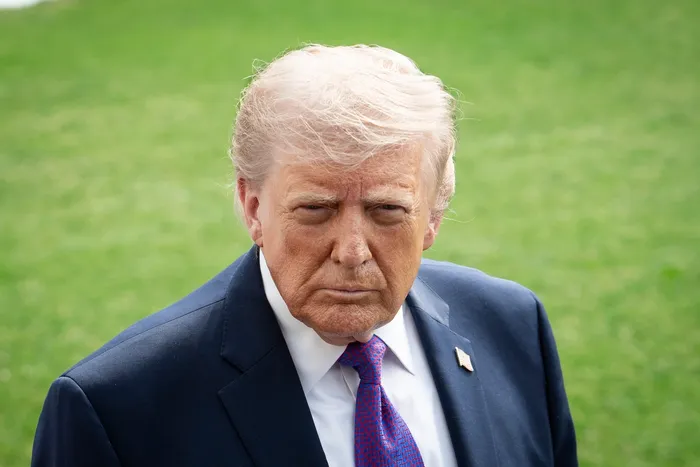
Donald Trump has spent decades viewing the world through the lens of leverage. To him, the Strait of Hormuz isn't just a geographical coordinate; it is a negotiation table where the stakes are trillions of dollars. His recent demands for allies to shoulder the burden of "policing" these waters reflect a shift in the American psyche. The message is clear: the era of the unilateral protector is over.
But for the sailor on the deck, or the drone operator in a darkened room in the Negev, the "burden" isn't a line item in a budget. It is the terrifying realization that the margin for error has evaporated.
Consider a hypothetical merchant named Elias. He lives in a coastal village where the rhythm of life is dictated by the passage of these steel giants. He watches the tankers go by, carrying the lifeblood of distant cities. To Elias, the news of Israel expanding its strike envelope into the Iranian heartland isn't a headline. It is the sound of the sky tearing open. It is the fear that one day, the horizon won't show a ship, but a plume of black smoke that never goes away.
The conflict has moved beyond the shadows. For years, this was a "gray zone" war—a dance of cyberattacks, limpet mines attached secretly to hulls, and whispered threats. Now, the lights are on. Israel’s strikes are no longer confined to proxy warehouses in Syria; they are hitting the source. Iran, cornered and defiant, looks to the Strait. It is their only card, and it is an ace.
The Calculus of Chaos
Why should a person living a quiet life in a suburb care about the ballistic trajectory of a mid-range missile?
Because of the math.
One-fifth of the world’s liquid petroleum passes through that narrow gap. If the Strait closes, the price of oil doesn't just go up; it teleports. We are talking about a shock to the global system that would make the 1970s look like a minor inconvenience. We are talking about the sudden, violent stalling of the global supply chain.
The tension isn't just between nations. It is between the past and the future. We are trying to run a twenty-first-century digital economy on a nineteenth-century foundation of territorial aggression.
The United States is pressing its allies—Japan, South Korea, the European powers—to send their own steel into the Gulf. The logic is that if everyone’s skin is in the game, the game becomes safer. But history suggests otherwise. When more hunters enter the woods, the chance of a stray bullet increases. One nervous radar technician, one misinterpreted radio signal, one "defensive" launch that hits a neutral target, and the web snaps.
The Human Cost of High Stakes
We often talk about war in terms of "assets" and "targets." We forget the eyes.
The eyes of the Israeli pilot, squinting against the glare of his HUD as he flies a mission that could redefine the Middle East for a generation. The eyes of the Iranian father in Isfahan, looking at the ceiling and wondering if the next thunderclap is a storm or a bunker-buster. The eyes of the American voter, trying to decipher if "securing the lanes" means lower prices or another decade of televised funerals.
There is a specific kind of exhaustion that comes with living on the brink. It’s a low-grade fever of the soul. We watch the live updates. We see the maps with the red circles growing larger. We hear the rhetoric about "allies stepping up" and "deterrence being restored."
But deterrence is a fragile ghost. It only exists as long as everyone is too afraid to move. Once the first stone is thrown, deterrence is replaced by momentum. And momentum is a blind god.
The expansion of Israeli strikes signifies a new chapter where the "red lines" have been erased and redrawn in blood. It is no longer about containing a threat; it is about dismantling a capability. When you move to dismantle, the other side moves to survive. For Iran, survival is tied to the ability to make the rest of the world hurt as much as they do. They don't need to win a naval battle against the U.S. Navy. They just need to sink one ship in the wrong place.
The Ghost in the Machine
We are told that technology makes war cleaner. Precision guided munitions. Satellite surveillance. AI-driven threat detection.
But technology also makes the world smaller and the consequences faster. In the time it takes you to read this paragraph, a high-frequency trading algorithm could react to a rumor of a closed Strait, wiping out the retirement savings of thousands of people who couldn't tell you where Oman is on a map.
This is the "human element" we usually ignore. We aren't just observers of this conflict. We are participants in its consequences. We are the ones who pay for the "expanded strikes" at the pump, at the pharmacy, and in the quiet anxiety of our dinner table conversations.
The tragedy of the Strait of Hormuz is that it is a physical place holding a metaphysical weight. It is a few miles of water that determines whether the world stays fed and warm.
The political theater—the "pressing of allies"—is a search for a shield. Everyone wants someone else to hold the line so they don't have to. But the line is made of people. It is made of nineteen-year-olds on destroyers and merchant mariners just trying to get home to their families.
The Final Ripple
If you stand on the shore of the Musandam Peninsula and look north, you can see the tankers. They look like toy boats from a distance, slow and purposeful. They represent the quiet, grinding work of civilization.
Beyond them, in the haze, are the shadows of the warships.
The world is currently holding its breath, waiting to see if the next headline will be the one that changes everything. We look for leaders to find a way out, to de-escalate, to find the "synergy" of diplomacy. But the reality is much grittier. It is a matter of iron and ego.
As the strikes expand and the rhetoric sharpens, the Strait remains. Indifferent. Narrow. Deep.
It is waiting for us to realize that when we fight over the throat of the world, we are all eventually going to find it hard to breathe.
The tanker moves on. The pilot returns to base. The politician signs the order. And somewhere, in a small apartment thousands of miles away, a woman turns off her television, walks to her window, and looks out at the lights of a city that only stays bright as long as the water in that far-off strait stays blue and empty of fire.
We are all tethered to the tide.
When the tide turns red, no one is far enough away to stay dry.