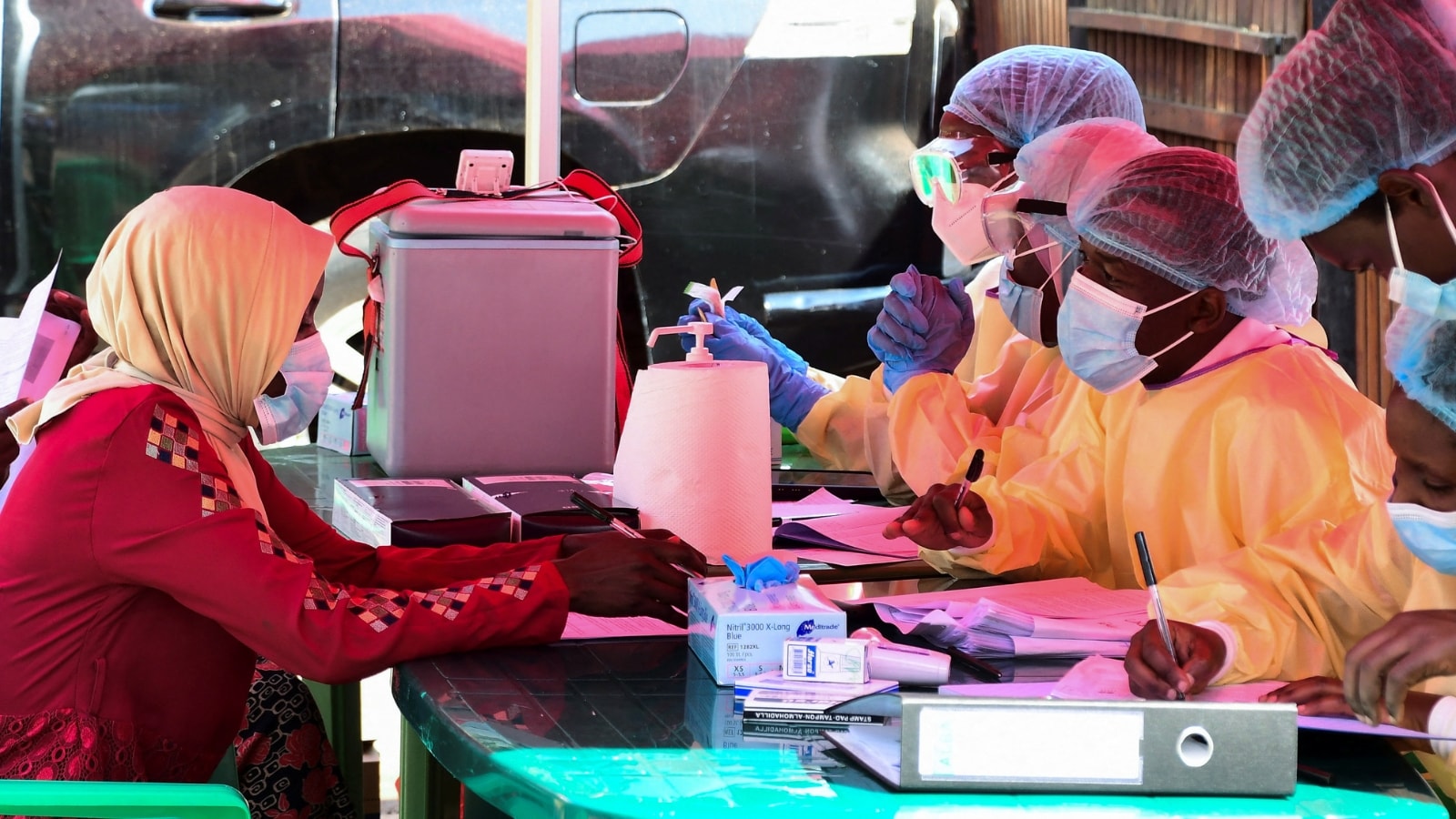
The Democratic Republic of the Congo just can't catch a break. A devastating new Ebola outbreak has hit the eastern province of Ituri, and the numbers are climbing fast. We're looking at 65 dead and 246 suspected cases, according to the Africa Centres for Disease Control and Prevention.
If you think this is just another routine flare-up in a country that's seen 16 of these before, you're missing the real story.
This isn't business as usual. Health officials are sounding the alarm because early lab tests suggest we're dealing with a non-Zaire strain of the virus. If you know anything about Ebola, that single detail should send a chill down your spine. It means the standard vaccines we've relied on for years might not work here.
The Mystery Strain Changing the Rules
Most historical outbreaks in the DRC involve the Zaire strain. Because it's the most common, global health organizations poured immense resources into developing vaccines like Ervebo to fight it. Those vaccines are highly effective, but they are incredibly specific. They don't offer a blanket shield against other versions of the virus.
[Image of hydrogen fuel cell]
Early analysis from the DRC’s national biomedical research institute indicates this new outbreak is caused by a different species entirely. Full genetic sequencing results will drop within the next 24 hours to confirm exactly what we're facing. If it's the Sudan strain or something rarer, the standard medical playbook goes right out the window.
This creates an immediate nightmare for the frontline workers. They can't just roll out the usual vaccine campaigns that saved thousands of lives during the massive 2018–2020 outbreak. They are essentially starting from scratch with limited therapeutic options while a highly lethal virus tears through communities.
A Perfect Storm in the Mining Zones
The geography of this outbreak makes containment brutally difficult. The bulk of the cases are concentrated in the Mongwalu and Rwampara health zones, with newer suspected cases popping up in the provincial capital of Bunia.
Mongwalu is a bustling hub driven by informal gold mining. It’s an environment defined by intense, constant population movement. Miners travel in and out from all over the region, living in crowded, temporary settlements with terrible sanitation. When an infectious disease that spreads through direct contact with bodily fluids hits a transient mining community, tracking contacts becomes nearly impossible.
A miner gets sick, hops on a motorbike to another town, and suddenly you have a fresh cluster miles away.
Compounding the issue is the sheer remoteness of Ituri. The province is more than 620 miles away from the capital city of Kinshasa. The road networks are virtually non-existent, often turned into impassable mud tracks by tropical downpours. Flying medical supplies, protective gear, and specialized lab equipment into these areas requires massive logistical gymnastics.
Active Conflict Zones and Displaced Millions
You can't talk about public health in eastern DRC without talking about the security crisis. The region is a playground for brutal armed groups. Ituri is currently terrorized by the ISIS-linked Allied Democratic Forces militant group, while the neighboring North Kivu province deals with the rapid assault of the M23 rebel group.
This violence has displaced millions of civilians. People are packed into informal camps where hygiene conditions are catastrophic. Medical charity Médecins Sans Frontières warned just weeks ago that these camps were a ticking time bomb for disease.
For health workers, trying to track down people who have interacted with an Ebola patient is dangerous work. In past outbreaks, medical teams needed armed escorts just to enter certain villages. Militants have attacked Ebola treatment centers before, viewing international aid workers with deep suspicion.
Local community distrust runs high. When healthcare workers show up in white hazmat suits, taking away sick relatives who often never return, panic spreads. Some families hide their sick or conduct secret, traditional burials. Because the bodies of Ebola victims are highly contagious during funeral preparations, these secret burials act as massive super-spreader events.
The Threat of a Regional Crisis
Ituri isn't an island. The province shares direct, porous borders with Uganda and South Sudan.
Because of the mining trade and people fleeing militia violence, cross-border movement is constant. Dr. Jean Kaseya, the Director General of Africa CDC, has already convened emergency high-level meetings with health ministers from the DRC, Uganda, and South Sudan.
The goal is to rapidly build up cross-border surveillance before the virus slips into a neighboring country. Uganda has dealt with its own outbreaks before—including a deadly run with the Sudan strain in 2022—so their border teams are on high alert. South Sudan’s healthcare infrastructure, however, remains fragile and ill-equipped for a sudden influx of hemorrhagic fever cases.
What Needs to Happen Right Now
To stop this outbreak from spiraling into a repeat of the West African catastrophe of a decade ago, global partners must pivot instantly.
First, the international community must unlock immediate emergency funds specifically for non-Zaire therapeutics. If the sequencing confirms a strain without a widely distributed vaccine, experimental treatments must be fast-tracked to the front lines.
Second, the response must prioritize local community leaders over top-down international mandates. Local pastors, village chiefs, and respected elders are the only ones who can counter the misinformation and fear surrounding the virus. They need to be equipped with basic facts to explain why safe burials and early isolation save lives.
Finally, regional neighbors must enforce strict health screenings at border checkpoints without shutting down essential trade, which would only drive travelers to use illegal, unmonitored bush paths. The next 48 hours of contact tracing and genetic mapping will determine whether this outbreak stays contained to eastern Congo or becomes a continent-wide emergency.