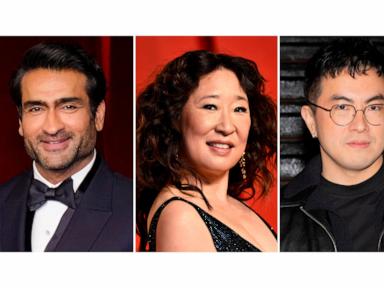
Sandra Oh, Kumail Nanjiani, and Bowen Yang aren't just names on a marquee anymore. They’re the heavy hitters spearheading a massive shift in how Hollywood sees Asian Americans and Pacific Islanders. HBO’s latest documentary project isn't some dry history lesson or a collection of "how we made it" fluff pieces. It’s a raw, uncomfortable, and necessary look at the psychological cost of being "the first" or "the only" in rooms that weren't built for you.
If you’ve watched any mainstream media lately, you’ve seen the surface-level wins. Everything Everywhere All At Once swept the Oscars. Beef dominated the awards circuit. But those trophies don’t erase decades of being sidelined or caricatured. This documentary gets into the grit. It asks why it took so long and what happens to the soul when you're forced to represent an entire continent every time you pick up a script.
The Powerhouse Trio Leading the Charge
Sandra Oh has been doing the work for decades. From Grey’s Anatomy to Killing Eve, she’s fought for roles that don't lean on her ethnicity as a crutch. In this doc, she doesn't hold back. She talks about the exhaustion of the "model minority" myth. It’s a trap. It pits communities against each other while keeping everyone under a glass ceiling. Oh’s perspective is that of a veteran who’s seen the industry's ugly side and stayed anyway.
Then you have Kumail Nanjiani. He’s gone from stand-up to Marvel superhero, and he’s been vocal about the weirdness of that transition. He’s often had to navigate the "terrorist" vs. "tech nerd" binary that South Asian actors were trapped in for years. His involvement brings a specific humor and a sharp edge to the narrative. He isn't just happy to be here. He’s questioning the terms of the invitation.
Bowen Yang represents the new guard. As a queer Asian man on Saturday Night Live, he’s breaking multiple barriers at once. He’s fast, he’s funny, and he’s unapologetic. Yang’s contribution to the documentary highlights the intersectionality that often gets ignored. You can’t talk about the AAPI experience as a monolith. It’s too big. It’s too messy. Yang’s presence ensures the conversation includes voices that are often pushed to the margins of an already marginalized group.
Why Representation Isn't Just a Buzzword
We hear the word "representation" so much it’s started to lose its meaning. It’s become a corporate checkbox. But for the people on screen, it’s about survival. When you don’t see yourself reflected in the culture, you start to feel invisible. Or worse, you start to believe the stereotypes. This HBO doc dives into the "perpetual foreigner" syndrome. No matter how many generations your family has been in the country, someone’s always going to ask where you’re really from.
The film doesn't just focus on the actors. It looks at the systemic issues. It looks at the writers' rooms where there was only one Asian person who had to vet every joke about soy sauce. It looks at the directors who were told their stories were "too niche" for a global audience. These aren't just anecdotes. They’re the structural barriers that have kept incredible talent in the shadows for a century.
Shattering the Monolith Myth
One of the biggest mistakes people make—and one this documentary tackles head-on—is treating Asian Americans and Pacific Islanders as one giant, identical group. We're talking about dozens of countries, hundreds of languages, and vastly different socioeconomic backgrounds. A third-generation Japanese American in Los Angeles has a completely different reality than a Hmong refugee in Minnesota or a Native Hawaiian fighting for land rights.
The documentary uses these celebrity voices to pull people in, but it stays for the hard truths. It highlights the tension between different subgroups and the struggle to find a unified political voice. It’s not all sunshine and solidarity. It’s complicated. And that’s what makes it good television. It treats the audience like adults who can handle nuance.
The Industry Shift That Made This Possible
Ten years ago, a project like this wouldn't have gotten a green light from a major streamer. It would've been a small indie film or a university project. What changed? Money. Hollywood finally realized that Asian American audiences are a massive, underserved market with huge buying power.
But it’s more than just the bottom line. There’s a new generation of executives who actually care. They aren't just looking for "diverse content." They’re looking for authentic stories. They’ve realized that the more specific a story is, the more universal it feels. When you watch Sandra Oh talk about her father’s reaction to her career, you don’t have to be Korean to understand that parent-child dynamic. It’s human.
Beyond the Screen
The impact of this documentary will likely be felt far beyond the 90-minute runtime. It’s a tool for educators, a mirror for the community, and a wake-up call for the industry. It challenges the "shame" culture that often prevents these stories from being told. For a long time, the prevailing wisdom was to "keep your head down and work hard." This doc says: "Lift your head up and speak out."
It’s also about the Pacific Islander part of the AAPI acronym. Too often, "PI" is tacked on to the end without any real thought. This project makes a point to include those voices, highlighting the unique challenges faced by Pasifika people, from climate change to colonial history. It’s a vital part of the puzzle that often gets lost in the "Asian" umbrella.
What You Should Do Next
If you’re tired of the same three stories being told over and over, you need to watch this. Don't just stream it and forget it. Talk about it. If you're a creator, look at your own work. Who are you excluding? If you're a viewer, vote with your remote. The only reason these projects keep getting made is because people show up for them.
Check your local HBO listings or your Max app for the premiere date. Set a reminder. When it drops, watch it with someone who doesn't look like you. Use it as a jumping-off point for a real conversation about race, identity, and the American dream. This isn't just a "minority story." It’s an American story. And it’s about time we started telling it right.
Stop settling for the "best friend" or the "sidekick" roles in your own life. These actors didn't. They fought for the lead, and they won. Now they’re showing you how they did it. Pay attention.