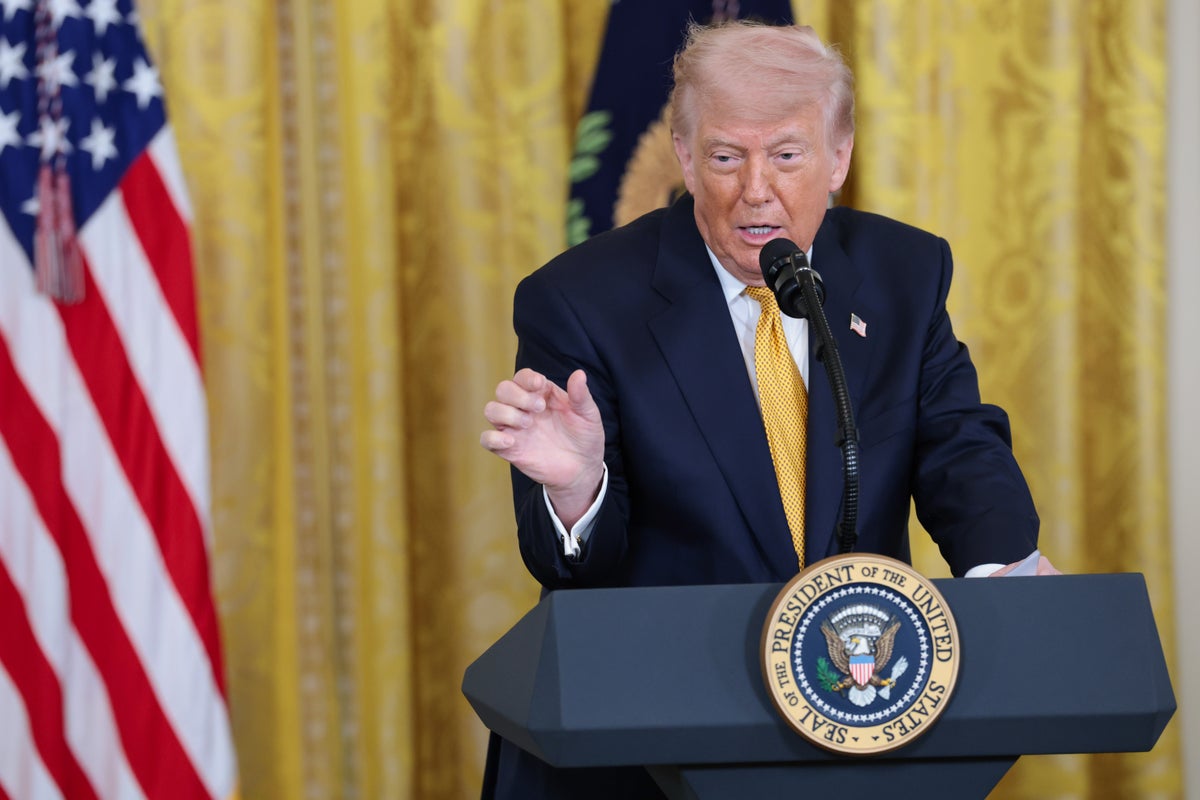
The media is obsessed with a spelling bee.
When Gavin Newsom pounces on Donald Trump’s linguistic tangents—specifically the recent riff on the homophones "see" and "sea"—the punditry class treats it like a medical diagnosis. They call it a "senior moment" or a "cognitive decline" reveal. They are wrong. They are falling for a parlor trick that has been the backbone of American political theater for forty years.
Newsom isn't "calling out" a mental state. He’s running a classic misdirection play. And Trump isn't "losing his mind" over vowels; he’s performing the same brand of stream-of-consciousness populism that has effectively broken the traditional political marketing model.
If you think this is about neurology, you’ve already lost the argument. This is about the total collapse of policy-driven discourse in favor of aesthetic warfare.
The Myth of the Linguistic Smoking Gun
The "lazy consensus" among the coastal elite is that if you catch a politician stumbling over a word or fixating on a weird analogy, you’ve found the "Gotcha" moment that will finally turn the tide. It’s a desperate hope rooted in the idea that voters care about SAT scores.
They don't.
The mistake Newsom makes—and the mistake the media makes by amplifying it—is assuming that "competence" is measured by verbal precision. In reality, voters perceive "authenticity" through verbal messiness.
When Trump rants about the ocean, his base doesn't see a man struggling with cognitive load. They see a man who isn't reading a teleprompter written by a 24-year-old McKinsey consultant. By attacking the delivery, Newsom reinforces the very "elite vs. everyday man" divide that fuels Trump’s engine.
I’ve spent two decades watching corporate leaders try to "out-intellectual" their disruptor competitors. It fails every single time. When a legacy brand tries to mock a startup founder for being "unprofessional" or "unfocused," they usually end up filing for Chapter 11 while the "crazy" guy IPOs. Politics is no different.
The Cognitive Decline Trap
Let’s dismantle the premise of "mental fitness" as a political weapon.
- The Professional Diagnosis Fallacy: Unless you are a board-certified neurologist who has performed a physical exam, using a 30-second clip to diagnose a "mental state" is malpractice. It’s also boring.
- The Double-Edged Sword: If the standard for office is perfect verbal acuity, then almost every sitting governor and senator is one long-haul flight away from being "unfit."
- The Engagement Metric: Trump’s "sea" riff generated more impressions than Newsom’s last five policy announcements combined. In the attention economy, a "weird" comment is worth more than a "correct" one.
Newsom is a master of the curated image. He is the "Blue Model" personified: polished, hair-gelled, and syntactically perfect. When he attacks Trump’s "mental state," he is really trying to sell his own brand of California-slick competence. But he's selling a product that is increasingly out of stock: the idea that the government is a well-oiled machine run by the smartest guys in the room.
Why the "See vs. Sea" Argument is Pedantic Garbage
The specific criticism involves Trump talking about the difference between looking at the ocean and the word "sea." Critics call it rambling.
It is rambling. But it’s also a form of "Plain Talk" branding.
Imagine a scenario where a CEO explains a complex supply chain issue by talking about how "boats go on water, and water is big." The Ivy League interns will laugh in the breakroom. The shareholders, however, will appreciate that the CEO isn't hiding behind jargon.
Trump’s "sea" riff is a linguistic Rorschach test.
- To the Critic: It’s evidence of a failing brain.
- To the Supporter: It’s a relatable guy thinking out loud.
- To the Insider: It’s a distraction that keeps the media from talking about the $34 trillion national debt.
Newsom knows this. He isn't stupid. He is using these clips to build his own national profile for 2028. He is positioning himself as the "Adult in the Room." But by engaging in the playground antics of "Look, he said a weird thing," Newsom concedes that the actual issues—housing affordability, energy costs, and the actual mechanics of governance—aren't as effective at moving the needle as a cheap shot.
The Professionalism Paradox
We are witnessing the death of the "Statesman" archetype.
For decades, we believed that the President should be a soaring orator in the vein of JFK or Reagan. That era is over. We are now in the era of the "Vibe."
Newsom is trying to fight a Vibe War with a Logic Sword.
If Newsom actually wanted to "disrupt" Trump, he wouldn't talk about Trump’s brain. He would talk about the tangible failures of the current economic reality that Trump’s rhetoric exploits. But he can't do that effectively without admitting his own party's blind spots. So, he pivots to the "mental state" narrative. It’s safe. It’s easy. It’s lazy.
The Data of Disconnection
Look at the polling on "candidate age and fitness." Both sides are underwater. Voters are exhausted by the "he’s too old/he’s too crazy" loop.
When Newsom enters this fray, he isn't providing a "fresh perspective." He is participating in a race to the bottom. He is validating the idea that the most important thing about a leader is their ability to distinguish between homophones on a stage in Iowa.
This focus on linguistic "glitches" ignores the actual systemic risks. We should be worried about a candidate's policy on AI regulation, their stance on the South China Sea, or their plan for the looming Social Security insolvency. Instead, we are debating if a man knows how to spell "sea."
Stop Looking for a Doctor; Start Looking for a Leader
The fundamental mistake is treating the Presidency like a cognitive test. It’s not. It’s a management and vision role.
History is full of effective leaders who were eccentric, erratic, or verbally challenged.
- Winston Churchill was often viewed as a rambling drunk by his contemporaries.
- Ulysses S. Grant was dismissed as a "butcher" and a failure before the war.
- Andrew Jackson was a literal brawler who ignored the Supreme Court.
The obsession with "mental state" is a modern luxury. It’s a sign of a society that is so comfortable it has forgotten what actual leadership looks like. We have replaced "What can you do for the country?" with "Can you pass a quiz?"
The Newsom Playbook is Failing
By making Trump’s "mental state" the centerpiece of his critique, Newsom is telegraphing his own weakness. He is saying, "I can't beat his ideas, so I’ll attack his hardware."
This strategy didn't work in 2016. It didn't really work in 2020 (Biden won on "not being Trump," not on being a mental giant). And it won't work now.
The American public has a very high tolerance for "crazy" if they think "crazy" will lower the price of gas or stop the neighbor's house from being foreclosed on. Newsom’s polished, scripted attacks feel like they were focus-grouped in a San Francisco boardroom. They lack the raw, visceral energy that actually changes minds in the Rust Belt.
The Truth Nobody Admits
The "see/sea" commentary isn't about Trump’s brain. It’s about our own collective inability to discuss anything of substance.
We gravitate toward these clips because they are easy to share. They fit into a tweet. They don't require us to understand tax law or geopolitical strategy. Newsom is just the latest "expert" to capitalize on our shortened attention spans.
He isn't defending democracy; he’s performing for a digital coliseum.
If you want to know who is fit for office, stop watching the clips Newsom shares. Look at the results of the policies they advocate for. Look at the state of the cities they manage. Look at the actual, measurable impact of their decisions.
Everything else is just noise.
The "see vs. sea" debate is a bottom-tier distraction. Trump is playing a character. Newsom is playing a critic. And the American public is the audience paying for a show that has no plot.
Stop falling for the "mental fitness" grift. It is the most boring, least effective way to analyze a political figure. It’s the refuge of people who have run out of actual arguments.
The next time you see a politician "calling out" a "senior moment," ask yourself: what are they trying to hide about their own record?
The answer is usually more terrifying than a misspelled word.


