The air in Jizan usually tastes of salt and heavy, unmoving heat. It is a city that sits on the edge of the world, where the harsh beauty of the Saudi Arabian desert meets the turquoise expanse of the Red Sea. For the thousands of Indian expatriates living there—engineers, nurses, and dockworkers—the rhythm of life is dictated by the call to prayer and the arrival of the next shipping container. It is a life of quiet ambition, lived thousands of miles away from the monsoon rains of Kerala or the crowded streets of Delhi.
But on a Tuesday night that started like any other, that rhythm was shattered.
The sound did not come from the sea. It came from above. It was a low, guttural roar that tore through the evening silence, followed by a flash of light that turned the dark horizon into a bruised shade of purple. When a projectile strikes, the first thing you lose is your sense of scale. You don't think about geopolitics. You don't think about the decades-long shadow war between Israel and Iran or the complex web of proxy militias stretching across the Middle East.
You think about the glass in your windows. You think about the person in the room next to you. You think about how thin the walls of a prefab housing unit actually are.
The Invisible Thread Between Jizan and Tehran
To understand why a piece of twisted metal falling in a Saudi coastal city matters to a family in Mumbai, you have to look past the dry headlines of diplomatic cables. The conflict between Israel and Iran is often portrayed as a game of high-stakes chess played with drones and cyberattacks. We talk about "strategic depth" and "regional deterrence" as if the map is made of plastic.
It isn't. The map is made of people.
When the news broke that a projectile—likely intercepted, though the origin remains a subject of intense military scrutiny—had come down near Jizan, a silent panic rippled through the Indian diaspora. There are nearly 2.5 million Indians in Saudi Arabia. They are the backbone of the Kingdom’s infrastructure. They are also, through no fault of their own, living on the front lines of a conflict they did not start and cannot stop.
Consider the hypothetical story of Ramesh, a site supervisor who moved to Jizan three years ago to save for his daughter’s wedding. When the explosion rocked the outskirts of the industrial zone, he did not see a "security incident." He saw the potential end of his family’s future. He saw his daughter’s wedding gold vanishing in a plume of smoke.
This is the human cost of the Israel-Iran conflict that is rarely discussed in the UN Security Council. It is the cost of fear. It is the weight of a phone call made at 3:00 AM to a crying wife in Kerala, just to say, "I am still here. I am safe."
The Cold Comfort of the Embassy
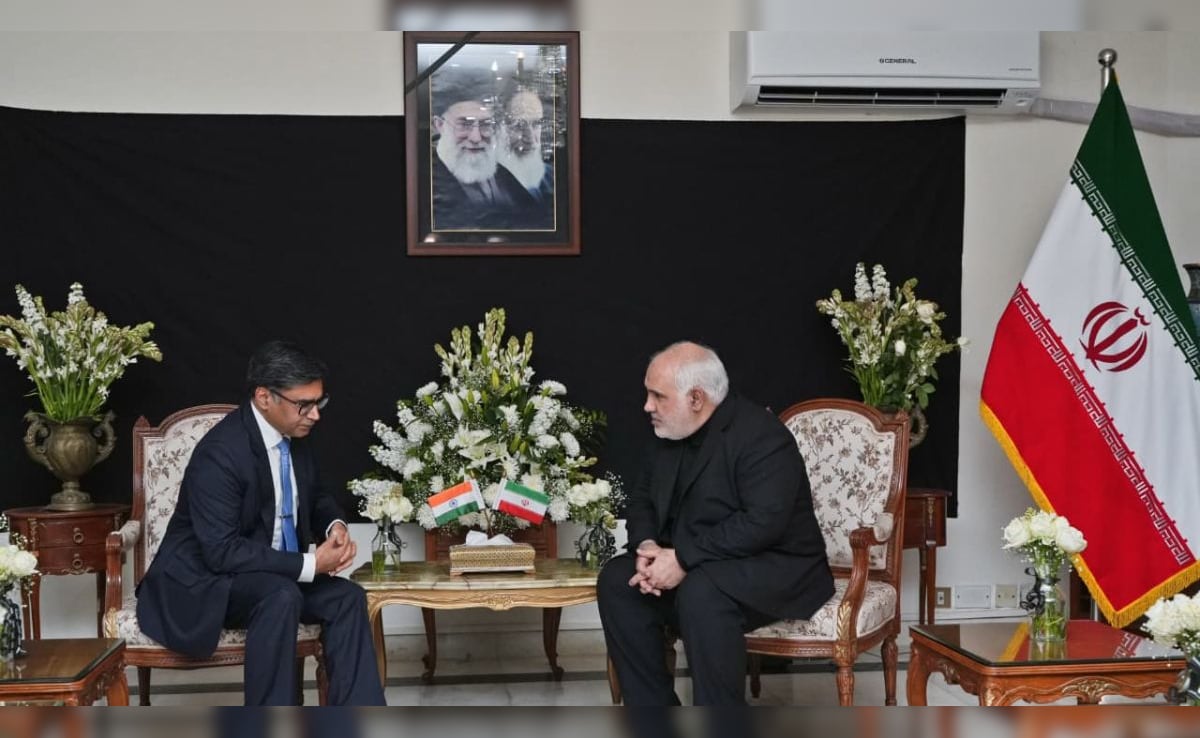
The Indian Embassy in Riyadh eventually issued its statement. It was a masterpiece of diplomatic restraint: No Indian casualties. No fatalities. All clear. It is the kind of sentence that makes a government official breathe a sigh of relief. It is a win on a spreadsheet.
But the relief is a shallow one. While the metal didn't find a human target this time, the shadow it cast remains. When we say there were "no fatalities," we are only counting the bodies. We are not counting the trauma, the sleepless nights, or the sudden realization of how fragile a life can be when it is caught between two regional giants.
The geography of the Middle East has become a corridor of fire. Jizan, once a sleepy port town, is now a flashpoint. To its south lies the Yemeni border, where the Houthi movement has long been a conduit for Iranian-made technology and resentment. To the north, the Kingdom’s crown jewel, its new futuristic cities, and its vital oil infrastructure stand as symbols of a different future.
The Indian workers are caught in the middle of these two futures.
The Architecture of a Proxy War
The projectile that fell near Jizan is just a symptom of a deeper, more systemic disease. The Israel-Iran conflict is no longer a localized dispute. It is a multi-theater drama that plays out in the skies over Syria, the shipping lanes of the Red Sea, and the drone factories of Tehran.
When Israel strikes an Iranian-linked target in Damascus, the response doesn't always come back to Tel Aviv. It might come as a drone toward a merchant ship. It might come as a rocket toward a Saudi industrial hub. This is the nature of asymmetrical warfare: the target isn't always the enemy's heart; sometimes, it's the enemy's supply chain, its stability, or its guests.
The Indian government knows this. New Delhi’s relationship with Riyadh is a delicate dance of energy security and diaspora management. Its relationship with Tel Aviv is one of defense cooperation and technology. Its relationship with Tehran is a historic bridge to Central Asia.
When that projectile fell in Jizan, it didn't just rattle windows; it rattled the very foundation of India's strategic autonomy. Every time a rocket is fired, the pressure on India to "choose a side" increases. Yet, for the people on the ground, there is no side. There is only the work, the family, and the hope that the next flash in the sky is just a thunderstorm.
The Silent Witness of the Red Sea
There is a specific kind of silence that follows an explosion. It is a vacuum. For a few seconds, the world stops moving. The crickets in the scrubland go quiet. The hum of the air conditioners seems to fade.
In those seconds, you realize that the world is much smaller than you thought. The missile that falls in Saudi Arabia was designed in a lab in Iran, fueled by a conflict that spans decades, and witnessed by a man from Kerala who just wanted to build a better life for his children.
The Red Sea, which has carried spices, silk, and pilgrims for millennia, now carries something darker. It carries the threat of miscalculation. One stray projectile hitting a dormitory, one drone hitting a hospital, and the entire calculus of the region shifts. The "no fatalities" headline is a gift of chance, not a guarantee of safety.
Beyond the Official Report
The Indian Embassy’s report was technically correct. Everyone was accounted for. The numbers remained zero. But the air in Jizan has changed.
The workers still go to the docks. The nurses still go to the clinics. The engineers still check the pressures on the pipelines. But they do so with a new awareness of the sky. They look up more often than they used to.
This is the hidden cost of the Israel-Iran conflict. It is not always measured in blood. It is measured in the loss of peace. It is measured in the erosion of the sense that if you work hard and stay out of trouble, you will be safe.
The global community focuses on the big movements: the troop deployments, the sanctions, the high-level meetings in Vienna or Washington. But the real story is in the Jizan industrial zone. It is in the eyes of the men who went back to work the next morning, their hands still shaking slightly as they gripped their tools.
They are the survivors of a battle they never fought.
The metal from the projectile has likely been carted away by now. It is probably sitting in a military warehouse, being measured and photographed by men in uniforms. The scorch marks on the earth will be covered by the shifting sands of the desert within a week. The official statement will be archived in a government server, another data point in a long history of regional instability.
But the sound of that night will linger. It will stay in the ears of those who heard it, a reminder that in the modern world, nowhere is truly distant. The war that starts in a boardroom in Tehran or a bunker in Tel Aviv eventually finds its way to the quiet streets of a coastal town, looking for a place to land.
As the sun sets over the Red Sea, painting the water in strokes of gold and orange, the city of Jizan returns to its routine. The shops open. The streets fill with the smell of roasting lamb and spices. For now, the sky is empty and the danger has passed. But everyone knows that the silence is only temporary. The conflict remains, a sleeping giant just over the horizon, waiting for its next chance to speak.
A man stands on the shore, watching the distant lights of a container ship move slowly toward the Suez Canal. He is far from home, but tonight, he is alive. That is the only victory that matters. That is the only fact that isn't cold.