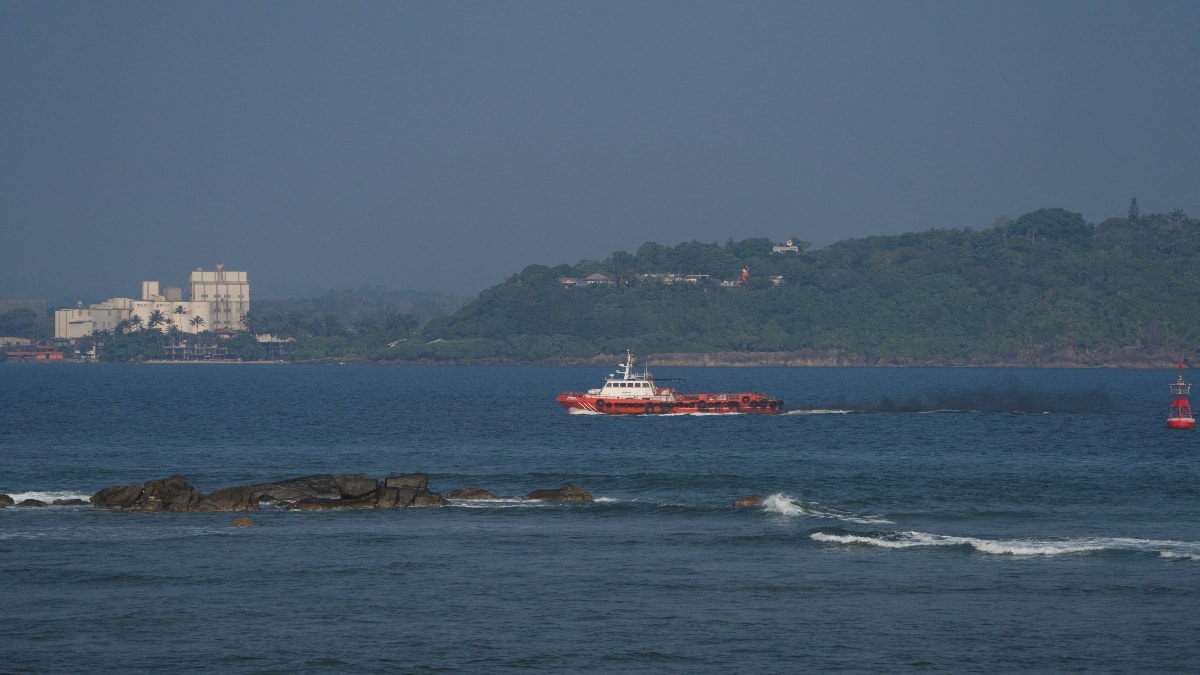
The air in the southern port of Bandar Abbas usually tastes of salt and diesel. It is a humid, heavy weight that clings to the skin of the dockworkers and the sailors navigating the Strait of Hormuz. On a standard Tuesday, the rhythm of the city is dictated by the pulse of global trade—the slow churn of tankers carrying the lifeblood of the global economy. But recently, that pulse skipped a beat.
High above the haze, where the air is too thin to breathe, eyes made of glass and silicon were watching. They don't blink. They don't sleep. And when the sun rose over the jagged mountains of southern Iran, these orbital sentinels captured a truth that ground-level reports tried to obscure. You might also find this connected coverage interesting: The $2 Billion Pause and the High Stakes of Silence.
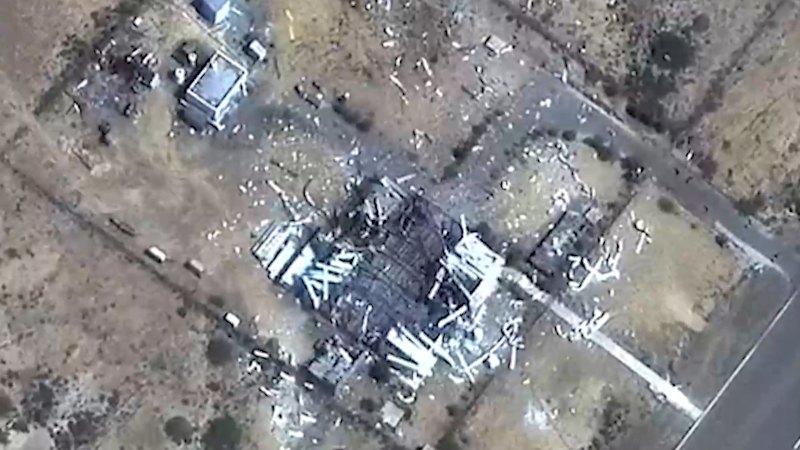
A patch of earth that should have been pristine was charred. A silhouette that once represented a sophisticated defense system was replaced by a smudge of charcoal and twisted metal.
The Anatomy of a Shadow
To understand what happened in the dirt of southern Iran, you have to look past the fire. You have to look at the invisible architecture of modern warfare. We often talk about "strikes" as if they are simple lightning bolts from the blue, but they are actually the culmination of a terrifyingly complex chess game played in the electromagnetic spectrum. As extensively documented in latest coverage by USA Today, the results are significant.
Consider a hypothetical radar operator—let’s call him Reza. In the moments before the silence, Reza isn't looking out a window. He is staring at a glowing green phosphorus screen. He represents the human element in a machine-driven standoff. His job is to trust the technology. He trusts that the S-300 batteries, the crown jewels of the regional defense strategy, are an impenetrable shield.
Then, the screen goes dark. Or worse, it fills with ghosts.
When satellite imagery from firms like Maxar or Planet Labs trickles down to the public, we see the "after." We see the scorched rectangles where mobile launchers once sat. But the "before" is where the real story lives. The strike wasn't just an explosion; it was a surgical removal of a nation’s peripheral vision. By targeting specific radar arrays and battery components near the coast, the "attacker"—widely understood to be a sophisticated adversary—wasn't just breaking hardware. They were blinding a giant.
The Language of the Crater
Satellite photos are a peculiar form of literature. They require a specific kind of literacy to read. To the untrained eye, a smudge on a runway is just a smudge. To an image analyst, it is a signature.
The precision is what haunts the sleep of generals. Look closely at the coordinates. The craters aren't scattered. They are clustered with a mathematical cruelty. They hit the "brain" of the defense system—the command and control vehicles—while leaving the less vital "limbs" relatively untouched. This is a message written in high explosives: We know exactly which wire to cut.
This isn't the carpet bombing of the 20th century. This is digital-age excision.
- The Radar Array: The first target. Without it, the missiles are just expensive lawn ornaments.
- The Power Source: A secondary hit to ensure that even if backup systems kick in, there is nothing to fuel the search.
- The Psychological Perimeter: The realization that the most defended airspace in the country was bypassed without a single interceptor being fired.
The facts are stark. Satellite passes confirmed that a key site near the Bandar Abbas airport took a direct hit. There was no massive fire that spread to civilian sectors. There was no "collateral damage" in the traditional, messy sense. There was only a hole where a capability used to be.
The Invisible Stakes of a Silent Port
Why does a charred patch of desert in a distant port matter to someone sitting in a coffee shop in London or a suburb in Ohio? Because the Strait of Hormuz is a choke point. It is a throat.
Every time a radar is destroyed in southern Iran, the pressure in that throat changes. When the "defense" is weakened, the "offense" feels emboldened. And when the offense feels emboldened, the insurance rates for tankers rise. Then the price of a gallon of gasoline at a station in Texas or a liter of petrol in Paris shifts by a few cents. These aren't just military strikes; they are economic tremors.
The real problem lies elsewhere, though. It's not in the price of fuel. It's in the uncertainty.
When satellite images go public, they strip away the fog of war. They force a narrative. Before the images, a government can claim "everything is fine" or "there was a minor accident." After the images, the silence of the satellite is louder than any press release. The images serve as an unmasking. They are the objective arbiter of a conflict that usually thrives on half-truths.
The Human at the Console
Imagine the operator, Reza, again. He is an avatar for a thousand others in uniform. When he sees the satellite images of his own post—captured from a foreign orbit and published on the internet—his world changes. He realizes his invisibility was an illusion. The sky is not a roof; it is a window.
This is the psychological weight of modern surveillance. It’s the feeling of being naked in a room where you thought you were alone.
Consider what happens next: The cycle of repair and response. Every strike on a radar battery is a challenge to the engineers who must rebuild it. They work in the shadow of the same satellites that mapped their previous failure. They know that as soon as they bolt a new component into place, a lens 300 miles above their heads will record the serial number.
The "aftermath" isn't just a physical debris field. It's a shift in the tectonic plates of regional power.
But the real story isn't the explosion. It's the silence that followed. It's the moment when the screen went dark and the operator realized that the shield was made of glass.
The satellites have moved on now. They are circling the poles, looking at other cities, other ports, other deserts. They are impartial. They don't care about the ideology of the target or the politics of the attacker. They only care about the reflection of light on scorched earth.
In the ports of southern Iran, the smell of diesel and salt remains. But the sky feels different now. It feels like a mirror. It feels like a threat. It feels like a witness.
The crater is a signature, and the ink is still wet.