Imagine a dinner table in a small apartment in Vilnius, or perhaps a dimly lit office in Seoul. On the table sits a map. For decades, that map had certain colors that stayed fixed. Blue meant protection. Red meant danger. Gray meant the unknown. The lines were drawn in ink that everyone assumed was permanent, backed by the word of a superpower that acted as the world’s ultimate guarantor.
Then came a series of choices that acted like a bottle of spilled acid on that parchment.
Foreign policy is often discussed in the dry, rhythmic language of "strategic pillars" and "multilateral frameworks." It sounds like something that happens in marble hallways between men in expensive wool suits. But foreign policy is actually about the level of anxiety a father feels when he looks at a border. It is about whether a factory in Ohio can ship its parts without a sudden tax appearing overnight. It is about the invisible glue that holds the modern world together.
When Donald Trump moved to reshape the American stance toward the world, he didn’t just change the rules. He changed the gravity.
The Ghost of the Handshake
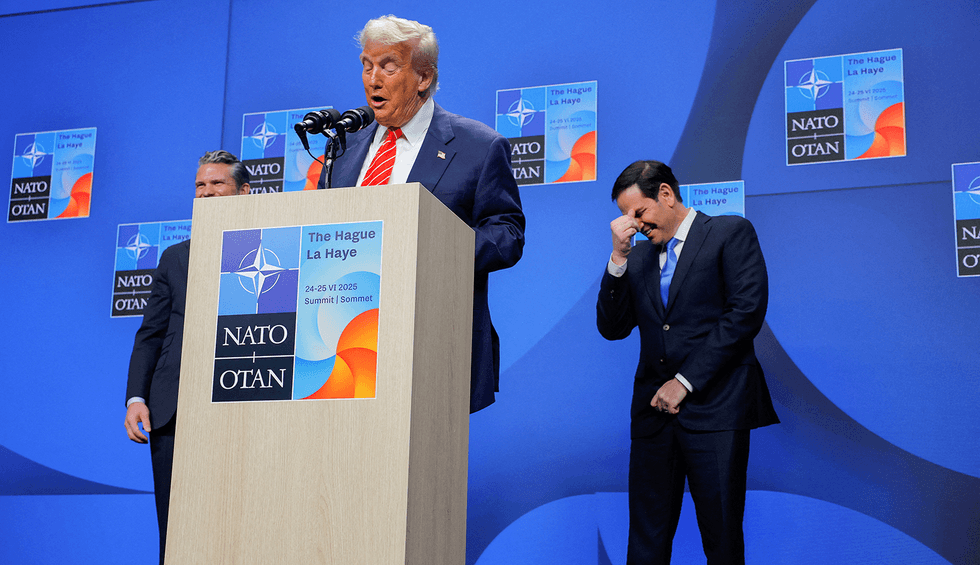
Trust is a fragile currency. In international relations, it is the only currency that actually matters. When the United States spent seventy years building alliances like NATO, it wasn't just doing a favor for Europe. It was buying a predictable world.
Think of an alliance as a long-term marriage. You don't question the commitment every Tuesday morning at breakfast. If you do, the marriage is already over. By suggesting that the U.S. might not defend its allies unless they "paid their bills," the administration turned a blood-oath into a transactional invoice.
The shift was visceral. For a diplomat in Tallinn, the "America First" doctrine wasn't a slogan; it was a cold breeze blowing through the cracks of their national security. If the guarantor of the world order views a treaty as a negotiable contract rather than a sacred bond, the contract is effectively worthless. The ink begins to fade.
The fallout wasn't just a heated argument at a summit in Brussels. It was the quiet realization among allies that they needed a Plan B. And Plan B usually involves looking for new friends or building their own walls.
The Empty Chair at the Table
There is a specific kind of power that comes from being the person who organizes the meeting. For a century, the U.S. was the world’s primary host. Whether it was trade, climate, or nuclear non-proliferation, the chair at the head of the table was reserved for Washington.
When the U.S. walked away from the Trans-Pacific Partnership (TPP), it didn’t just leave the room. It left a vacuum.
Imagine a neighborhood where the most influential person suddenly decides they no longer care about the communal park, the local school board, or the neighborhood watch. They retreat into their house and lock the door. The neighborhood doesn't stop existing. It just finds a new leader.
In the case of global trade, that new leader was often China. By stepping back from massive trade blocs, the U.S. didn't "save" its economy from foreign influence; it surrendered its ability to write the rules of the 21st-century economy. The "invisible stakes" here are the standards of the future. Who decides how data is protected? Who decides how labor is treated? When you aren't at the table, you're on the menu.
The Nuclear Echo Chamber
Decades of diplomacy are built on the idea of "slow and steady." You move toward peace through agonizingly boring meetings and thousands of pages of technical documents. It’s unglamorous. It’s frustrating.
The approach to Iran and North Korea during this era traded that slow grind for high-stakes theater.
The withdrawal from the Iran nuclear deal (the JCPOA) was a gamble that "maximum pressure" would force a better bargain. But international politics rarely follows the logic of a real estate closing. When you tear up a deal that the rest of the world—including your closest allies—thinks is working, you don't look tough. You look unreliable.
The human cost of this isn't found in a spreadsheet. It’s found in the heightened heartbeat of a sailor in the Strait of Hormuz. It's found in the renewed enrichment of uranium that had previously been under lock and key.
Then there was the "love letter" diplomacy with North Korea. For the first time, a sitting U.S. President met with a Kim. The photos were historic. The handshakes were firm. But the substance remained hollow. By elevating a dictator to the global stage without extracting concrete concessions, the administration blurred the line between a photo-op and a policy.
A hypothetical citizen in Seoul watches these events with a different lens than a pundit in D.C. For them, the spectacle is terrifying. They see the traditional guardrails being removed in favor of a personal rapport that could vanish with a single tweet. Security should be a structure, not a mood.
The Border as a Mirror
Foreign policy is often seen as "out there," but it is deeply "in here." The way a nation treats the world reflects how it sees itself.
The implementation of aggressive tariffs—even against allies like Canada and the European Union—was framed as a way to protect the American worker. It used the language of the 19th century to solve the problems of the 21st. The world is no longer a collection of independent islands; it is a nervous system. If you prick the finger in Germany, the arm in South Carolina feels the pain.
A tariff on aluminum isn't just a number. It’s a manufacturer in a small town realizing their costs just jumped 20%. It’s a retaliatory tax on American bourbon or motorcycles. It’s the slow-motion erosion of a global supply chain that took fifty years to perfect.
But the most profound change wasn't in the price of steel. It was in the perception of American stability.
For the better part of a century, the world relied on the "U.S. Dollar" of diplomacy. You knew what you were getting. You knew that even if the parties changed, the core interests remained. The sudden lurch toward isolationism, peppered with bursts of interventionism, created a "volatility tax" on every international interaction.
The Cost of Being Alone
There is a certain romanticism to the idea of the "lone wolf." It plays well in movies. It feels powerful to say we don't need anyone else.
But in the reality of global pandemics, climate shifts, and cyber-warfare, being alone is a liability. The withdrawal from the Paris Climate Accord and the World Health Organization (WHO) during a global health crisis sent a clear signal: the U.S. was resigning as the world’s first responder.
Consider a doctor in a developing nation, relying on international frameworks to fight a new virus. When the largest funder and leader of those frameworks walks away, that doctor’s job becomes infinitely harder. The stakes are biological. They are existential.
The five key aspects of foreign policy that were "blown up" aren't just bullet points on a political smear sheet. They are the foundations of a house we all live in.
- The sanctity of alliances.
- The leadership in global trade.
- The commitment to nuclear stability.
- The reliance on diplomatic expertise over personal whim.
- The role of the U.S. as a moral and institutional anchor.
When those foundations are rattled, the house doesn't necessarily fall down immediately. It groans. It shifts. Small cracks appear in the ceiling.
The real tragedy of a fractured foreign policy isn't a single explosion. It is the silence that follows. It’s the sound of allies making deals behind our backs because they no longer trust our word. It’s the sound of rivals moving into spaces we vacated. It’s the quiet realization that once you stop being the leader of the free world, it is incredibly difficult to get that job back.
The map has changed color. The lines are blurred. And as we sit at that table in Vilnius or Seoul or Ohio, we are all left wondering if the ink will ever be permanent again.
The world is no longer waiting for America to lead; it is learning how to move on.