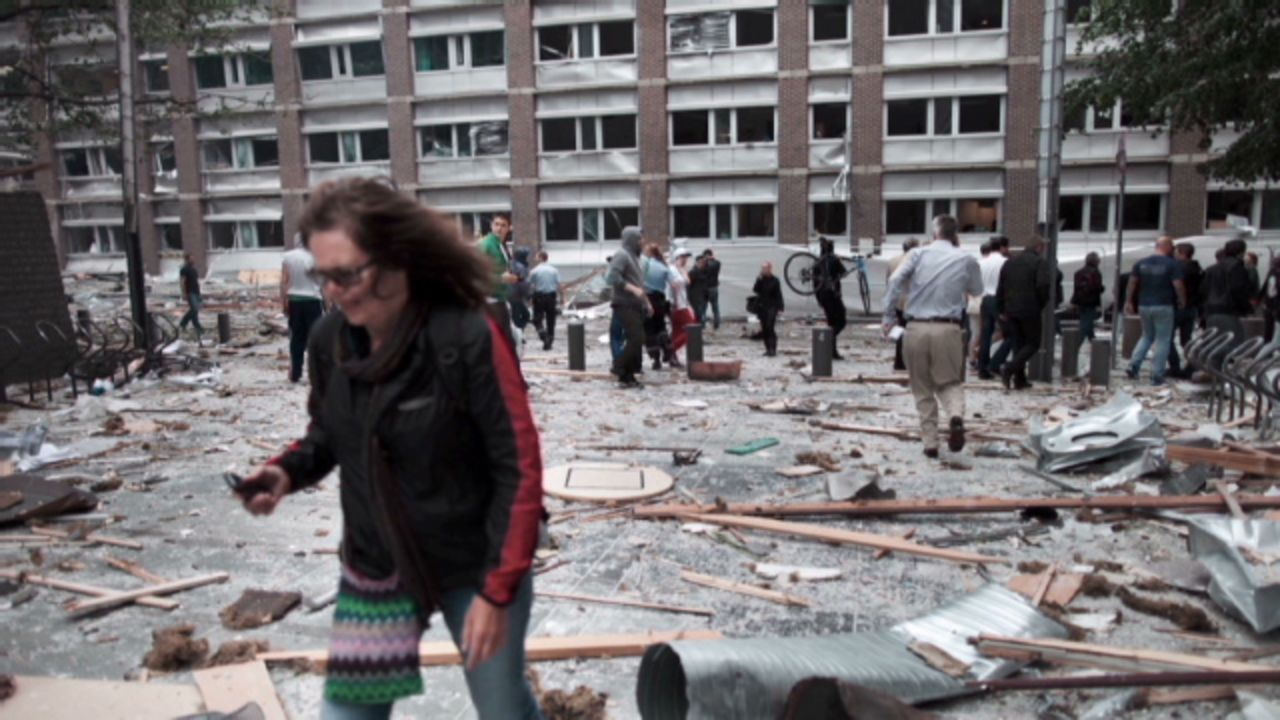
The media has a fever, and the only prescription, apparently, is hyperbole. While headlines scream about "scorched earth" and "total collapse," they are missing the most fundamental rule of modern electronic and kinetic warfare: defense is not a binary state of "broken" or "fixed." It is a mathematical trade-off of attrition.
The breathless reporting surrounding Ahmad Vahidi and the supposed evaporation of Iranian sovereignty over its own airspace ignores how integrated air defense systems (IADS) actually function in the 21st century. We are told the "butcher" is presiding over a ruin. The reality? He is presiding over a textbook lesson in the limitations of 20th-century hardware against 21st-century asymmetric saturation.
The Myth of the "Iron Dome" Everywhere
Western observers have been conditioned by the success of Israel's multi-layered defense to believe that anything less than a 95% interception rate is an embarrassing failure. This is a cognitive trap. Iran’s geography is approximately 1.6 million square kilometers. Israel’s is roughly 22,000.
To suggest that a "collapse" has occurred because a strike package penetrated a specific corridor is like saying a person is "completely unprotected" because they have a scratch on their arm while wearing a bulletproof vest.
The "scorched earth" narrative assumes that every missile or drone that hits its target represents a systemic failure. In reality, modern defense is about layered prioritization. You don't waste an S-300 or a Bavar-373 interceptor on a $20,000 loitering munition. If you do, you’ve already lost the economic war. I’ve seen analysts track "leaks" in the system without ever acknowledging the "cost-per-kill" ratio that actually dictates the longevity of a regime.
Stop Calling it a "Collapse" When It’s an "Evolution"
The "lazy consensus" argues that if the S-300 didn't fire, it didn't work. This is dangerously naive.
Active radar is a death sentence in a high-intensity conflict against a peer or near-peer adversary equipped with anti-radiation missiles (ARMs). Turning your radar on is like lighting a flare in a dark forest; you might see the wolf, but every hunter in the woods now knows exactly where you are.
What the "scorched earth" pundits call a "collapse" is often a tactical decision to remain "dark."
- Emission Control (EMCON): Staying silent to preserve the asset for a high-value threat (like a manned bomber) rather than exposing it to intercept a swarm of decoys.
- Asymmetric Redundancy: Moving toward mobile, short-range systems like the Khordad-15 that are harder to track but easier to replace.
The competitor articles love the "butcher" moniker because it sells ads. It paints a picture of a desperate, flailing leadership. But Vahidi is an operative who understands that in a war of attrition, survival is the only metric that matters. If the air defense "collapsed," why are the primary command and control nodes still functional? Why is the industrial base still churning out the very drones that are currently destabilizing European security?
The Fallacy of Scorched Earth
The term "scorched earth" implies a defender destroying their own resources to prevent an enemy from using them. The media is misusing the term to describe an attacker’s success. It’s a linguistic mess that obscures the truth: Iran isn't burning its own ground; it is being forced to choose which ground is worth the price of a missile.
When an F-35 or a high-end standoff missile penetrates a zone, it isn't necessarily because the defense is "weak." It’s because the physics of stealth and electronic warfare (EW) are currently outpacing the physics of traditional kinetic interception.
The Real Technical Bottleneck:
- Sensor Fusion: Iran’s struggle isn't a lack of missiles; it’s the inability to integrate disparate Russian, Chinese, and indigenous sensors into a single, unhackable picture.
- Latency: The time between "detect" and "engage" is being exploited by high-speed, low-altitude cruise missiles.
- Saturation: No system on Earth can handle a 500-unit swarm. Not the S-400, not THAAD, not Aegis.
To mock Vahidi for "allowing" a collapse is to mock a man for being unable to catch every drop of water in a monsoon with a bucket.
The Unconventional Advice: Watch the Logistics, Not the Explosions
If you want to know if a defense system is actually failing, stop looking at the craters. Look at the supply lines.
If Iran were truly in a state of "scorched earth" collapse, we would see a cessation of domestic aerospace production. We would see the grounding of their (admittedly ancient) tactical air force. We aren't seeing that. We are seeing a shift toward decentralized, "guerrilla" air defense.
Why the "Experts" are Wrong About Vahidi
The narrative of the "incompetent butcher" ignores the fact that Vahidi is overseeing a transition to an "attrition-first" posture.
- They are trading space for time.
- They are trading cheap infrastructure for expensive adversary munitions.
- They are banking on the fact that the West’s stomach for a long-term, high-cost air campaign is smaller than their own stomach for occasional, localized "scorched" patches of dirt.
I’ve spent years analyzing regional defense postures, and the biggest mistake is always underestimating the adversary's willingness to absorb pain. The "collapse" reported by Zee News and others is a Western projection of what we would consider a failure. For a revolutionary regime, a 20% survival rate of key assets after a massive strike is a win.
The Brutal Truth
The "air defense collapse" is a convenient myth for those who want to believe a conflict would be short, sharp, and decisive. It won't be.
Every time a headline claims the "end is near" for Iranian air sovereignty, they provide a false sense of security to policymakers. The "scorched earth" isn't a sign of the end; it’s the new baseline of a conflict that has no clear exit strategy.
The defense hasn't collapsed; it has merely been stripped of its illusions. If you think a few successful strikes mean the "butcher" is out of moves, you haven't been paying attention to the last forty years of Middle Eastern warfare.
The map isn't the territory, and the explosion isn't the war. Stop reading the scoreboard and start looking at the deck. Vahidi is still holding cards, and they aren't the ones you think.
Get used to the smoke. It isn't a sign of defeat; it’s the new atmospheric condition of modern geopolitics.