The Edmonton Oilers are currently huddling around the medical report like it is a divine prophecy. The "lazy consensus" among beat reporters and the fan base is simple: Leon Draisaitl returns, the power play clicks back into a historic rhythm, and the team cruises into the postseason. It is a comforting narrative. It is also a fundamental misunderstanding of how modern championship windows slam shut.
Hope is not a strategy. Expecting a single player—even a Hart Trophy winner—to patch the structural rotting of a roster that relies on outscoring its own incompetence is the definition of hockey insanity. I have watched front offices across the league fall into this "star-power trap" for two decades. They mistake a band-aid for a cure.
The Power Play Mirage
Everyone points to the man advantage. They see Draisaitl at the right circle and assume the math just works. But the "Draisaitl Effect" is actually masking a deeper, more systemic failure in Edmonton’s 5-on-5 play.
When you look at the underlying metrics, the Oilers often lose the expected goals battle ($xG$) during even-strength minutes, even when their stars are healthy. Relying on a historically high shooting percentage from the "Oilers Spot" is a gamble, not a system. In the playoffs, officiating tightens. The whistles go into the pockets. If your entire identity is built on a 29% power play conversion rate that disappears when a defenseman is allowed to cross-check you in the ribs without a penalty, you aren’t a contender. You’re a circus act.
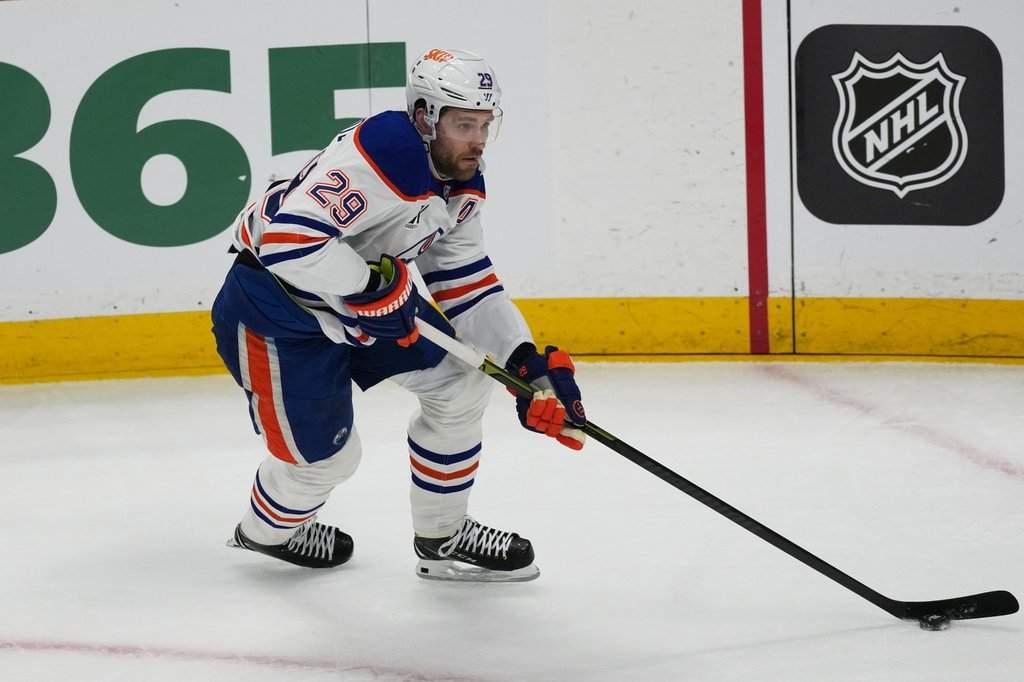
The return of Draisaitl actually risks regressing the team’s recent (and necessary) adaptation to a more gritty, defensive style. When the stars are out, bottom-six players actually have to play hockey. When the stars return, the rest of the roster becomes spectators. They stop skating. They start looking for the pass to #29. They become soft.
The Cap Hell Reality Check
Let’s talk about the math that the "optimists" refuse to acknowledge. The Oilers are operating in a reality where two players consume roughly 25% of the total salary cap. This is the "stars and scrubs" model.
History is a brutal teacher here. Since the introduction of the salary cap in 2005, teams that win the Stanley Cup almost universally possess "surplus value" players—entry-level contracts or mid-tier veterans performing like superstars. Edmonton has the opposite. They have superstars performing like superstars, and a supporting cast performing like they belong in the American Hockey League.
Bringing Draisaitl back doesn't fix the fact that the goaltending remains a coin flip. It doesn't fix a defensive corps that struggles with zone exits under high pressure. It just means you’ll lose 5-4 instead of 3-1. Is that "progress"? Only if you’re selling tickets, not if you’re chasing rings.
The Injury Compensation Trap
There is a psychological phenomenon in professional locker rooms where players "play up" when a leader is down. We saw it. The effort increased. The defensive gaps closed. The moment Draisaitl steps back on that ice, the subconscious "relief" will set in.
- The Problem: The defensive intensity will drop by 10%.
- The Consequence: The team will trade chances.
- The Result: High-event hockey that favors teams with deeper blue lines—which the Oilers do not have.
I have seen GMs celebrate a star's return only to watch their team go 2-6-2 in the following ten games because the collective urgency evaporated. The Oilers aren't just waiting for a player; they are waiting for an excuse to stop playing hard.
The Counter-Intuitive Play: Limit the Minutes
If the Oilers actually wanted to win, they wouldn't rush Draisaitl back to 22 minutes a night. They would do something radical: play him 16 minutes.
Force the second and third lines to carry the water. Use Draisaitl as a tactical weapon, not a workhorse. But they won't do that. They are too scared of the standings. They will burn him out by mid-April, and by the second round of the playoffs, he will be skating on one leg again, and we will be right back here talking about "what if."
Addressing the Premise
People ask: "How much better are the Oilers with Draisaitl?"
The honest answer: They are better in the regular season and exactly the same in the playoffs.
The playoffs are a war of attrition. They are about who has the best third pair and the most reliable fourth line. Draisaitl is a 100-point producer, but he cannot play 60 minutes. The minutes he is off the ice are the minutes where the Oilers' season goes to die. Until management addresses the cavernous void behind the top six, the health of the stars is a moot point.
Stop checking the injury report. Start checking the trade wire for a shutdown defenseman who can actually clear a crease. Otherwise, this "optimism" is just a stay of execution.
Get Draisaitl back. Watch the power play goals pile up. Watch the highlights on social media. Then watch the team exit in the first round because they still haven't learned that one man, no matter how elite, cannot outrun a flawed philosophy.
Expect the return. Expect the hype. Then expect the inevitable collapse when the game actually gets heavy.