The Regulatory Paradox of Spontaneous Expression
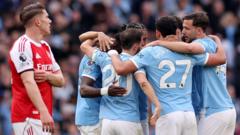
The friction between governing bodies and elite athletes regarding post-goal celebrations is not a matter of etiquette, but a conflict of administrative oversight versus high-stakes psychological release. When Pep Guardiola asserts that players possess the autonomy to celebrate as they wish, he is defending a critical variable in the performance equation: the dissipation of acute physiological stress.
Professional football operates at a physical and cognitive intensity where the margin for error is measured in milliseconds. The act of scoring a goal represents the culmination of a high-pressure execution cycle. Denying or over-regulating the immediate emotional discharge that follows creates a cognitive debt that can interfere with the player’s transition back into a focused, defensive, or tactical state. Also making headlines lately: Operational Optimization of FIFA World Cup Match Official Preparation.
The Feedback Loop of Reward and Performance
In a high-performance environment, the celebration serves three distinct functions within the team’s operational framework.
- Neurochemical Reset: The surge of dopamine and adrenaline during a goal must be processed. Forced suppression of these neurochemicals through rigid regulatory threats (such as yellow cards for shirt removal or "excessive" celebration) introduces a secondary stressor—the fear of administrative sanction—at the exact moment the primary stressor is resolved.
- Social Cohesion Reinforcement: Celebrations are non-verbal signaling mechanisms. They validate the collective effort of the tactical unit, reinforcing the "sunk cost" of the physical exertion required to generate the scoring opportunity.
- Psychological Warfare: From a strategic standpoint, a prolonged or specific celebration serves as a temporal dominance marker. It forces the opposing team to remain in a state of stasis, dwelling on the failure while the scoring team dictates the pace of the restart.
The Legalistic Overreach of Governing Bodies
The International Football Association Board (IFAB) and various league authorities often cite "the image of the game" or "time-wasting" as justifications for punishing celebrations. This logic is structurally flawed. It prioritizes the aesthetic preferences of a broadcast product over the biological realities of the participants. Additional insights regarding the matter are covered by Yahoo Sports.
When a referee issues a caution for a player entering the crowd or removing their jersey, they are applying a binary rule to a non-binary emotional state. This creates a Disproportionality of Risk. A player who receives a yellow card for a celebration is now statistically compromised for the remainder of the match. They can no longer commit tactical fouls or engage in high-risk challenges without the threat of a red card. Consequently, the regulation of a celebration directly alters the tactical integrity of the game’s remaining duration.
The Cost-Benefit Analysis of Managerial Permissiveness
Guardiola’s stance is a calculated leadership strategy. By publicly advocating for player autonomy in these moments, he transfers the "risk-ownership" to the players while simultaneously shielding them from external criticism. This creates a psychological safety net.
Managers who attempt to micro-manage celebrations risk alienating the creative core of their squad. The "guaranteed output" of an elite striker is often tied to their sense of personal agency. Restricting that agency at the moment of highest reward leads to a phenomenon known as Incentive Decay. If the cost of the celebration (a fine, a benching, or a public dressing down) outweighs the perceived value of the goal’s emotional release, the player's subconscious drive may subtly diminish over time.
Categorizing the Impact of Celebration Regulation
The current regulatory landscape can be broken down into three primary friction points:
- Temporal Friction: Rules against "excessive time-wasting" ignore that the clock is managed by the referee. The solution is not to punish the emotion, but to be more precise with added time.
- Physical Friction: Rules against leaving the field of play or removing equipment. These are relics of a pre-digital era of sports marketing, where jersey sponsors demanded 100% visibility during the high-value "hero shot" of a goal celebration.
- Behavioral Friction: Cautions for "provocative" gestures. This is the most subjective area, as it requires a referee to interpret intent and cultural context in real-time, an impossible task for an official focused on sporting mechanics.
The Mechanism of Modern Man-Management
Guardiola’s philosophy aligns with modern organizational psychology, which suggests that high-performing individuals require "zones of deregulation." In a hyper-structured tactical system like a "Juego de Posición" (Position Play), where every movement is scripted to the meter, the celebration is the only unscripted moment available to the player.
Allowing this unscripted moment preserves the player's sense of self within the machine. If you remove the right to celebrate, you turn the athlete into a purely functional asset, which eventually leads to burnout and reduced creative risk-taking.
The Shift Toward Tactical Stoicism
While Guardiola defends the right to celebrate, a counter-trend of "Tactical Stoicism" is emerging among certain elite squads. This is the practice of minimal celebration to signal that the goal was an expected outcome, not a statistical anomaly. This "business as usual" approach serves a different strategic purpose: it denies the opponent the satisfaction of seeing the scoring team's relief, projecting an aura of inevitability.
However, forcing this stoicism from the top down is rarely effective. It must be an organic evolution of the team's culture. Guardiola's brilliance lies in recognizing that his role is not to dictate the style of the emotion, but to ensure the permission for it exists.
Strategic Recommendation for Club Governance
To optimize player performance while navigating current league regulations, clubs should move away from internal disciplinary measures regarding celebrations and instead focus on Post-Event Mitigation.
- Administrative Buffer: Rather than punishing a player for a "shirt-off" yellow card, the club should treat it as a standard operational cost, provided it doesn't lead to a suspension.
- Clock Management Integration: Training players to celebrate in specific zones that allow for a faster VAR check or a quicker return to their own half ensures that the emotional release does not come at the expense of tactical readiness.
- Media Shielding: Following the Guardiola model, coaching staff should take the brunt of the media's "moral" questioning. By framing celebrations as an essential human right within the sport, they prevent the narrative from distracting the squad from their next objective.
The objective is to maintain the player's psychological momentum without incurring unnecessary administrative debt. In the high-stakes environment of elite football, the "cost" of a yellow card is often lower than the "cost" of a suppressed, frustrated athlete.