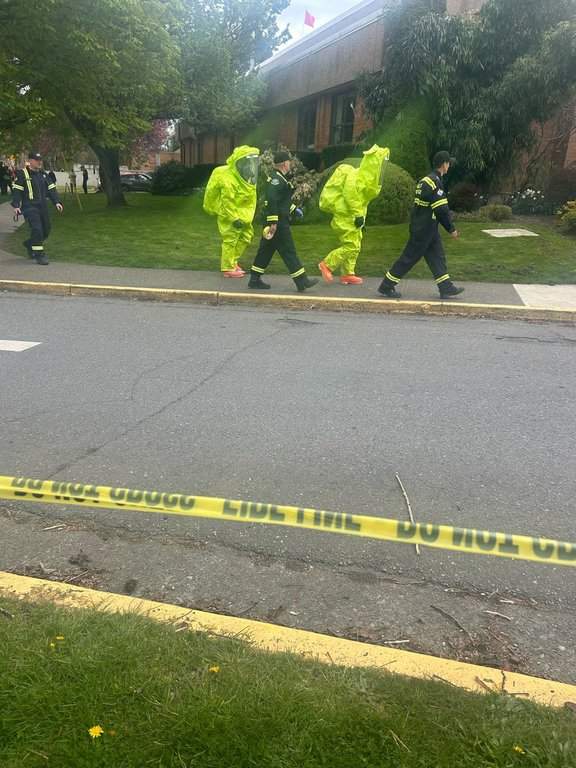
The closure of the Crystal Pool facility due to localized air quality failures highlights a systemic fragility in aging urban infrastructure where public health mandates intersect with mechanical obsolescence. When a municipality declares a facility "safe" yet remains unable to restore service for 72 hours, it signals a disconnect between biological safety thresholds and operational readiness. This delay is not merely an inconvenience; it represents a failure in the facility's Mean Time to Recover (MTTR), a metric that dictates how effectively a city can manage its high-utilization public assets.
The Triad of Aquatic Facility Stability
To understand why a facility like Crystal Pool remains offline despite a cleared safety status, one must analyze the three interdependent systems that govern aquatic operations. A failure in one creates a cascading effect that prevents a "safe" environment from becoming a "functional" one.
1. Atmospheric Chemical Equilibrium
Air quality in indoor pools is not a static measurement but a dynamic byproduct of water chemistry. The primary culprit in air quality degradation is the formation of trichloramines. When chlorine reacts with organic compounds (sweat, oils, urea), it off-gasses into the immediate breathing zone. A "safe" reading from a spokesperson implies that the parts per million (ppm) of these contaminants have dropped below the Action Level set by occupational health standards. However, the clearance of the air is the final step, not the first.
2. Mechanical Air Exchange and HVAC Redundancy
The gap between the "safe" declaration and the "Tuesday reopening" suggests a mechanical bottleneck. Indoor pools require specialized HVAC systems—often Heat Recovery Ventilators (HRVs) or Large Scale Dehumidifiers—to move thousands of cubic feet of air per minute. If the initial air quality spike was caused by a mechanical seizure or a sensor failure, "safety" is achieved by venting the building manually or through emergency overrides. "Operational status," conversely, requires the system to hold that equilibrium autonomously. Reopening is delayed because the engineering team must verify that the system can maintain standard parameters under the thermal load of a full capacity crowd.
3. Biological Stabilization Cycles
Public pools operate under strict turnover rates. Most jurisdictions require the entire volume of pool water to pass through the filtration system every six hours. If the air quality issue was tied to a chemical imbalance in the water (e.g., a "shock" treatment or a failure in the automated dosing pump), the water itself must undergo multiple turnover cycles to ensure chemical levels return to a range that is non-reactive for bathers.
The Latency of Public Communication vs. Technical Reality
There is a measurable delta between the "official" safety narrative and the technical timeline. Public relations departments prioritize the mitigation of panic, leading to phrases like "the pool is safe." From a risk management perspective, "safe" is a binary state: either the chemicals are within legal limits or they are not.
The technical reality is a gradient. The 72-hour buffer often seen in municipal closures accounts for:
- Re-equilibration: Allowing the water and air to settle after high-intensity scrubbing or venting.
- Staff Recalibration: Re-aligning the lifeguard and maintenance shifts that were disrupted by the emergency closure.
- Verification Latency: Waiting for third-party lab results or independent inspector sign-offs that are legally required before the public can be admitted.
Economic and Social Opportunity Costs
The failure to maintain operational continuity at a central hub like Crystal Pool generates a significant cost function. This is not limited to lost entrance fees; it extends to the disruption of the "social infrastructure."
- Contractual Liabilities: Many pools host private swim clubs or physiotherapy sessions. A four-day closure triggers refund clauses or forces the city to provide alternative space, straining other facilities like the Esquimalt or Saanich systems.
- The Displacement Effect: When one facility closes, the load shifts to neighboring pools. This increased bather load accelerates the chemical degradation in those secondary facilities, potentially creating a secondary wave of air quality issues if those systems are also near their mechanical limits.
- Public Trust Erosion: Frequent "minor" closures create a perception of unreliability. For users who rely on the facility for health-mandated exercise, the unpredictability becomes a barrier to entry, eventually lowering the total participation rate in municipal wellness programs.
The Structural Bottleneck: Aging Infrastructure
Crystal Pool is a legacy asset. In engineering terms, legacy assets suffer from Component Interdependency. Modern facilities are modular; if a sensor fails, a redundant system takes over. In older builds, a failure in the air handling unit might be inextricably linked to the boiler or the main circulation pump.
The decision to delay the reopening until Tuesday, following a weekend of "safety," points to a lack of confidence in the facility's ability to handle peak load. Weekends represent the highest bather load of the week. If the maintenance team is unsure of the HVAC system's resilience, they will intentionally bypass the weekend rush to observe the system under a "light load" (Monday) before permitting a "heavy load" (Tuesday). This is a standard risk-mitigation tactic used when a system is nearing its end-of-life cycle.
Quantifying the Vulnerability
A rigorous analysis of this incident requires looking at the Reliability, Availability, and Maintainability (RAM) of the city's aquatic portfolio.
- Reliability: The probability that the pool will function without failure over a given interval. For Crystal Pool, this probability is declining as the frequency of air quality incidents increases.
- Availability: The percentage of scheduled time the pool is actually open. Every "Tuesday reopening" after a Friday incident reduces the annual availability by roughly 1%.
- Maintainability: The ease with which the system can be repaired. If parts for the HVAC or filtration systems are no longer "off-the-shelf" and require custom fabrication or long lead times, the MTTR will continue to expand.
Strategic Operational Pivot
To move beyond the cycle of reactive closures and vague safety declarations, the management of municipal aquatic assets must shift toward Predictive Maintenance (PdM).
The current model is reactive: a sensor triggers an alarm, the pool closes, a spokesperson issues a statement, and the facility reopens once the alarm clears. A predictive model utilizes real-time data logging of CO2 levels, humidity, trichloramine concentrations, and fan motor vibrations to identify a pending failure 48 to 72 hours before it occurs.
By identifying the degradation of air quality while it is still within "safe" but "sub-optimal" ranges, maintenance can be performed during off-hours. This eliminates the need for emergency multi-day closures. The current closure of Crystal Pool is evidence that the city is currently operating at the bottom of the "Maintenance Maturity Model."
The immediate path forward requires a transition from binary "Open/Closed" communication to a transparency model that shares real-time air and water quality metrics via a public-facing dashboard. This creates accountability for the mechanical systems and provides the public with the data needed to make informed decisions about their own health.
Until the city addresses the fundamental mechanical limitations of the facility, the "safe but closed" paradox will remain a recurring feature of the urban landscape. The Tuesday reopening is a temporary reprieve, not a solution to the underlying systemic instability of the asset. The city must prioritize the capital expenditure for a full HVAC overhaul or accelerate the timeline for a replacement facility to prevent the total failure of this critical social node.