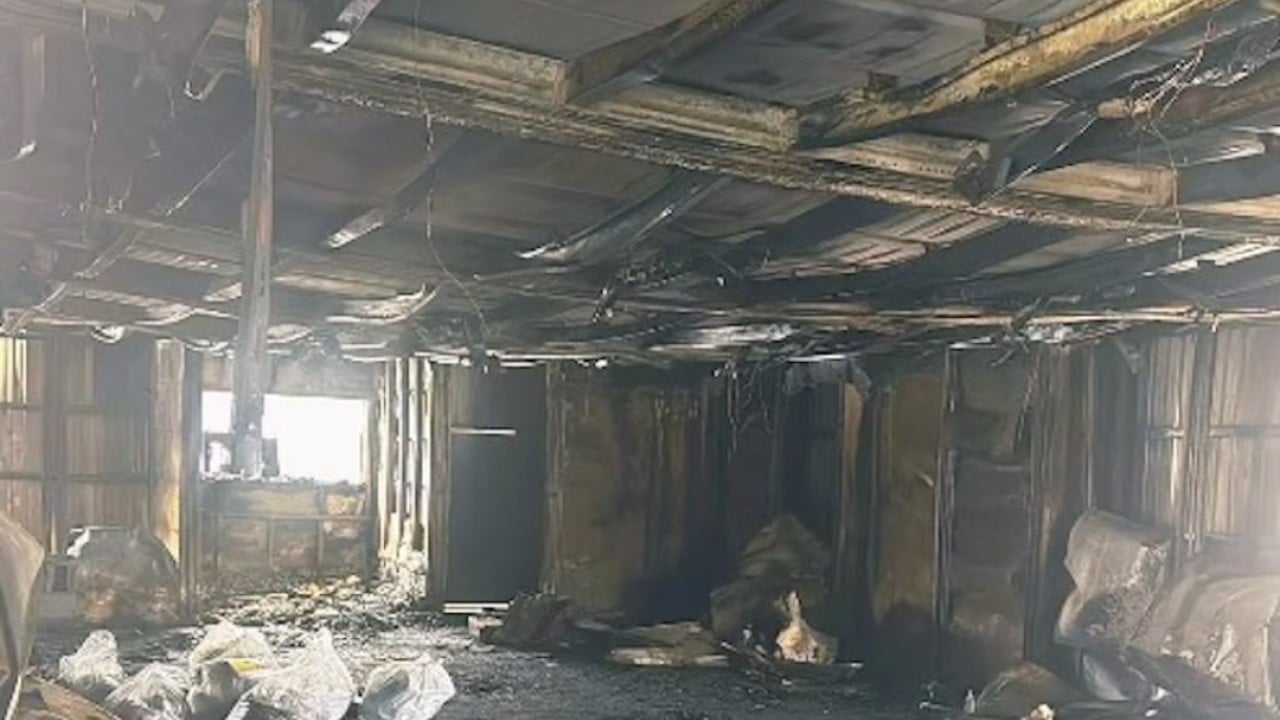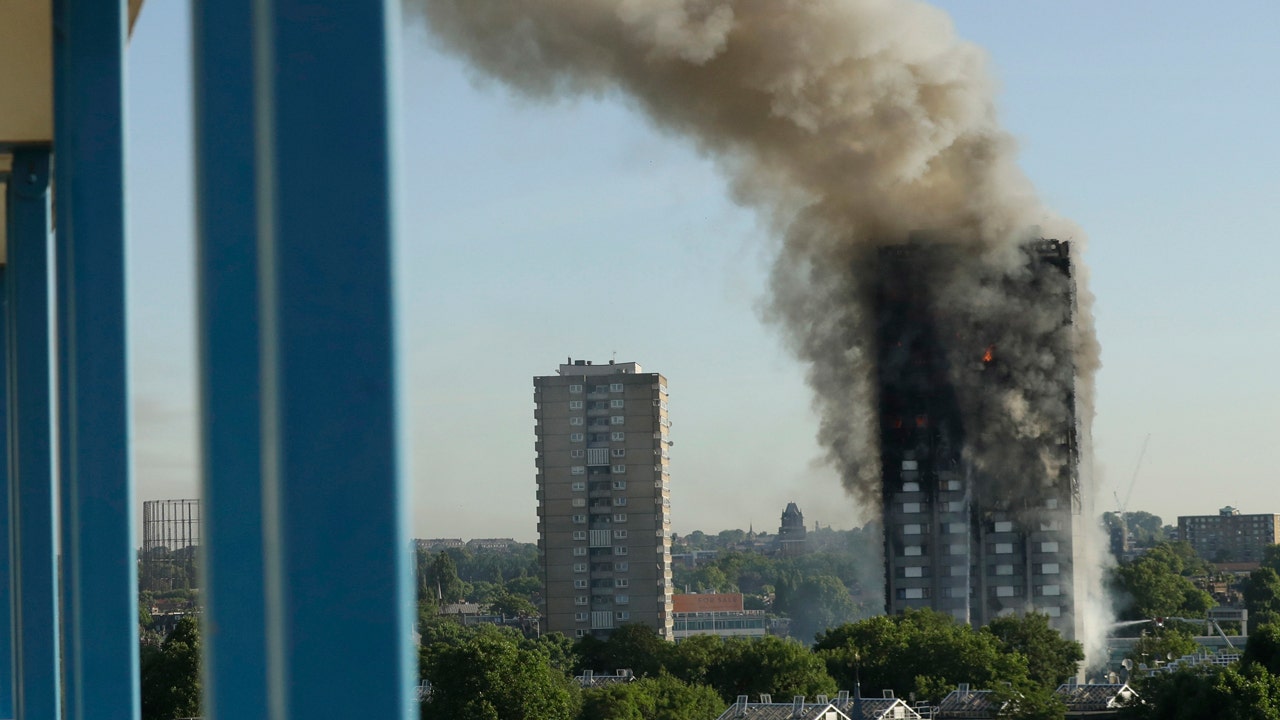
The decision by the UK government to suspend demolition activities at Grenfell Tower represents a fundamental collision between structural asset management and the preservation of forensic evidence. While the primary driver for site clearance is the mitigation of long-term structural instability and the psychological burden on the local community, the discovery of handprints within the restricted zones introduces a new variable into the evidentiary chain. This pause is not merely a bureaucratic delay; it is a critical realignment of the Triad of Post-Disaster Site Management: structural safety, legal accountability, and communal sanctity.
The Evidence Persistence Paradox
In high-heat structural failures, the survival of biological or behavioral evidence—such as handprints—defies standard entropy expectations. The presence of these marks on the interior surfaces of the tower creates a mandatory "stop-work" condition under the principles of forensic archaeology.
The core conflict resides in the Evidentiary Decay Function. Every day the structure remains standing, it is subject to environmental degradation, wind loading, and material fatigue. However, the act of demolition is inherently destructive. If these handprints represent the final movements of victims or provide data points for a spatial analysis of the tragedy, their destruction before digitized preservation constitutes a permanent loss of forensic truth.
The Forensic Value of Spatial Behavior
Behavioral traces in a disaster zone provide three specific datasets that cannot be replicated by blueprints or witness testimony:
- Path-to-Exit Mapping: Handprints indicate the tactile search for egress in zero-visibility conditions (smoke logging).
- Structural Integrity Feedback: Marks at specific heights or locations can reveal how occupants interacted with the building’s failing envelope.
- Human Verification: In a site where many remains were unrecoverable or severely compromised, these traces serve as a proxy for presence, providing a form of closure that is biological rather than purely administrative.
The Risk Hierarchy of Deferred Demolition
The Ministry of Housing, Communities and Local Government (MHCLG) operates under a specific risk hierarchy. By halting the removal of the structure, they accept an increase in Static Risk to gain a reduction in Investigative Risk.
Structural Fatigue and Load-Bearing Calculations
The Grenfell structure has been subjected to extreme thermal stress, which fundamentally altered the molecular lattice of the reinforced concrete.
- Carbonation Depth: The fire accelerated the penetration of carbon dioxide into the concrete, lowering the pH and potentially corroding the internal steel rebar.
- Thermal Spalling: The explosive loss of concrete surface layers during the 2017 event left the core skeleton vulnerable to the elements.
- Mechanical Shoring Dependency: The building is currently maintained by an internal "skeleton" of props. These props have a finite service life.
The decision to pause demolition shifts the burden onto the structural engineering teams who must now extend the maintenance lifecycle of a building that was never intended to remain in this state for nearly a decade. This creates a Maintenance Creep where the cost and danger of stabilizing the site begin to eclipse the logistical costs of the demolition itself.
The Stakeholder Divergence Model
A project of this magnitude lacks a "unified user." Instead, the site is governed by three distinct stakeholder groups with diametrically opposed definitions of success.
1. The Forensic and Legal Cohort
For investigators and legal counsel, the site is a Passive Data Repository. Their objective is maximum retention. Until the Grenfell Tower Inquiry and potential criminal prosecutions are fully exhausted, any physical change to the site is viewed through the lens of evidence spoliation. The handprints are "New Data" that require a refresh of the digital twin models used in court.
2. The Bereaved and Survivor Collective
This group views the tower through the lens of Sanctity and Memorialization. For them, the handprints are not data points; they are relics. The logic here is not engineering-based but emotional and restorative. The pause in demolition is a validation of the "Human Element" over "Project Timelines."
3. The Urban Governance and Safety Body
The government’s primary metric is Liability Mitigation. A standing, unstable tower in a densely populated urban area is a continuous liability. The discovery of handprints forces these officials to pivot from a "Clearance Strategy" to a "Curatorial Strategy," which is significantly more complex and expensive.
Technical Challenges of Non-Invasive Preservation
To honor the pause without compromising the forensic data, the technical team must deploy high-fidelity capture technologies. Standard photography is insufficient for the legal threshold required in a disaster of this scale.
Terrestrial Laser Scanning (TLS) and Photogrammetry Integration
The standard protocol for preserving these newly discovered marks involves:
- Sub-millimeter LiDAR: Creating a point cloud of the handprints to capture depth and pressure signatures.
- Multispectral Imaging: Using specific light wavelengths to highlight oils or residues that are invisible to the naked eye.
- Reflectance Transformation Imaging (RTI): A method that allows investigators to re-light the surface digitally from any direction, revealing surface texture that indicates how the mark was made.
The bottleneck here is the environment. The interior of the tower is hazardous (asbestos, lead, and structural instability), meaning technicians must work in full protective gear, which slows the rate of data acquisition.
The Economic Cost of the Pause
In large-scale civic engineering, a "pause" is a misnomer; it is a period of high-burn expenditure without tangible progress.
- Security Overhead: The cost of 24/7 site security to prevent unauthorized access.
- Environmental Monitoring: Constant sensors for air quality and structural movement.
- Opportunity Cost of Land: While secondary to the human tragedy, the inability to transition the site into a permanent memorial prevents the local community from reaching a state of "Post-Disaster Equilibrium."
This fiscal reality often puts pressure on the government to resume work, creating a tension between the Budgetary Clock and the Forensic Clock.
Defining the Boundary of "Complete Investigation"
The primary difficulty in resuming demolition lies in defining when the "search" is over. In a structure with hundreds of rooms and thousands of square meters of wall surface, the discovery of handprints suggests that previous surveys may have missed critical details.
This leads to a Diminishing Returns Threshold. At what point does the search for further marks become statistically unlikely to yield new information? The government must establish a clear "Forensic Completion Framework" that defines:
- The specific zones that have been cleared by forensic archaeologists.
- The digital standards required to consider a physical mark "permanently preserved."
- The sign-off process involving both technical experts and community representatives.
Without this framework, the project will fall victim to "Scope Creep," where every small discovery triggers a multi-month work stoppage, leading to a perpetual state of structural decay and communal purgatory.
Structural Integrity vs. Emotional Closure
The core of the Grenfell dilemma is that the building is both a crime scene and a tomb. The handprints serve as a bridge between these two identities. From a data-driven perspective, the marks are evidence of human movement under stress. From a human perspective, they are a final goodbye.
The suspension of demolition is a necessary tactical retreat. It acknowledges that the Efficiency of Removal must be subordinate to the Integrity of the Process. If the government proceeded with demolition while known human traces remained unrecorded, the resulting loss of trust would render any future memorial or legal outcome illegitimate in the eyes of the public.
Operational Recommendation for Site Management
The path forward requires a transition from a demolition-first mindset to a Forensic Deconstruction Methodology.
- Phase Zero (Current): Total cessation of mechanical vibrations. Immediate deployment of high-resolution RTI and LiDAR teams to the specific floors where handprints were identified.
- Validation Loop: Presentation of the digital captures to the survivor groups to ensure the "Dignity of Data" has been met. This is a crucial step in the "Permission to Proceed" logic.
- Selective Dismantling: Rather than a traditional top-down demolition, the government should consider the surgical removal of the specific wall segments containing the handprints. This allows the structural demolition to proceed while the physical evidence is moved to a climate-controlled, secure environment.
- Structural Re-certification: Following the delay, a full re-assessment of the temporary shoring is required. The static load calculations from 12 months ago may no longer be valid due to seasonal temperature fluctuations and material fatigue.
The Grenfell site is no longer a construction project; it is a complex archival operation. The success of the MHCLG will be measured not by how quickly they clear the site, but by how effectively they navigate the friction between the permanence of the physical structure and the fragility of the human traces it contains. The government must now fund and execute a precision-mapping operation that treats every square inch of the interior as a primary source document, effectively turning the tower into a digital archive before the first crane returns to the site.