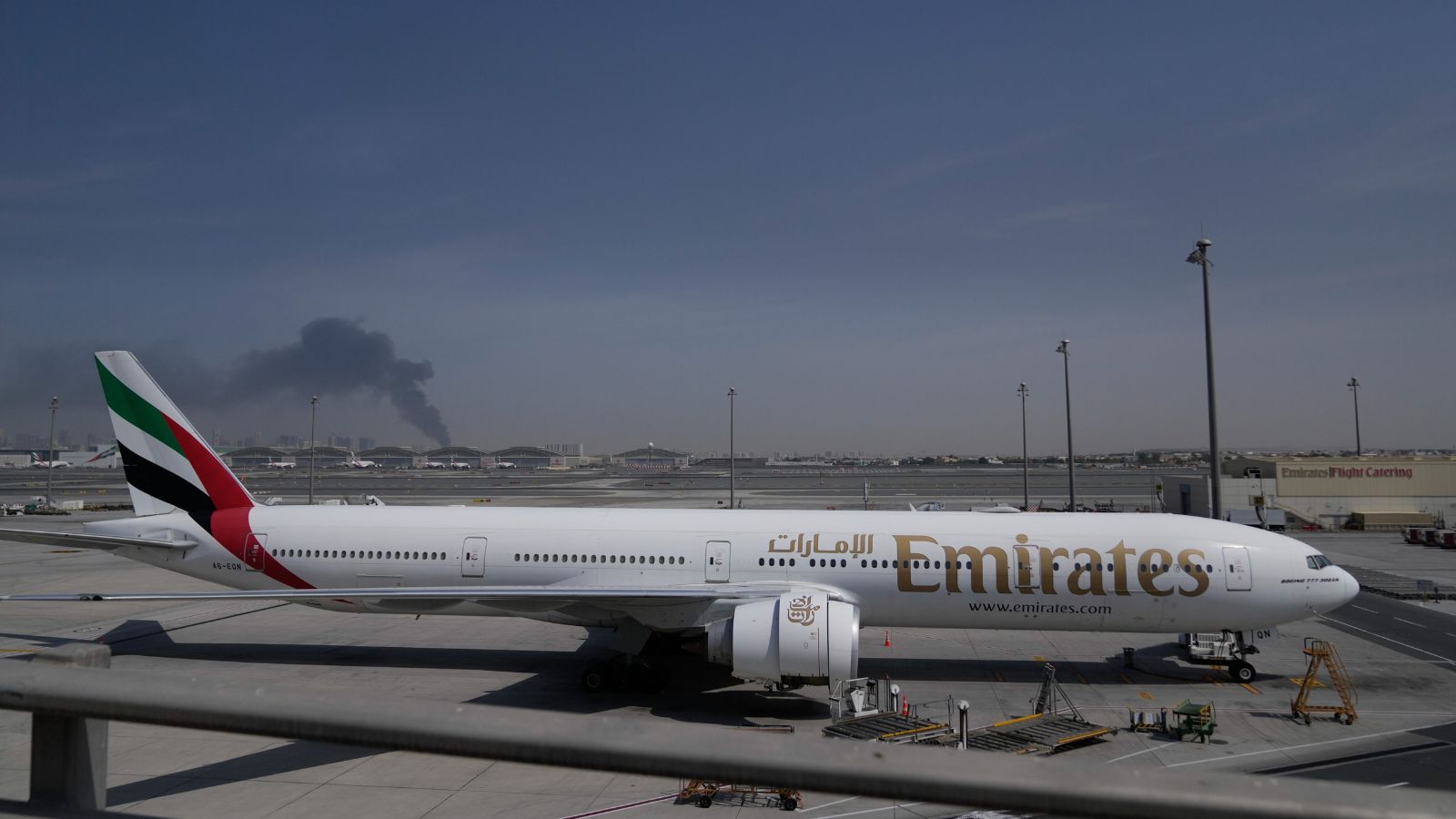
Zayed International Airport (AUH) has initiated a phased restoration of flight schedules following a period of extreme regional volatility. This transition from total suspension to partial operations signals a calculated risk assessment by the General Civil Aviation Authority (GCAA) and Etihad Airways. The resumption is not a return to the status quo; it is a recalibration of aviation logistics against a backdrop of kinetic geopolitical threats.
The Triad of Aviation Risk Management
The decision to reopen airspace or resume operations at a global hub like Abu Dhabi rests on three critical pillars. When these pillars are compromised, the economic cost of grounding fleets is secondary to the catastrophic risk of hull loss or passenger casualties.
- Airspace Integrity: This involves the physical safety of flight paths. In the context of the Iran-Israel escalation, the risk shifted from passive (electronic warfare/GPS jamming) to active (missile trajectories and drone swarms).
- Regulatory Clearance: National authorities must synchronize with international bodies such as EASA (European Union Aviation Safety Agency) and the FAA (Federal Aviation Administration). A discrepancy between these regulators creates a "litigation trap" for carriers.
- Logistical Inertia: Restarting a hub is not instantaneous. Crew duty cycles, aircraft positioning, and fuel supply chains require a 24-to-72-hour lead time to reach 80% capacity after a full shutdown.
The Cost Function of Regional Instability
Every hour an aircraft remains on the tarmac at Zayed International, the airline incurs fixed costs that cannot be recovered. However, the variable costs of rerouting are often more punitive.
When the Iranian and Iraqi airspaces close, long-haul flights between Europe and Asia must divert to the "Southern Corridor" over Saudi Arabia and Egypt or the "Northern Corridor" over Central Asia. These diversions add between 90 and 150 minutes of flight time.
- Fuel Burn: For a Boeing 787-9, an extra two hours of flight time translates to approximately 10,000 to 12,000 kilograms of additional fuel consumption.
- Carbon Credits: Under the Carbon Offsetting and Reduction Scheme for International Aviation (CORSIA), these diversions increase the carbon tax liability for the carrier.
- Connecting Failures: Zayed International operates as a "wave" hub. When an inbound flight from London is delayed by 90 minutes due to rerouting, it misses the outbound connection "wave" to Sydney or Manila, triggering massive hotel and compensation costs under passenger rights regulations.
The Logistics of Partial Resumption
"Partial operations" at Zayed International is a technical term that mask complex prioritization. The airport does not simply allow any plane to land; it implements a priority hierarchy designed to stabilize the network.
The Priority Hierarchy:
- Recovery of Stranded Assets: Flights that were diverted to "alternate" airports (such as Muscat or Dammam) are prioritized to return to Abu Dhabi to reset the crew and maintenance schedules.
- High-Yield Long-Haul: Routes with the highest passenger density and cargo value (e.g., London, New York, Singapore) receive the first available slots.
- Regional Feeders: Short-haul flights within the GCC are the last to be fully restored, as these passengers can often be rebooked on ground transport or later flights with less systemic disruption.
Electronic Warfare and Navigation Degradation
A factor often omitted in standard reporting is the prevalence of GPS spoofing and jamming in the Eastern Mediterranean and Persian Gulf. Even when the missiles stop flying, the electronic environment remains "noisy."
Modern avionics suites rely on GNSS (Global Navigation Satellite System) for precision approaches. When these signals are jammed, pilots must revert to Inertial Reference Systems (IRS) and ground-based radio beacons (VOR/DME). This reversion increases the "cockpit workload," leading to wider separation requirements between landing aircraft. Reduced separation efficiency directly limits the number of arrivals per hour at AUH, forcing the airport to maintain "partial" status despite the absence of active combat.
The Fragility of the Hub-and-Spoke Model
The UAE’s aviation strategy is built on the hub-and-spoke model, which assumes the Middle East is a stable transit point between the East and West. The recent escalation exposes a structural vulnerability: the "Geographic Bottleneck."
If the Strait of Hormuz or the surrounding airspace becomes a persistent no-fly zone, the competitive advantage of Abu Dhabi as a transit point evaporates. Passengers seeking reliability will opt for "Over-the-Pole" routes or direct ultra-long-haul flights that bypass the region entirely, such as London to Perth or New York to Singapore. This shift represents a long-term threat to the valuation of Gulf-based carriers.
Tactical Protocol for Travelers and Cargo Managers
The current situation at Zayed International requires an operational pivot from "scheduled" to "dynamic" planning.
- Cargo Diversification: Shippers should not rely on "belly cargo" in passenger planes during this period. Dedicated freighters, which often have more flexible routing permissions, offer higher reliability despite the premium cost.
- The 4-Hour Buffer: For transit passengers, a minimum connection time (MCT) of 4 hours is now the baseline for safety. The previous 60-to-90-minute "slick" connections are statistically likely to fail due to rerouting delays.
- Insurance Review: Standard travel insurance often excludes "Acts of War" or "Civil Unrest." Corporate travel departments must verify that their policies cover "Geopolitical Disruption," which is a separate underwriting category.
The resumption of flights at Zayed International is a fragile equilibrium. The system is currently running on "tactical oxygen"—temporary clearances and precarious flight paths. Any further kinetic exchange between regional powers will likely trigger an immediate, automated shutdown of the corridor. The aviation sector is no longer monitoring schedules; it is monitoring radar signatures and diplomatic cables in real-time.
Strategic recommendation: Shift critical transit volume to the Southern Hemisphere corridors for the next 14 days, regardless of the current "partial" reopening status, to bypass the inevitable congestion and volatility of the Persian Gulf airspace.


