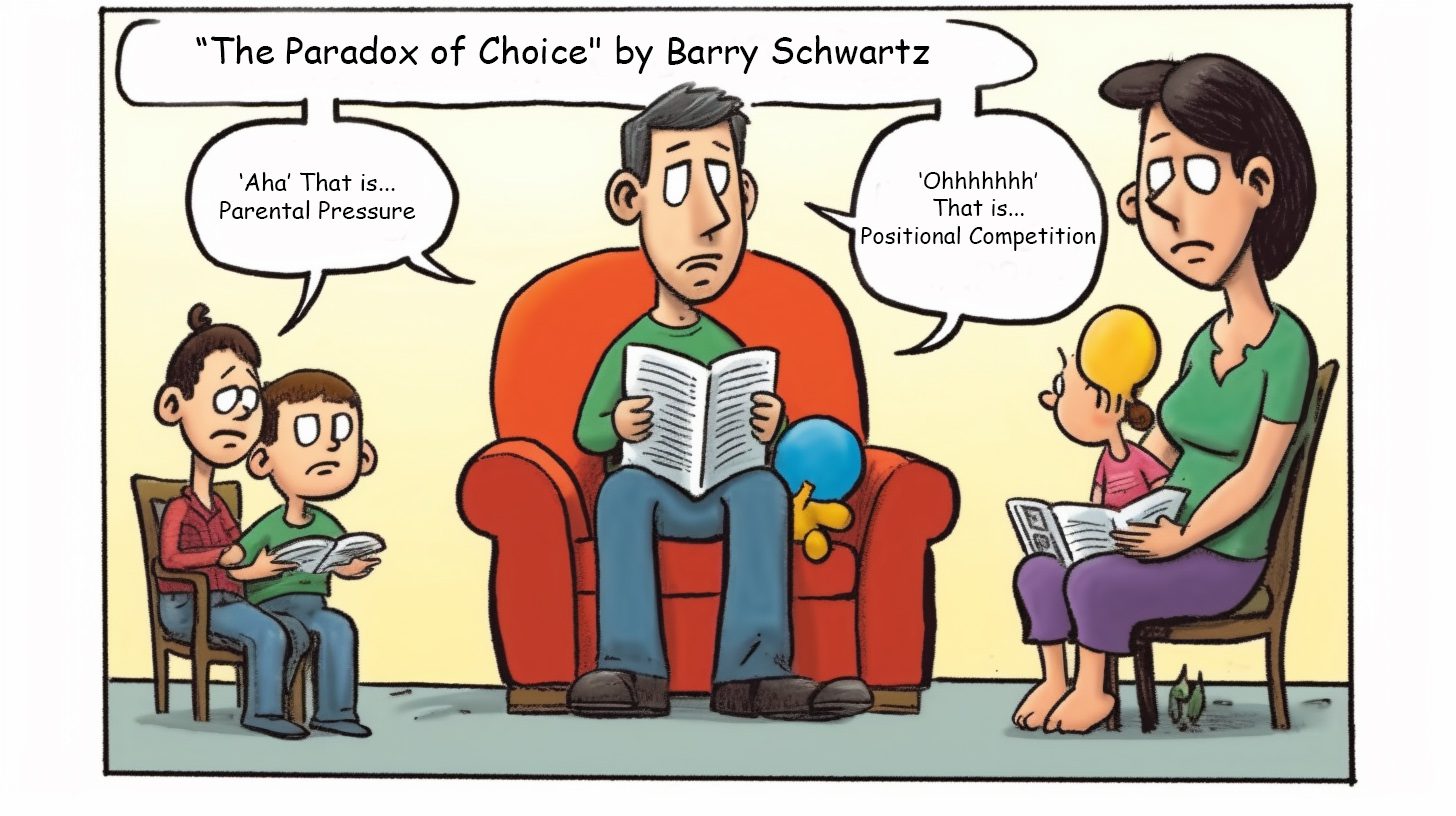
Parental burnout is not a failure of character; it is a failure of resource management. When parents attempt to maximize performance across every metric—nutrition, cognitive development, emotional regulation, and extracurricular achievement—they inevitably encounter the law of diminishing returns. In a closed system of finite time and energy, the pursuit of "parental excellence" often results in a negative net ROI for the family unit. To stabilize the domestic ecosystem, parents must transition from a strategy of total optimization to one of intentional underachievement in low-leverage areas.
The Marginal Utility of Parental Effort
The relationship between parental input and child outcomes is non-linear. In the early stages of development, basic inputs such as caloric stability, safety, and consistent presence yield massive developmental gains. However, as the baseline of safety and "good enough" care is met, the curve flattens.
The final 10% of "perfect" parenting—hand-making every organic meal, Curating 24/7 educational play, or managing a rigorous multi-sport schedule—requires 90% of a parent's remaining cognitive bandwidth. This disproportionate allocation of resources creates a fragile system. When a parent operates at 100% capacity, any external shock (illness, professional crisis, financial stress) triggers a total system collapse because there is zero "buffer" or slack in the schedule.
The Cost Function of High-Pressure Parenting
Every minute spent micro-managing a child’s environment carries an opportunity cost. This cost is typically extracted from the parent’s own physiological and psychological reserves. We can quantify the degradation of the family unit through three primary cost centers:
- Cognitive Load and Decision Fatigue: The mental labor of tracking every milestone and scheduling every enrichment activity depletes the prefrontal cortex. This leads to increased irritability and decreased emotional regulation, meaning the "perfect" parent is paradoxically more likely to snap at their child.
- Relational Friction: When parenting becomes a series of performance benchmarks, the parent-child relationship shifts from a supportive bond to a manager-subordinate dynamic. This increases resistance from the child and decreases the long-term influence of the parent.
- The Modeling Effect: Children learn through observation more than instruction. A parent who is perpetually stressed, over-extended, and obsessed with optimization models a life of anxiety. By "underachieving," a parent models boundaries, prioritization, and sustainable living.
Strategic Underachievement: The Three Pillars of Selective Neglect
To implement a sustainable domestic strategy, a parent must categorize tasks based on their impact-to-effort ratio. Strategic underachievement involves identifying "low-leverage" activities and intentionally performing them at a "C-grade" level to preserve resources for "high-leverage" interactions.
I. Outsourcing and Automation
The goal is to minimize the number of low-value decisions made daily. This includes:
- Uniformity in Nutrition: Reducing meal complexity to a rotating five-day cycle minimizes grocery logistics and preparation time.
- The "Good Enough" Standard for Domestic Maintenance: A house that is sanitary but cluttered is a functional trade-off for a parent who chooses thirty minutes of rest over thirty minutes of organizing.
II. Activity Pruning
The modern "achievement culture" dictates that children should be involved in multiple organized sports or arts programs. However, the logistical burden of transportation and the financial strain often outweigh the developmental benefits. A leaner schedule—one activity or even zero organized activities for a season—restores "white space" to the family calendar. This white space allows for spontaneous, low-pressure play, which has been shown to be more effective for developing executive function than structured, adult-led activities.
III. Emotional De-escalation
Underachieving in "discipline" does not mean a lack of boundaries; it means choosing not to engage in every power struggle. A rigorous analyst recognizes that not every behavior requires a "teachable moment." By ignoring minor infractions or non-dangerous non-compliance, a parent preserves their emotional capital for significant safety or moral issues.
The Resilience of the "Buffer" System
In engineering, a buffer is a component that helps a system resist changes in pressure or demand. In a family, the parent is the primary buffer. If the parent is exhausted, the buffer is gone.
By lowering the performance bar in non-essential categories, the parent creates a surplus of energy. This surplus acts as insurance. When a child experiences a genuine crisis—a social setback at school or a health issue—the "underachieving" parent has the capacity to pivot and provide intense support. The "overachieving" parent, already at their breaking point, has nothing left to give, leading to a secondary crisis of parental burnout.
The Economic Case for "C-Grade" Domesticity
If we view the home as a production unit, the primary "product" is a well-adjusted, resilient child capable of independent function.
Counter-intuitively, high-intensity parenting can hinder this goal. Over-functioning parents create under-functioning children. When every obstacle is cleared and every schedule is managed by the parent, the child fails to develop the "frustration tolerance" necessary for adulthood. By doing less, the parent forces the child to do more, facilitating the development of self-efficacy.
The move to underachieve is not an admission of defeat; it is a tactical retreat to higher, more defensible ground. It is an acknowledgment that human capacity is finite and that the most valuable asset a child has is a parent who is present, regulated, and not perpetually on the verge of a breakdown.
Re-evaluating Success Metrics
Traditional metrics of "good parenting" are often visible and external: a clean home, an honor roll child, a curated social media presence. These are vanity metrics. They do not correlate with long-term psychological health or family stability.
A more robust set of metrics includes:
- Parental Sleep Quality: A direct proxy for system stress.
- Frequency of Unstructured Play: A metric for cognitive development and creative freedom.
- Reactive vs. Proactive Interactions: The ratio of "stop doing that" to "tell me more about that."
The Strategic Play
Identify the top three sources of logistical stress in the current weekly schedule. Assign each a value based on its long-term impact on the child's character or safety. If an activity ranks low on impact but high on stress, reduce the effort allocated to it by 50% immediately. Use the reclaimed time for physiological recovery. Repeat this audit quarterly. The objective is not to be a better parent through more effort, but to be a more effective parent through higher quality, lower frequency interventions.
Move the baseline from "optimization" to "sustainability." The family unit is a marathon, not a sprint, and the current pace of high-intensity parenting is leading to mass attrition. Recalibrate the output requirements to ensure the primary operator survives the journey.