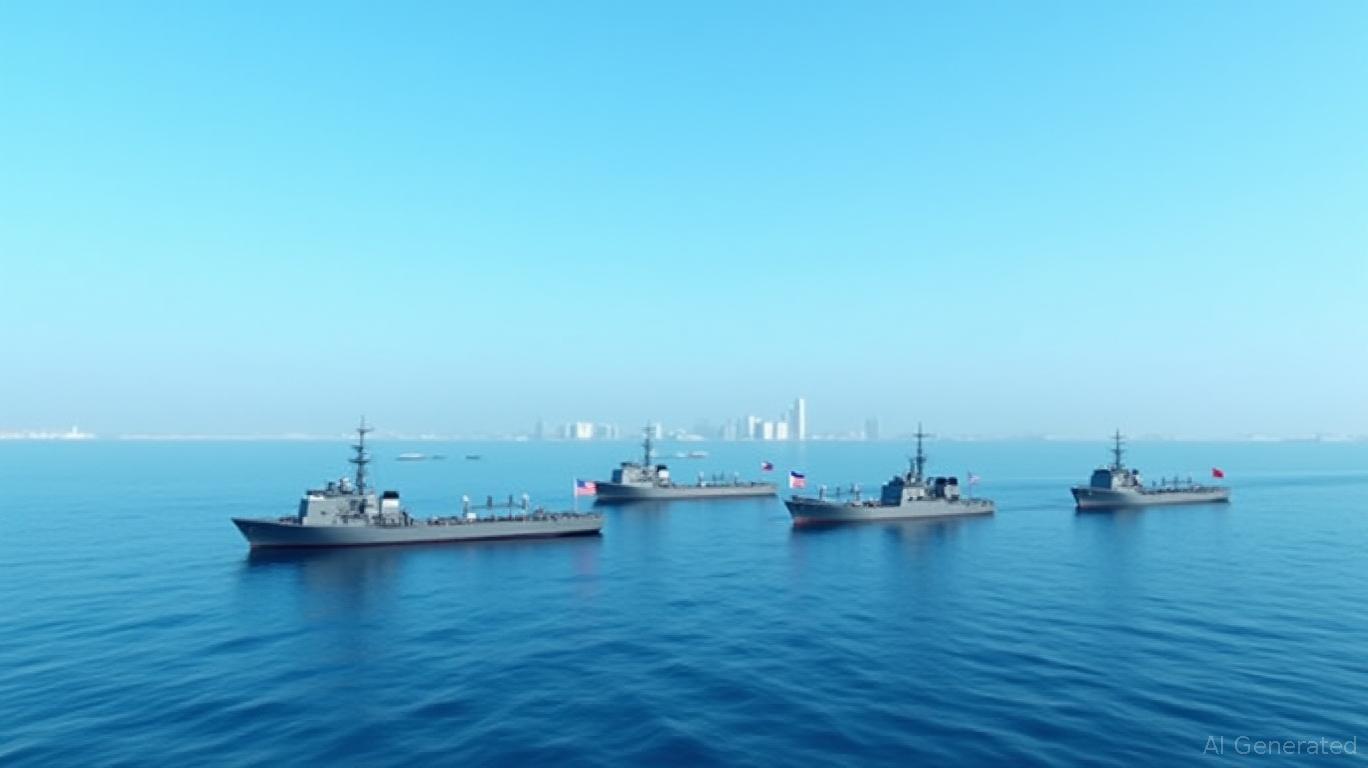
The Philippine Sea is currently the most crowded patch of water on the planet, and the stakes involve far more than fishing rights or disputed sandbars. As the United States and Philippine forces launch their most sophisticated combat drills to date, the objective has shifted from simple coastal defense to a high-tech, multi-domain strategy designed to check China’s maritime expansion. This is no longer just about showing the flag. It is a fundamental rewiring of the regional security architecture, centered on the deployment of mid-range missile systems and rapid-response logistics that could effectively bottle up the People’s Liberation Army (PLA) within the first island chain.
The End of Strategic Ambiguity
For decades, the alliance between Washington and Manila was a sleepy affair, defined by counter-terrorism cooperation in the southern islands and occasional disaster relief. Those days are gone. Under the current administration in Manila, the Enhanced Defense Cooperation Agreement (EDCA) has been accelerated to a degree that caught Beijing off guard.
The core of the current tension lies in the shift from "internal security" to "territorial defense." The Philippines is no longer just hunting insurgents in the jungle; it is preparing for high-intensity naval and aerial warfare. By allowing the U.S. military access to sites facing the South China Sea and the Taiwan Strait, Manila has effectively turned its archipelago into a series of "unsinkable aircraft carriers."
The Missile in the Room
Beijing’s primary grievance isn't the number of sailors involved in these drills. It is the hardware. The recent introduction of the Typhon missile system—a land-based launcher capable of firing Tomahawk cruise missiles—onto Philippine soil represents a tectonic shift in the balance of power.
From a tactical standpoint, placing these systems in the northern Philippines puts Chinese military installations in the Spratly Islands and even parts of the Chinese mainland within striking distance. This creates a "no-go zone" for Chinese vessels. It is a classic anti-access/area-denial (A2/AD) strategy, but this time, the U.S. is using China’s own playbook against it.
Breaking the First Island Chain
The geography here is unforgiving. If you look at a map, the Philippines sits like a cork in a bottle. To reach the open Pacific, the Chinese navy must pass through narrow straits. By reinforcing these chokepoints with mobile missile batteries and advanced radar, the U.S.-Philippine alliance is making it clear that those exits can be closed at a moment's notice.
- Luzon Strait Access: Control over this waterway is vital for any potential conflict involving Taiwan.
- Subic Bay Revival: The logistical footprint in this deep-water port allows for sustained operations far from the U.S. mainland.
- Cyber Integration: These drills now include significant components of electronic warfare, designed to blind Chinese sensors before a single kinetic shot is fired.
Why Beijing Cannot Back Down
To understand the Chinese reaction, one must look at their "Blue National Territory" doctrine. Beijing views the South China Sea not as international waters, but as a domestic maritime province. Every joint exercise between the U.S. and its allies is viewed by the Communist Party as a direct violation of their sovereignty and a containment strategy meant to stunt their rise.
However, the "wolf warrior" diplomacy of the past five years has largely backfired. By harassing Philippine resupply missions at Second Thomas Shoal with water cannons and military-grade lasers, China has inadvertently pushed Manila closer to Washington. The result is a self-fulfilling prophecy where China’s attempts to secure its perimeter have led to a massive increase in the U.S. military presence it sought to avoid.
The Technology Gap and the Grey Zone
Modern warfare in the Pacific is less about sinking ships and more about controlling the "Grey Zone"—the space between peace and open conflict. China has mastered this by using its Coast Guard and maritime militia (fishing boats that act as paramilitary units) to bully neighbors without triggering a formal military response.
The counter-strategy being tested now involves "Transparent Defense." The Philippines, supported by U.S. intelligence, surveillance, and reconnaissance (ISR) assets, is filming every encounter. They are winning the information war by showing the world the David-vs-Goliath reality of the South China Sea.
The Cost of Readiness
Maintaining this level of alert is not cheap. The Philippine defense budget has seen significant hikes, but they are still outspent by China by a ratio of nearly 50 to 1. This is where the U.S. Indo-Pacific Command steps in.
The financial and material support from the U.S. isn't just charity; it’s an investment in a frontline state. The current drills focus on "interoperability," a military term for making sure everyone’s radios, data links, and weapons systems speak the same language. If a conflict breaks out, the Philippine military will function as a specialized component of a much larger American machine.
Overlooked Factors The Economic Backdoor
While the headlines focus on missiles and destroyers, the real vulnerability might be economic. China remains one of the Philippines' largest trading partners. There is a quiet, desperate struggle within the Philippine elite between those who prioritize security and those who fear losing Chinese investment.
Beijing knows this. They have mastered the art of "economic coercion," threatening to cut off banana imports or throttle tourism when Manila gets too cozy with Washington. If China decides to squeeze the Philippine economy, the U.S. will have to do more than provide ships; it will have to provide markets. Without an economic component, the military alliance sits on a shaky foundation.
The Taiwan Connection
We cannot talk about the Philippines without talking about Taiwan. The northernmost Philippine islands are less than 100 miles from Taiwan’s southern tip. In any scenario where China moves against Taipei, the Philippines becomes the most important piece of real estate on the map.
The U.S. military is currently upgrading airfields and fuel storage facilities in these northern provinces. The goal is "Agile Combat Employment"—the ability to disperse aircraft across many small, austere runways rather than keeping them on a few large, vulnerable bases. It is a shell game played with multi-million dollar fighter jets.
The Risks of Escalation
Is there a danger that these drills could spark the very war they are meant to prevent? Absolutely.
Military history is littered with "accidental" wars started by a nervous captain or a miscommunicated order during a high-stakes exercise. The South China Sea is now a theater of "close encounters." When Chinese and American jets fly within feet of each other, the margin for error disappears.
A New Regional Reality
Japan and Australia are also joining the fray. We are seeing the birth of a "mini-lateral" security framework. No longer relying on a single large treaty like NATO, the U.S. is stitching together a web of smaller, more flexible alliances.
This "latticework" approach makes it much harder for China to isolate any single country. If you touch the Philippines, you are now dealing with Tokyo and Canberra as well. This collective defense is the only thing currently preventing a total Chinese takeover of the regional waterways.
The era of the South China Sea as a "Chinese Lake" is being challenged by a coalition that has finally found its backbone. The current drills are the physical manifestation of that resolve. They represent a bet that the cost of conflict is now so high that even Beijing will think twice before trying to change the status quo by force.
The archipelago is no longer just a collection of islands; it is the front line of a global power struggle that will define the next century. The ships are in the water, the missiles are in their tubes, and the world is watching to see who blinks first.