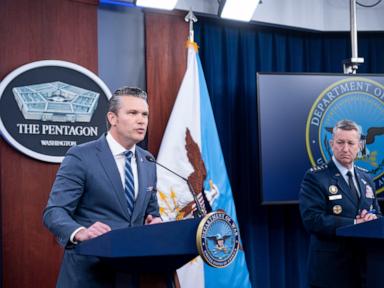
The Senate Armed Services Committee is preparing for a confirmation hearing that has shifted from a standard political skirmish into a high-stakes interrogation on the mechanics of modern warfare. When Pete Hegseth sits before the panel, he won't just be answering for his resume or his past commentary. He will be forced to defend a strategic vision for a Department of Defense that is currently managing a direct, kinetic conflict with Iran. This is no longer a theoretical debate about "forever wars." It is a granular discussion about carrier strike groups, missile defense interception rates, and the very real possibility of a regional escalation that could draw the United States into a decade-long quagmire.
The Shift from Punditry to Pentagon Reality
For years, Hegseth built a brand on criticizing the "managerial class" of the military. He argued for a leaner, more aggressive force that prioritizes lethality over bureaucracy. That rhetoric works well on a television set, but it hits a hard wall when it meets the current reality of CentCom operations. The United States is currently engaged in a high-intensity maritime campaign in the Red Sea and responding to ballistic missile volleys from Iranian territory. Meanwhile, you can read related stories here: The Maldives Pivot and the Brutal Reality of Indian Ocean Neutrality.
Senators from both sides of the aisle are expected to move past the cultural grievances that dominated the early news cycle regarding his nomination. They want to know if a man who has never managed a budget larger than a small nonprofit can oversee a $850 billion enterprise while the proverbial "check engine" light is flashing on the American security umbrella in the Middle East. The fundamental question isn't whether Hegseth is loyal to the administration, but whether he understands the logistical nightmare of maintaining a surge in the Persian Gulf without hollowing out our Pacific readiness.
The Iran Problem is No Longer Contained
The central tension of this hearing will be the "maximum pressure" campaign 2.0. In his previous role as a commentator, Hegseth frequently advocated for a hardline stance against Tehran, suggesting that American restraint had been interpreted as weakness. Now, as the prospective Secretary of Defense, he must reconcile that hawkishness with the reality of an overstretched Navy and a depleted stockpile of interceptor missiles. To see the full picture, check out the excellent analysis by NBC News.
Military analysts are quietly pointing to the "interceptor gap." Every time the U.S. shoots down a $20,000 Iranian-made drone with a $2 million missile, the math of attrition moves against Washington. Hegseth will be asked how he plans to break this cycle. If his answer is simply "more aggression," he will likely face pushback from career military officers who worry about the lack of a clear exit strategy or a defined political end-state.
Hard Questions on Personnel and Command
Beyond the immediate conflict, the committee will dig into Hegseth’s plans for the Joint Chiefs of Staff. There has been significant talk about a "warrior board" designed to prune the ranks of general officers deemed too focused on social issues. In a time of war, or near-war, decapitating the leadership of the various branches is a move fraught with peril.
The defense establishment views this as a potential purge that could shatter institutional knowledge at the exact moment it is needed most. Hegseth will need to convince the skeptics that his desire to reform the military won't result in a hollowed-out command structure that is unable to respond to a multi-front crisis. He has to prove he can distinguish between a "woke" policy he dislikes and a vital operational capability he might not yet fully understand.
The Industrial Base and the Long Game
We are seeing the limits of the American defense industrial base in real-time. The conflict with Iran has exposed the fact that we cannot produce munitions fast enough to keep up with a sustained engagement. Hegseth has talked a big game about cutting "wasteful" spending, but the committee will demand specifics.
- Which programs get the axe to fund the massive increase in missile production?
- How does he intend to bypass the years of litigation and red tape that currently stall shipyard expansions?
- Can he manage the complex relationship with defense contractors who have a stranglehold on the supply chain?
These are not ideological questions. They are practical, boring, and absolutely vital to national survival. A Secretary of Defense who treats the Pentagon like a theater for cultural battles will find themselves overwhelmed by the sheer weight of the procurement process.
The Ghost of 2003
There is a palpable fear in the halls of the Senate that the current trajectory mirrors the lead-up to the Iraq War. The intelligence coming out of the region is murky, the alliances are shifting, and the rhetoric is heating up. Hegseth’s past statements suggesting that a conflict with Iran might be inevitable will be used against him. He will be pressured to define what a "win" looks like.
If the goal is regime change, the cost is unthinkable. If the goal is containment, the current strategy is failing. Hegseth must provide a third option that doesn't involve another trillion-dollar commitment in the desert. He needs to show a level of nuance that hasn't been present in his public persona to date.
The reality is that the Pentagon is a massive, slow-moving beast. It resists change by its very nature. Hegseth is entering the building with a mandate to break things, but he is doing so while the building is already under fire. The Senate will decide if he is the man to lead the repair crew or if he’s just bringing more matches to a room full of gasoline.
Hegseth’s performance will be judged on his ability to pivot from the simplified world of cable news to the agonizingly complex world of geopolitical chess. The time for slogans is over. The time for a coherent, sustainable defense strategy is long overdue.
Expect the committee to focus heavily on the "Rules of Engagement." There is a growing movement within the incoming administration to loosen these rules to allow for more decisive action against Iranian proxies. However, veteran commanders warn that loosening these rules without a clear diplomatic path often leads to "mission creep," where tactical successes lead to strategic failures. Hegseth will be forced to go on the record regarding where he draws the line between "decisive force" and "uncontrolled escalation."
The hearing will also serve as a litmus test for the Republican party’s own internal divide. On one side, you have the traditional hawks who want a massive military presence everywhere. On the other, the "America First" isolationists who want to pull back and focus on the border. Hegseth sits at the uncomfortable intersection of these two groups. He wants a powerful military, but he claims he wants to use it less. In the middle of an active conflict with Iran, he can't have it both ways.
Watch the exchange between Hegseth and the more seasoned members of the committee, particularly those who have served in combat. There is a specific language spoken in those circles—a language of logistics, casualty estimates, and terrain. If Hegseth speaks in generalities and talking points, he will be eaten alive. If he demonstrates a mastery of the theater’s specific challenges, he might just pull it off.
The stakes could not be higher. This is the first time since the Vietnam era that a nominee for Secretary of Defense has faced a confirmation process while the nation is so close to a full-scale regional war. The margin for error has evaporated. Every word Hegseth utters during this "grilling" will be analyzed not just by the senators in the room, but by the leadership in Tehran, Moscow, and Beijing. They are looking for signs of a distracted, divided, or incompetent American military leadership.
Stop looking at the tattoos. Stop looking at the Fox News clips. Start looking at the map of the Strait of Hormuz and the inventory lists of our carrier groups. That is where this hearing will be won or lost.