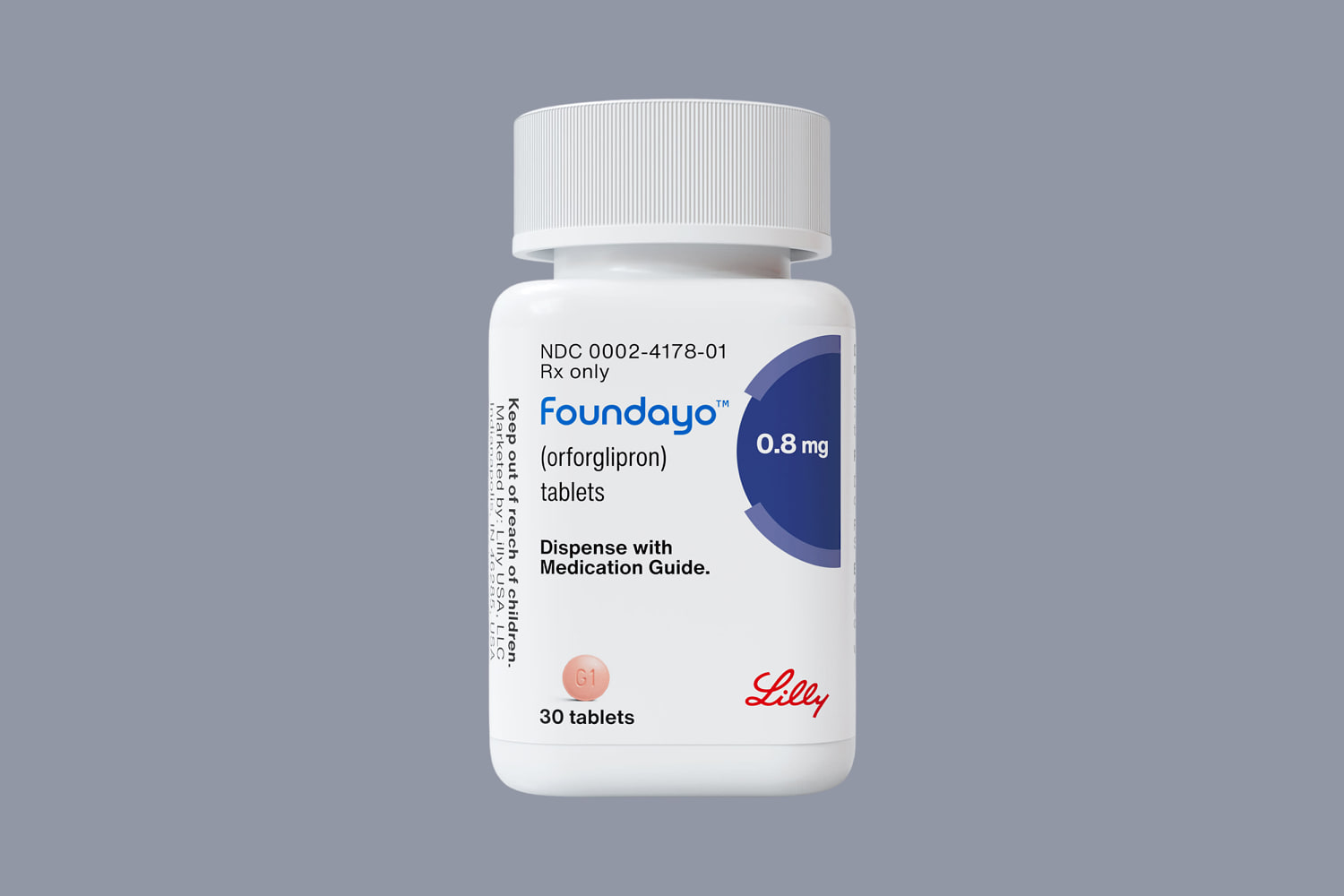
The current friction between the Food and Drug Administration (FDA) and the pharmaceutical industry is not a matter of bureaucratic whim, but a structural failure in the alignment of clinical trial design and regulatory evidentiary standards. When the FDA denies a New Drug Application (NDA) or a Biologics License Application (BLA), it is rarely a critique of the molecule’s theoretical potential. Instead, it is a formal declaration that the data provided has failed to cross the threshold of "substantial evidence" of effectiveness as defined by the 1962 Kefauver-Harris Amendment. This tension has reached an inflection point because the industry is moving toward personalized medicine and orphan drugs, where traditional large-scale, randomized controlled trials (RCTs) are often logistically impossible, yet the regulatory framework remains anchored in population-level statistical significance.
The Triad of Rejection: The Structural Causes of Non-Approval
Analyzing recent high-profile Complete Response Letters (CRLs) reveals that denials cluster into three distinct logical failures. Identifying which "pillar" a drug falls under is the first step in diagnosing why a promising therapy fails to reach the market.
1. The Surrogate Endpoint Gap
A surrogate endpoint is a laboratory measurement or physical sign used as a substitute for a clinically meaningful endpoint, such as feeling better or living longer. The FDA’s Accelerated Approval Program allows these endpoints, but the logic often breaks down when the correlation between the surrogate (e.g., reduction in a specific protein) and the clinical benefit (e.g., improved mobility) is not "reasonably likely" to predict success. If a company spends $500 million proving it can clear amyloid plaques but cannot prove this clearing slows cognitive decline, the FDA is legally obligated to deny or restrict the drug to prevent "regulatory creep"—where the standard of evidence is lowered to the point of meaninglessness.
2. CMC and Manufacturing Fidelity
Chemistry, Manufacturing, and Controls (CMC) issues are the invisible killers of drug approvals. Even if a drug shows a 40% improvement in survival, a denial is inevitable if the applicant cannot prove the drug can be manufactured consistently at scale. This is particularly acute in Cell and Gene Therapy (CGT). Unlike small molecules (aspirin), which are chemically synthesized, biologics are "grown" in living cells. The complexity of maintaining sterile, consistent batches across different manufacturing sites often leads to "refusal to file" or CRLs based on purity, potency, or stability concerns.
3. The Statistical Fragility of Subgroup Analysis
When a primary endpoint fails in a Phase 3 trial, sponsors often hunt for a "responder" subgroup (e.g., "the drug worked for women over 50 with a specific biomarker"). The FDA viewed this practice—known as "P-hacking" or data dredging—with extreme skepticism. Unless the subgroup was pre-specified in the statistical analysis plan before the trial began, the FDA treats these results as hypothesis-generating, not confirmatory.
The Cost Function of Regulatory Uncertainty
The economic impact of an FDA denial extends far beyond the immediate loss of projected revenue. It triggers a cascade of capital reallocation that shifts the entire biotech ecosystem toward lower-risk, incremental "me-too" drugs rather than high-risk, high-reward innovations.
- Valuation Compression: A CRL typically results in a 30% to 70% overnight drop in a biotech's market capitalization. This isn't just a loss for shareholders; it’s a signal to venture capital that the "regulatory risk premium" for that specific therapeutic class has increased.
- The Opportunity Cost of Capital: When a drug is denied after ten years of development, the $2.6 billion average cost of bringing a drug to market (accounting for failures) must be recouped by the remaining pipeline. This forces companies to hike prices on existing drugs to subsidize the sunk costs of the rejected ones.
- Talent Attrition: Repeated denials in a specific field—such as Alzheimer’s or certain oncology niches—drive the best researchers toward fields with clearer regulatory pathways, creating a self-fulfilling prophecy of stagnation in "difficult" disease states.
The Bayesian Conflict: Why Regulators and Patients Disagree
The "Upset" cited in the current discourse stems from a fundamental divergence in how risk is calculated. Patients with terminal or rare diseases operate under a Bayesian framework of desperate utility. To a patient with a 100% mortality rate, even a drug with a 10% chance of working and a 20% chance of severe side effects has a positive net utility.
The FDA, however, operates under a Frequentist framework of public safety. Their mandate is to ensure that the drug's benefit outweighs its risk for the entire population indicated on the label. If the FDA approves a drug based on weak data to satisfy a vocal patient group, they risk a "Type I Error"—approving a drug that is actually ineffective or harmful. The long-term cost of a Type I error is the erosion of public trust in the entire medical system, which outweighs the short-term benefit to a specific patient group.
The Mechanism of the "Complete Response Letter"
A CRL is not a permanent "No," but a roadmap for remediation. However, the requirements for remediation are often prohibitively expensive.
- Request for New Clinical Trials: If the FDA deems the existing data "insufficiently robust," they may demand a new Phase 3 trial. This typically requires another three to five years and $100 million to $300 million in funding. For a pre-revenue biotech, this is effectively a death sentence.
- Safety Signals and REMS: Sometimes the efficacy is clear, but the safety profile requires a Risk Evaluation and Mitigation Strategy (REMS). This adds operational complexity to the drug’s rollout, requiring specialized training for doctors or mandatory patient registries.
- Post-Marketing Requirements (PMRs): For drugs approved under the accelerated pathway, the FDA can mandate Phase 4 trials. If these trials fail to confirm clinical benefit, the FDA now has streamlined authority to pull the drug from the market, as seen with several recent oncology indications.
Logical Framework for Pipeline Optimization
To mitigate the risk of denial, pharmaceutical strategists must apply a "Regulatory Stress Test" to their pipeline. This involves quantifying three variables:
- P(s): Probability of technical success (the drug works in the lab).
- P(reg): Probability of regulatory alignment (the FDA accepts the endpoint).
- P(m): Probability of market access (insurers will pay for it).
Most failures occur because companies over-index on P(s) while ignoring the volatility of P(reg). Regulatory alignment is a moving target; as new technologies like CRISPR or mRNA emerge, the FDA must write the rulebook in real-time. Companies that engage in early and frequent "Type B" meetings with the FDA are statistically more likely to avoid CRLs because they co-create the evidentiary standard with the regulator.
The Shift Toward Real-World Evidence (RWE)
The use of Real-World Evidence—data gathered from electronic health records, insurance claims, and wearable devices—represents the most significant shift in regulatory logic since the 1960s. RWE can provide a "synthetic control arm" for rare diseases where a placebo group would be unethical or impossible to recruit. However, the data must be rigorously curated. The FDA’s primary concern with RWE is the lack of "data hygiene"—the potential for bias, missing entries, and the absence of blinding.
For a drug developer, the strategic use of RWE isn't just about proving efficacy; it’s about proving "value" in a crowded market. If a new drug is denied because it isn't "better" than a generic, the company has failed to understand the shifting landscape of comparative effectiveness.
Strategic Play: The Regulatory Diversification Model
The era of the "blockbuster or bust" clinical trial is ending. To survive an environment of increased regulatory scrutiny, developers must pivot toward a modular clinical strategy.
Instead of a single, massive Phase 3 trial, developers should execute a "Master Protocol" approach. This allows for multiple sub-studies under one umbrella, testing the drug in different populations or in combination with other therapies. This creates "internal hedges"—if the drug fails in one subgroup, the data from others may still support a narrower approval.
Simultaneously, the manufacturing process must be "de-risked" by investing in Quality by Design (QbD) early in Phase 1. By the time a drug reaches the FDA's desk, the CMC section should be the most boring part of the application. High-impact denials are often avoidable results of cutting corners in manufacturing to save capital for clinical trials. The strategic play is to treat the FDA not as an adversary to be bypassed, but as a critical stakeholder whose evidentiary needs are the primary constraint on the drug's design. The "upset" over denials is a symptom of a failure to respect this constraint.