The fluorescent lights of a modern hospital wing have a way of bleaching the color out of everything—the skin, the spirit, and the truth. If you sit in a waiting room long enough, you’ll see a familiar parade. It is a procession of the "managed." These are people whose heartbeats are sustained by tiny orange plastic bottles, whose blood sugar is a math problem they are failing to solve, and whose joints ache with the silent fire of systemic inflammation.
We call this healthcare. But for many, it is merely a high-tech holding pattern.
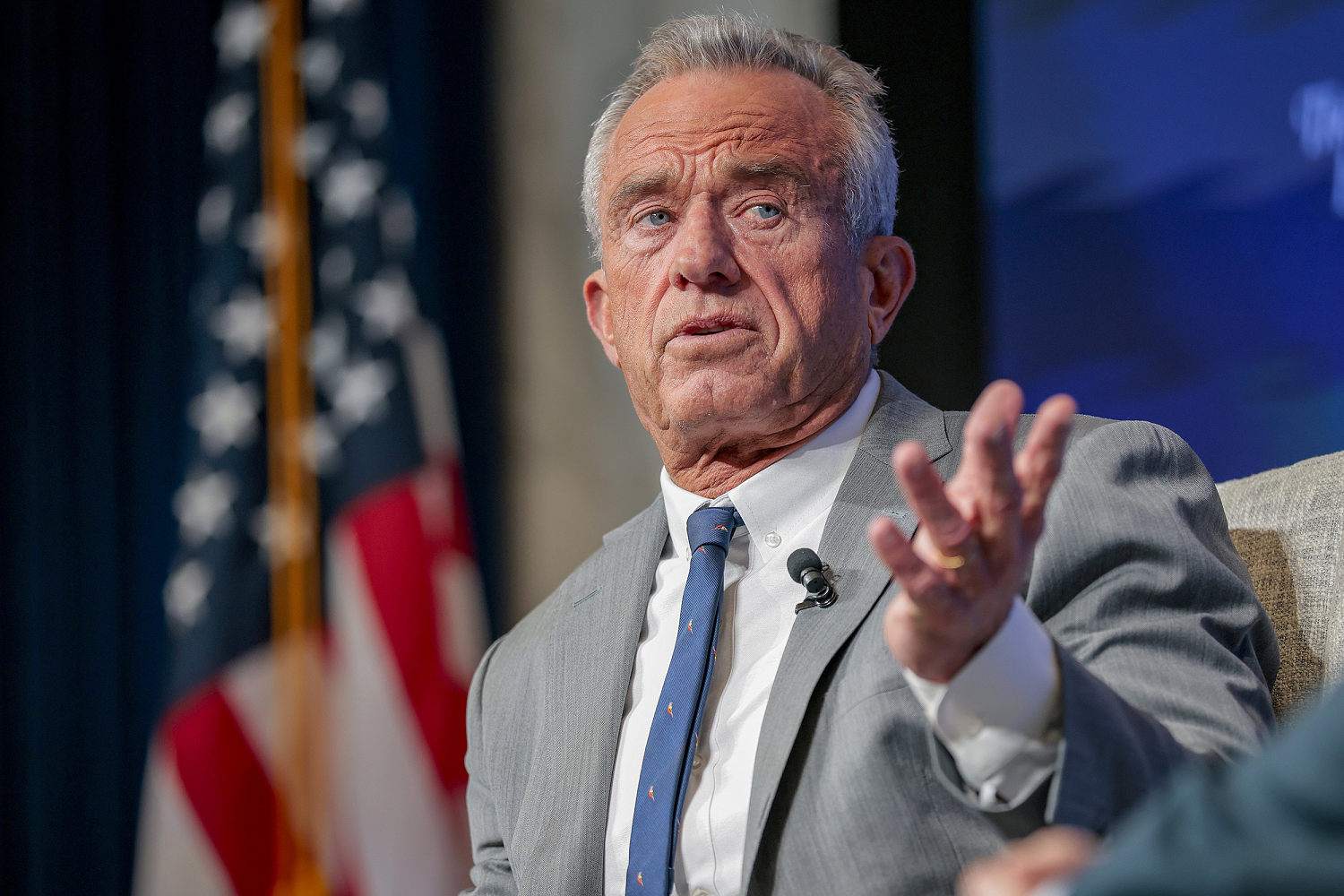
Robert F. Kennedy Jr. recently stepped onto a stage to point at a glaring, almost absurd hole in the American medical soul. He isn't just talking about policy; he is talking about the dinner plate. He is pushing for a fundamental shift in how we train the gatekeepers of our vitality. He wants doctors to actually understand food.
It sounds like common sense. It feels like a revolution.
The Architect Who Doesn’t Know Bricks
Imagine a hypothetical student named Sarah. She is brilliant. She survived the grueling gauntlet of organic chemistry, crushed the MCATs, and spent four years in a sleep-deprived haze of anatomy labs and pathology lectures. She can trace the most obscure metabolic pathways of a rare genetic disorder. She can recite the contraindications for a third-generation cephalosporin without blinking.
But when a patient sits across from her and asks, "What should I eat to stop this pre-diabetes from becoming a life sentence?" Sarah feels a cold prickle of sweat.
In her entire medical education, Sarah likely received fewer than twenty hours of nutrition instruction. Often, it was closer to zero. She was taught how to identify a fire and how to spray it with a chemical extinguisher. She was never taught how to stop the house from being made of tinder.
This isn't Sarah’s fault. It is a systemic failure of the blueprint. We are graduating "health architects" who have never been taught the properties of the bricks and mortar.
The statistics are not just numbers; they are a ledger of national exhaustion. Chronic diseases—type 2 diabetes, obesity, hypertension, and heart disease—account for nearly 90 percent of the $4.5 trillion the United States spends annually on healthcare. Most of these are, at their core, metabolic disasters. They are lifestyle ghosts haunting a system designed for acute trauma.
If you get hit by a car, you want a surgeon. If you have a raging infection, you want an antibiotic. But if your body is slowly breaking down because of a forty-year relationship with ultra-processed corn syrup and seed oils, the current medical model mostly offers a way to fail more slowly.
The Invisible Stakes of the Grocery Aisle
There is a quiet tragedy in the way we talk about "dieting." We’ve framed it as a matter of vanity or willpower. We’ve turned it into a hobby for the wealthy or a chore for the disciplined.
The reality is much darker.
Kennedy’s push for nutritional literacy in medical schools is an attempt to address the "poisoning" of the American metabolism. It is a recognition that the grocery store has become a minefield. Consider the average cereal aisle. It is a kaleidoscope of bright colors and cartoon mascots, all masking products that are essentially pre-digested starches and industrial sugars.
When a doctor doesn't understand the biochemical impact of these foods, they cannot advocate for the patient. They become, however unintentionally, a de facto salesperson for the pharmaceutical industry.
Take the case of a man we’ll call David. David is fifty, tired, and twenty pounds overweight. His blood pressure is creeping up. His doctor, following the "standard of care," prescribes a statin and a blood pressure medication. These drugs work. The numbers on the chart go down. The doctor checks a box.
But David’s underlying biology hasn't changed. He is still inflamed. His insulin levels are still a roller coaster. Because his doctor wasn't trained to deconstruct David's breakfast or explain how fiber acts as a protective shield for his gut microbiome, David remains a "customer" of the medical system until the day he dies.
He is managed. He is not healed.
The Great Disconnect
Why is there such resistance to teaching nutrition? Why does the suggestion feel like an attack on the scientific establishment?
Part of it is the sheer momentum of the status quo. Medical schools are funded, in part, by research grants and partnerships that favor the "pill for an ill" narrative. There is no patent on broccoli. There is no massive lobbying group for the absence of sugar.
But there is also a deeper, more philosophical disconnect. We have been conditioned to view the human body as a machine with discrete parts. If the pump (the heart) is struggling, we fix the pump. We forget that the pump is submerged in a chemical bath dictated by what we swallow three times a day.
The science is catching up, even if the curriculum isn't. We now know that the gut microbiome—the trillions of bacteria living in your digestive tract—functions almost like a separate organ. It regulates your immune system, produces neurotransmitters like serotonin, and determines how you store fat.
When a doctor doesn't know how to advise a patient on feeding that microbiome, they are practicing medicine with one eye closed. They are ignoring the very foundation of human resilience.
A New Kind of Rounds
What would it look like if Kennedy’s vision took hold?
Picture a medical school where "Clinical Nutrition" isn't an elective that students skip to study for their boards. Picture a residency program where rounds include a trip to the local market, where doctors-in-training learn to read labels with the same scrutiny they apply to an MRI.
Imagine a world where a patient walks in with high cholesterol, and the first "prescription" isn't a chemical compound, but a protocol for systemic repair.
"I want you to eat this, in this order, for these reasons."
There is a profound power in that clarity. It returns agency to the patient. It moves the needle from "What is wrong with you?" to "What can we build together?"
This isn't about being "anti-medicine." It is about being "pro-health." It is about recognizing that the most sophisticated surgical robot in the world is useless if the patient's body has lost the ability to repair its own cells.
The Bitter Pill of Truth
The push for this change is met with eye-rolls from those who believe it’s a distraction from "real" science. They argue that doctors are already overworked, that there isn't enough time in the four-year cycle to squeeze in more lectures.
But we have to ask: what are we prioritizing?
We have time to teach future doctors how to manage the symptoms of a failing society, but we don't have time to teach them how to prevent the failure in the first place? That isn't a lack of time. It is a lack of courage.
Kennedy is tapping into a growing resentment among the public. People are tired of being told they are fine until they are suddenly in a crisis. They are tired of feeling like a collection of symptoms rather than a human being.
The human element is the mother who wants to see her daughter's wedding without needing a walker. It is the young man who wants to focus on his career without the "brain fog" that stems from a diet of processed toxins. It is the elderly couple who wants their golden years to be spent in the garden, not the pharmacy line.
The stakes are not abstract. They are written in the faces of the millions of Americans who are currently "living" but not thriving.
The Cost of Silence
Every year we delay this integration, we pay for it. We pay for it in skyrocketing insurance premiums. We pay for it in lost productivity. Most importantly, we pay for it in the currency of human suffering.
If a doctor can't tell the difference between a calorie that causes a spike in inflammatory cytokines and one that fosters cellular repair, they are missing the most important tool in their kit. They are a mechanic who knows how to change a tire but doesn't know that the car needs oil to run.
It is a strange irony that in our quest for the most advanced, molecular-level interventions, we have ignored the most basic biological truth: we are what we consume.
The movement to change medical education isn't just a policy tweak. It is a reclamation. It is an attempt to pull medicine back from the cold, industrial grip of symptom management and return it to the art of healing.
It starts with a simple, radical realization.
The most important instrument in the hospital isn't the scalpel or the scanner.
It's the fork.