Li Wei stands at the edge of his workstation in a sprawling electronics assembly plant in Shenzhen, his fingers moving with the muscle memory of a decade. He is a small cog in the world’s most massive machine. Around him, the air hums with the electric whine of soldering irons and the rhythmic thud of hydraulic presses. This is where the world’s gadgets are born. But lately, the math of his life—and the math of the factory floor—has stopped making sense.
The spreadsheets arriving at the manager’s office upstairs are flashing red. Factory gate prices are screaming upward at a pace not seen in nearly four years. The Producer Price Index (PPI), the pulse of what it costs to actually make things, has surged by 6.8%. It sounds like a dry statistic from a boardroom briefing. It isn't. It is the sound of the world’s supply chain stretching until the metal groans.
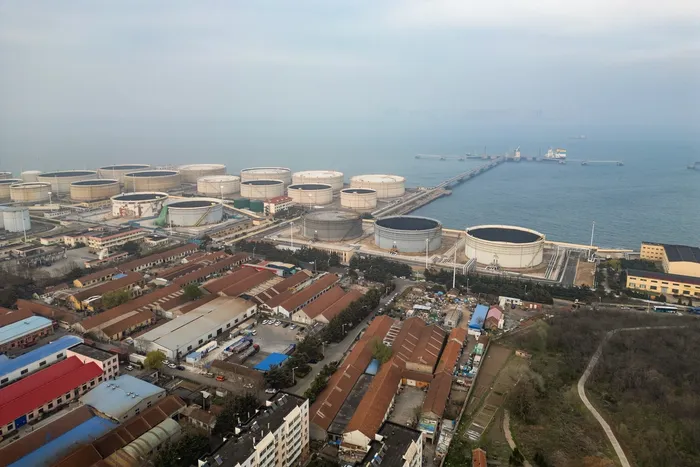
For the bosses, this is a crisis of copper, steel, and oil. The raw materials required to build the modern world have become prohibitively expensive. Global demand for commodities has spiked as the world tries to shake off its slumber, yet the pipes are clogged. Shipping containers are in the wrong ports. Mines are playing catch-up. Because China is the world's workshop, when the cost of coal and iron ore spikes there, the ripples eventually hit a shelf in a suburban big-box store five thousand miles away.
The Invisible Tax on the Floor
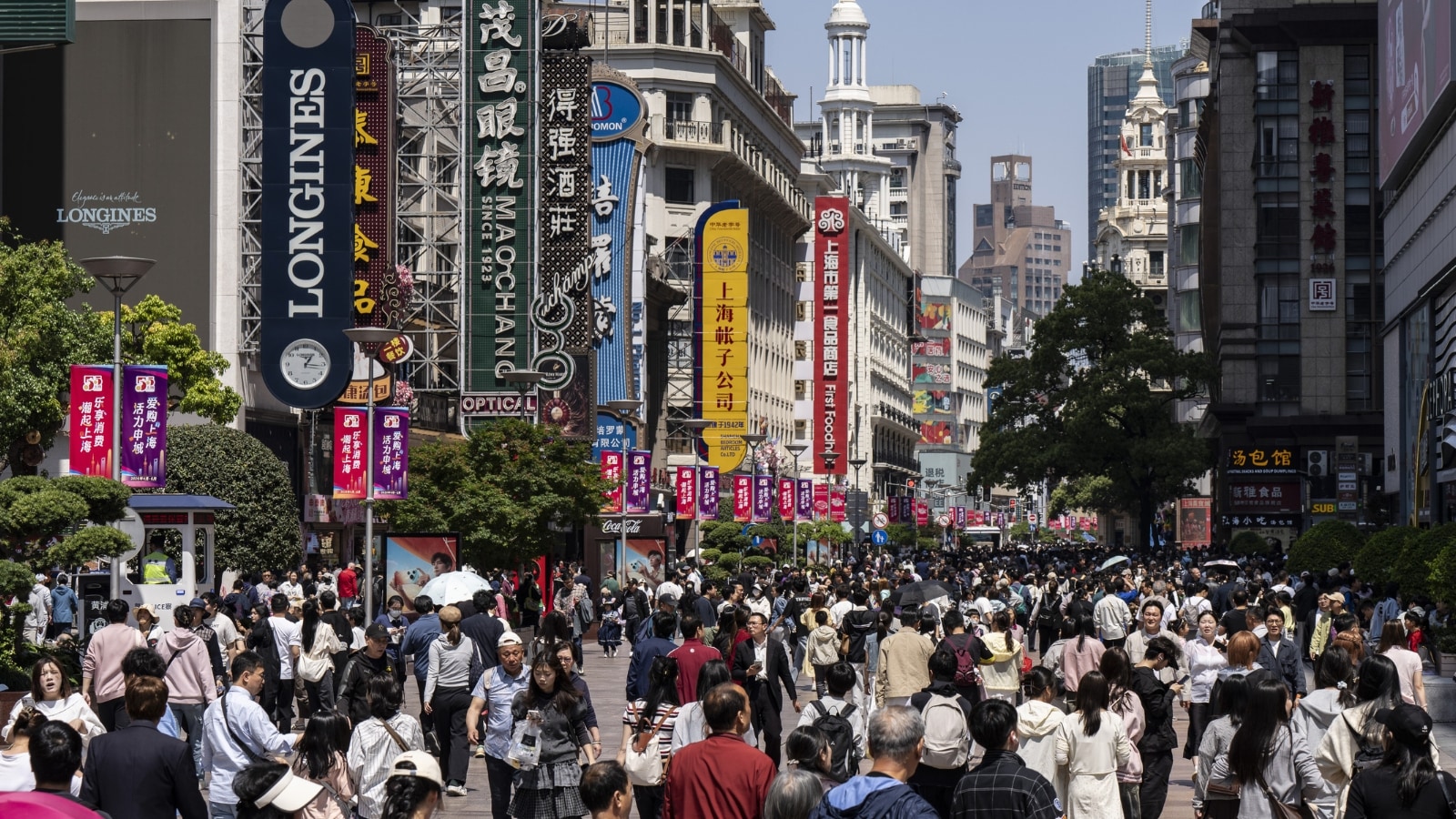
But there is a second story unfolding simultaneously, one that keeps economists awake at night. While the cost of making goods is skyrocketing, the people supposed to buy them are keeping their wallets shut. This is the "tepid domestic demand" the headlines mention so clinically. In reality, it looks like the quiet aisles of the wet market where Li Wei stops on his way home.
He looks at the price of pork. He looks at the price of leafy greens. Then he looks at his paycheck.
The factory is paying more for everything—electricity, raw circuit boards, logistics—but it cannot easily pass those costs on to the consumer. If they raise the price of a smartphone or a toaster too sharply, the already hesitant shoppers will simply walk away. This leaves the manufacturers caught in a brutal vice. Their margins are being crushed into dust. When margins disappear, raises disappear. When raises disappear, Li Wei buys fewer groceries.
The cycle is a closed loop of hesitation.
A Tale of Two Inflations
We often talk about inflation as a single monster, but right now, it is a hydra. There is the inflation of "stuff"—the raw materials being traded in Chicago and Shanghai—and then there is the inflation of "living." In the factory zones of Guangdong, these two forces are colliding in a way that defies standard logic.
Usually, when factory prices go up, it means the economy is white-hot. It suggests that demand is so high that suppliers can’t keep up, leading to a healthy, if fast-paced, growth. But that isn't what is happening here. This is "cost-push" inflation. It’s the expensive kind. It’s the kind that doesn't come from a booming middle class eager to spend; it comes from the rising cost of the very blood that keeps the industrial heart beating.
Consider a hypothetical mid-sized plastics firm in Ningbo. The owner, let's call him Mr. Zhang, is seeing his polymer costs rise by 20% in a single quarter. He has two choices. He can raise his prices and risk losing his contracts to a competitor in Vietnam or India. Or, he can eat the cost, hoping that the commodity bubble pops before his bank account does.
Most are choosing to eat the cost. For now.
The Shadow of the Consumer
Why are people like Li Wei not spending? The answer lies in the psychological scarring of the past few years. While the macro numbers show a China that has bounced back, the micro reality is one of profound caution. The "Consumer Price Index" (CPI), which tracks what people actually pay for things like haircuts and handbags, remains stubbornly low, hovering around 0.9%.
This gap—the massive distance between high factory costs and low consumer spending—is a structural canyon.
It tells us that the engine is running hot, but the wheels aren't gripping the road. People are saving for a rainy day because they’ve realized it can pour for months without warning. They are paying down debt. They are looking at the volatility of the global market and deciding that the old car can last another two years.
The government finds itself in a delicate balancing act. If they intervene to cool down the commodity prices by tightening credit, they risk choking off the small businesses that are already gasping for air. If they do nothing, the "factory inflation" might eventually bleed into the daily lives of the citizenry, sparking the kind of social friction that every central planner fears.
The Ripple on the Horizon
This is not just a Chinese story. Because the global economy is an intricate web of dependencies, the "near four-year high" in factory inflation is a warning shot for everyone.
Think of the journey of a single laptop power adapter. The plastic casing started as expensive oil. The internal wiring was copper that cost a premium. The shipping fee to get it across the ocean was four times what it was a year ago. Even if the Chinese factory absorbs some of that pain, they can't absorb all of it forever. Eventually, the pressure must be vented.
The vent is the consumer’s pocketbook in London, New York, and Tokyo.
We are living through a period of "imported inflation." We are essentially importing the rising costs of Chinese production. The cheap goods that fueled the global lifestyle for three decades are hitting a ceiling. The era of the "China Price"—the idea that you could always find it cheaper if you made it in volume in the East—is being tested by the cold reality of physics and resource scarcity.
The Human Toll of the Decimal Point
Back in Shenzhen, the shift ends. The lights stay on, of course—the machines never truly sleep—but the human component of the factory changes over. Li Wei walks to his dormitory. He passes a storefront selling luxury watches, the neon lights reflecting in a puddle. He doesn't look at them. He’s calculating the cost of a bus ticket back to his home province for the next holiday.
Economics is often taught as a series of graphs, lines crossing at an "equilibrium" point. It feels clean. It feels certain. But true economics is the sweaty palms of a factory owner looking at a raw material invoice he can't afford. It’s the hesitation of a father in a supermarket. It's the silent prayer that the price of coal drops before the winter sets in.
The surge in factory prices is a fever. In a healthy body, a fever is a sign that the system is fighting back, trying to heal. But if the fever stays too high for too long, it begins to damage the very organs it’s trying to protect.
The world is watching the thermometer. We are waiting to see if the heat breaks before the pressure cooker reaches its limit. For now, the steam is whistling, and the plate remains half-empty.
Li Wei zips his jacket against the evening chill, his mind already moving past the factory gates, wandering toward a future that feels as expensive as it is uncertain.