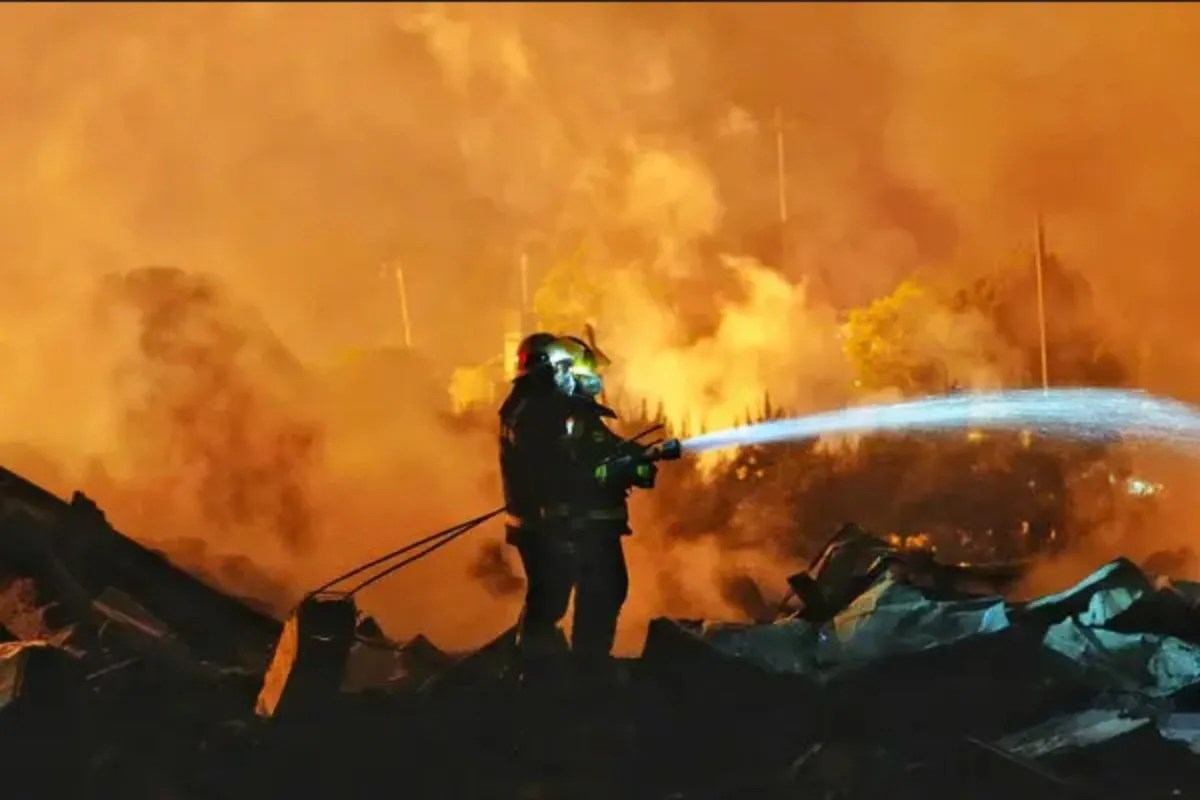
The recent explosion at a fireworks manufacturing facility in China, which claimed 21 lives and left 61 others with life-altering injuries, is not merely an industrial accident. It is a recurring symptom of a systemic failure in rural manufacturing oversight. While state media often frames these events as isolated incidents of negligence, the reality is rooted in a high-stakes trade-off between local economic survival and basic human safety. For decades, the firework industry has operated within a gray zone of "home-style" production where safety protocols are viewed as expensive inconveniences rather than life-saving necessities.
The blast leveled the facility within seconds. Initial reports suggest that improper storage of chemical precursors, likely potassium nitrate and sulfur, triggered a chain reaction that the building’s outdated suppression systems could not contain. This is the brutal truth of the sector. When profit margins are thin and global demand for cheap pyrotechnics peaks, the first thing to be sacrificed is the structural integrity of the workspace. If you found value in this post, you should read: this related article.
The Infrastructure of a Death Trap
Most people envision a fireworks factory as a modern chemical plant with stainless steel vats and automated sensors. The reality on the ground in provincial China is often a series of interconnected sheds with corrugated metal roofs and dirt floors. These facilities are frequently situated in residential pockets or on the outskirts of villages to keep overhead low and labor accessible.
The chemistry of a firework is inherently volatile. You are dealing with friction-sensitive powders that can ignite from a single spark or even a sharp change in humidity. In these "shadow factories," workers often handle raw explosive materials with plastic scoops or bare hands. There are no static-discharge mats. There are no spark-proof tools. For another perspective on this event, see the latest update from NBC News.
When an ignition occurs in such a confined, substandard space, the result is a high-velocity pressure wave. The 21 victims in this latest tragedy didn't just succumb to fire; they were caught in a structural collapse caused by the force of the blast. The 61 injured survivors now face a harrowing recovery from blast-induced trauma, including perforated eardrums, shrapnel wounds, and severe respiratory burns from inhaling toxic chemical fumes.
Why Regulations Fail at the Village Level
China has some of the strictest industrial safety laws on paper. Following the catastrophic Tianjin port explosion in 2015, the central government initiated a massive crackdown on hazardous material storage. However, there is a disconnect between Beijing’s directives and the enforcement capabilities of local township officials.
Local cadres are often caught in a conflict of interest. On one hand, they are pressured to meet safety quotas. On the other, these small-scale factories are the primary employers in regions where agriculture no longer provides a livable wage. Closing a factory for safety violations means putting hundreds of people out of work. In many cases, inspectors provide advance notice of "surprise" visits, allowing owners to hide illegal stockpiles or temporarily clear out overcrowded workshops.
The Seasonal Surge Risk
The timing of these disasters is rarely accidental. The industry follows a boom-and-bust cycle tied to the Lunar New Year and international holidays. During peak production months, factories operate 24 hours a day.
- Labor Fatigue: Workers pulling 12-hour shifts lose the precision required to handle explosive dust safely.
- Overstocking: To meet massive orders, factories store finished goods in walkways and loading bays, turning every square inch of the facility into a potential bomb.
- Subcontracting: Large, licensed firms often outsource the most dangerous parts of the assembly—like manual fuse insertion—to unlicensed "satellite" workshops that operate entirely off the books.
This creates a tiered system of risk where the poorest, least-protected workers handle the most unstable materials. When a satellite workshop blows up, the primary contractor often denies any legal connection, leaving the victims without insurance or compensation.
The Chemical Component of Chaos
To understand the scale of the destruction, one must look at the specific materials involved. Cheap fireworks often utilize perchlorates and metal powders to achieve bright colors. These are not stable compounds. If they are stored in a damp environment, they can undergo exothermic reactions, generating their own heat until they reach an auto-ignition point.
If a factory is poorly ventilated, fine explosive dust settles on every surface—rafters, light fixtures, and clothing. This dust is a "secondary explosion" hazard. A small initial pop at a workbench kicks the dust into the air, creating a fuel-air mixture that detonates with the force of military-grade explosives. This explains why the 21 deaths occurred so rapidly; the entire building effectively became a vacuum of fire.
Global Responsibility and the Bottom Line
While the blame is often laid at the feet of local managers, the global supply chain plays a significant role in maintaining these conditions. Western distributors demand lower prices year after year. To remain competitive, Chinese manufacturers cut corners on safety equipment and facility maintenance.
We are seeing a race to the bottom where the true cost of a firework is measured in blood rather than yuan. Professional-grade safety standards require massive investment in reinforced bunkers, specialized ventilation, and automated mixing. For a small-town entrepreneur, those costs are prohibitive. It is cheaper to pay "hush money" to a few local officials or settle with a grieving family for a fraction of what a proper upgrade would cost.
The Myth of Reform
Every time a disaster of this magnitude occurs, the government promises a "total overhaul" of the sector. They announce the closure of thousands of small mines and factories. But like water flowing downhill, the production simply moves to more remote areas or rebrands under a different name.
The underlying economic desperation remains. As long as there is a massive global market for five-cent firecrackers and a local population with no other job prospects, people will continue to mix gunpowder in sheds.
The 61 people currently in the hospital are a testament to a broken oversight mechanism. They represent the collateral damage of an industrial strategy that prioritizes output over the lives of the people producing it. Until the cost of a human life exceeds the cost of a safety violation, these headlines will continue to repeat with rhythmic, tragic certainty.
The next step for the industry isn't more paperwork. It is a fundamental shift in how rural labor is valued. Without a viable economic alternative for these regions, the "shadow factories" will continue to operate in the dark, waiting for the next spark to level another village block.