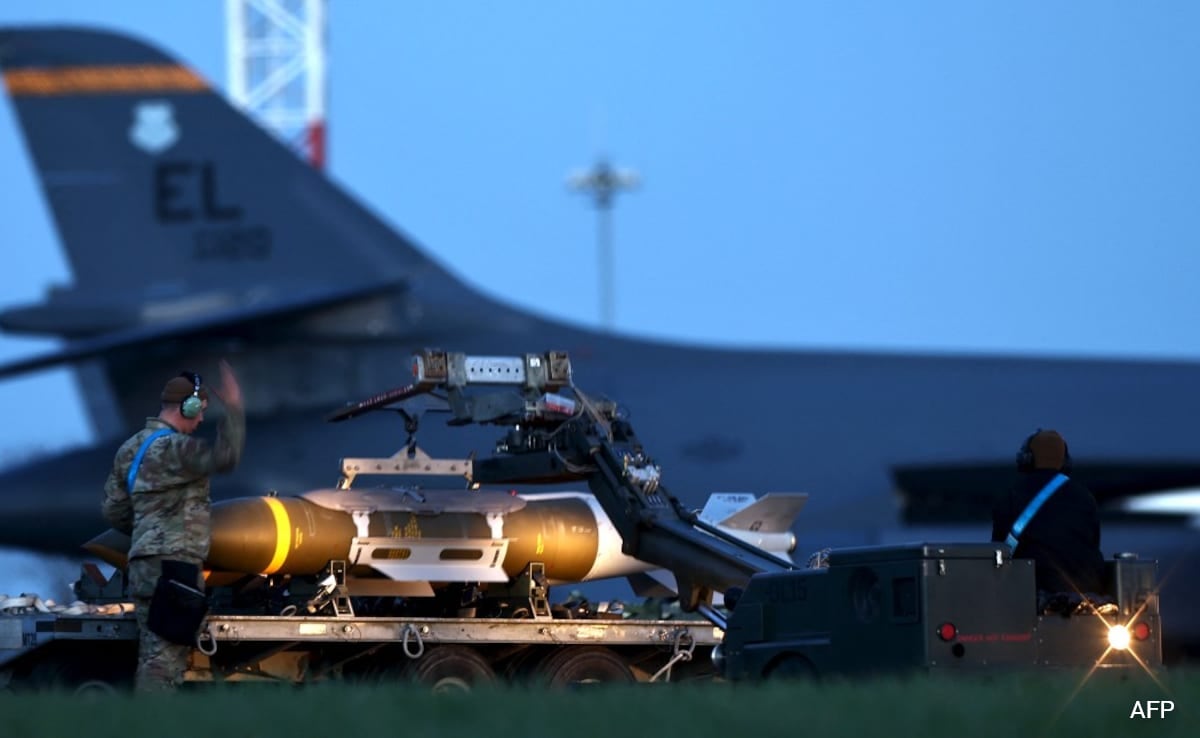
A signature on a piece of heavy vellum in Washington does not make a sound that can be heard six thousand miles away. It is a silent act. Yet, that stroke of a pen carries the weight of $9 billion, a sum so vast it ceases to be money and becomes a tectonic shift in the geography of power. To understand what just happened in the Oval Office, you have to look past the spreadsheets and the dry press releases about "Interoperability" or "Regional Stability." You have to look at the silhouettes of the F-15IA and F-15I+ jets that will soon slice through the heat haze of the Middle East.
Donald Trump has cleared the path for a massive influx of American military hardware into the hands of Israel, the United Arab Emirates, and other regional partners. On paper, it is a transaction. In reality, it is the construction of a high-tech wall intended to hem in the ambitions of Iran.
The Anatomy of a Deal
The bulk of this nearly $9 billion package is earmarked for Israel, a nation that operates on a permanent state of high alert. For the Israeli pilot sitting in a cockpit on a tarmac in the Negev desert, these are not just "units." They are the difference between a successful interception and a catastrophic failure. The deal includes advanced F-15 fighter jets, outfitted with sensors and electronic warfare suites that can "see" through the digital noise of modern combat.
These machines are marvels of engineering. They are designed to fly faster and carry more than almost anything else in the sky. But their true value lies in their ability to communicate. In a potential conflict with Iran, a lone jet is a target; a network of jets, linked by American satellite data and local radar, is a shield.
The UAE, meanwhile, continues its transformation into a regional powerhouse. Their portion of the deal isn't just about hardware; it is about a seat at the table. By acquiring American technology, they bind their security infrastructure to the United States. It is a marriage of necessity. When a nation buys a fighter jet, they aren't just buying a plane. They are buying a twenty-year relationship with the mechanics, the software engineers, and the generals who built it.
The Shadow of Tehran
Why now? The answer lies in the drone factories and missile silos of Iran. The tension in the Persian Gulf has moved from a simmer to a steady boil. Iran’s development of long-range ballistic missiles and its "gray zone" warfare—using proxies and autonomous drones—has forced its neighbors to upgrade their kit.
Consider the "Suicide Drone." It is a cheap, buzzing mosquito of a weapon, often costing less than a mid-range sedan. To stop a swarm of these, you need more than just bullets. You need the sophisticated radar systems and kinetic interceptors that make up the backbone of this $9 billion sale.
The logic from the White House is straightforward: a well-armed ally is an ally that doesn't need American boots on the ground. By flooding the region with high-end American tech, the administration is attempting to create a "Balance of Terror." If every actor knows that their opponent has the capability to strike back with devastating precision, perhaps they will choose to keep their fingers off the trigger.
It is a gamble. History is littered with "defensive" weapons that eventually found an offensive purpose.
The Human Component
Behind every billion-dollar figure is a factory worker in St. Louis or a software coder in Tel Aviv. This deal represents tens of thousands of man-hours. It represents the survival of production lines that keep the American defense industry humming. In states like Missouri, these sales are a lifeline for local economies.
But there is another human element, one that is harder to quantify. It is the anxiety of the civilian in Haifa or Dubai. For them, these sales are a grim reminder of the neighborhood they live in. They see the arrival of more weapons not as a sign of impending peace, but as a preparation for a storm. They know that while the politicians speak of "deterrence," the engineers are calculating "lethality."
The technology itself is becoming increasingly autonomous. We are moving toward a world where the reaction times required to stop a hypersonic missile are faster than a human synapse can fire. We are trusting our survival to algorithms. This $9 billion isn't just buying metal and fuel; it is buying the most advanced artificial intelligence ever integrated into warfare.
The Invisible Stakes
If this wall of technology holds, the world continues to receive its oil, the shipping lanes of the Strait of Hormuz remain open, and the global economy avoids a heart attack. If it fails, the cost will be measured in more than just dollars.
The United States is doubling down on a specific vision of the Middle East. It is a vision where the "Abraham Accords" spirit—the normalization of ties between Israel and Arab nations—is reinforced by a shared military backbone. They are building a digital and physical fortress.
The sale includes 25 F-15IA aircraft and upgrade kits for Israel's existing fleet. This isn't a temporary fix. This is a decades-long commitment to air superiority. It tells Iran that the sky is no longer a vacuum they can fill.
Yet, there is a paradox at the heart of the arms trade. To ensure peace, you must prepare for the most violent version of the future imaginable. You must spend billions on machines you hope will never fire a shot in anger. You must build the most terrifying weapons on earth and then keep them in a hangar, polished and waiting.
The sun sets over the Potomac, and the ink on the vellum dries. Somewhere in the world, a cargo ship begins the slow process of moving parts, engines, and munitions toward the horizon. The deal is done. The money will move, the factories will roar to life, and the skies over the desert will grow a little more crowded, and a lot more lethal.
The quiet of the desert night remains, for now, unbroken. But the air is heavy with the scent of jet fuel and the silent, vibrating tension of a world that is arming itself for a day it hopes will never come.



