The cargo ship doesn’t care about diplomacy. It sits low in the water, a rusted leviathan carrying thousands of German-engineered sedans, their paint shimmering under the harbor lights like polished glass. For decades, this was the heartbeat of a predictable world. A car was built in Wolfsburg, sold in Ohio, and the math stayed the same. But the math just changed.
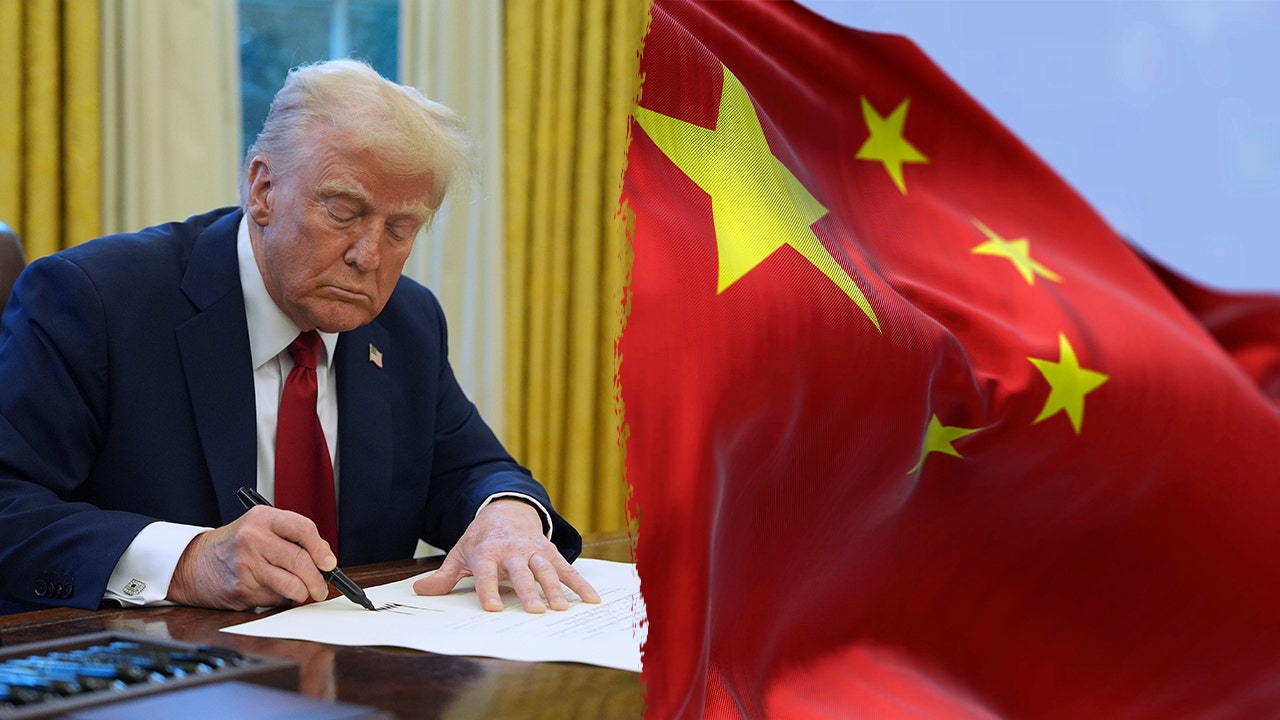
The announcement from the White House didn’t come with a white flag or a handshake. Instead, it arrived as a blunt instrument: a 25% tariff on European cars and trucks. To the spreadsheet warriors in Washington, it’s a leverage point in a trade deal that went sour. To the man standing on a dealership lot in New Jersey, it’s the sound of a dream becoming $10,000 more expensive overnight. Meanwhile, you can read similar developments here: The Death of Spirit Airlines and the End of Cheap Skies.
The Ghost in the Assembly Line
Consider Marcus. He doesn't exist in the official press releases, but he exists in every town with a factory. Marcus is a mid-level manager at a logistics firm that handles parts for European imports. He’s spent twenty years mastering the "just-in-time" delivery system. His life is measured in millimeters and minutes. When a 25% tax hits the border, Marcus doesn't just see a price hike. He sees a ghost.
The ghost is the sudden, chilling realization that the supply chain is actually a noose. If the cars don't move because the price tag has bloated beyond recognition, the ships stop coming. If the ships stop coming, Marcus’s warehouse goes quiet. This isn't about "protecting the American worker"—at least not in the way the slogans suggest. It’s a high-stakes poker game where the chips are made of chrome and human livelihoods. To understand the full picture, we recommend the recent analysis by The Wall Street Journal.
Trade deals are often framed as dry, legalistic documents signed by people in expensive suits. In reality, they are the invisible architecture of our daily lives. They dictate why your morning coffee costs four dollars instead of six, and why the truck you need for your construction business is suddenly sitting behind a financial wall. When the U.S. government claims the EU hasn't lived up to its end of the bargain, they aren't just arguing over percentages. They are tectonic plates shifting under our feet.
The 25 Percent Wall
What does 25% actually look like? It looks like a betrayal of the middle class.
For a $40,000 European crossover—the kind used by families who value safety ratings and fuel efficiency—that tariff adds a staggering $10,000 to the sticker price. Dealers can’t absorb that. Manufacturers won't. The cost travels down the line like a fever, jumping from the port to the showroom to the consumer's monthly budget.
But the pain isn't contained to the luxury market. Think about the small business owner who relies on a fleet of European-made vans. These aren't status symbols; they are tools. When the tool becomes a quarter more expensive, the business owner stops hiring. They delay expansion. They raise their own prices. The ripple effect turns a targeted strike against a foreign "competitor" into a self-inflicted wound on the domestic economy.
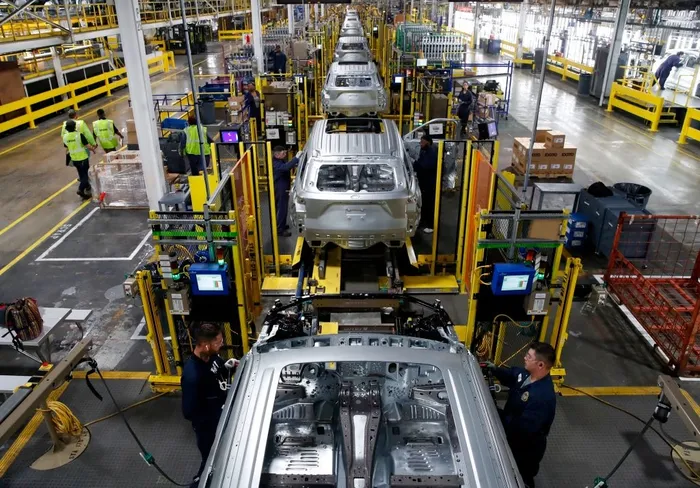
The logic behind the hike is rooted in a desire to force Europe’s hand. The administration argues that the EU has been "unfair," keeping American products out while flooding the U.S. market with Volkswagens and BMWs. It’s a narrative of victimhood that plays well on a campaign stage. Yet, the reality of global manufacturing is a tangled web. Many of those "European" cars are actually built in South Carolina or Alabama. The engines might come from Germany, the electronics from Asia, and the final assembly happens in the American South.
By slapping a 25% tax on the badge, you aren't just hitting a foreign CEO. You’re hitting the American mechanic who services those vehicles and the American worker who bolts the seats into the frame.
The Mirror of Retaliation
Trade wars are rarely won. They are survived.
History is littered with the wreckage of "protective" tariffs that ended in disaster. When one nation builds a wall, the other nation doesn't just sit behind it and weep. They build their own.
As we speak, officials in Brussels are looking at their own list of American exports. Bourbon. Harley-Davidson motorcycles. Florida oranges. Blue jeans. These are the symbols of American identity, and they are about to become very expensive for Europeans to buy.
The invisible stakes are the loss of trust. For seventy years, the Atlantic alliance was built on the idea that we are stronger together. We traded goods so we wouldn't have to trade blows. Now, that relationship is being reduced to a series of transactional threats. It’s a "what have you done for me lately" philosophy that ignores the decades of stability provided by open markets.
You can feel the tension in the air at the international ports. Longshoremen watch the cranes lift containers, wondering if the next ship will even show up. There is a specific kind of silence that falls over a port when trade slows down—a heavy, metallic quiet that signals a stalling engine.
The Myth of the Quick Fix
There is a seductive quality to the "tough guy" approach to economics. It feels active. It feels like someone is finally standing up for the "little guy." But the little guy is usually the one who pays the bill.
If the goal is to bring manufacturing back to American shores, a sudden tariff is a blunt, ineffective tool. Factories take years to build. Supply chains take decades to forge. You cannot simply flip a switch and replace a century of German engineering with a domestic equivalent just because the tax code changed on a Tuesday.
Instead of a rebirth of American industry, we are more likely to see a period of stagnation. Consumers will hold onto their old cars longer. The average age of vehicles on the road will climb, leading to more breakdowns and more environmental impact. The "new" economy will look a lot like the old one, just dirtier and more expensive.
We often forget that trade is an act of faith. I give you something I make well; you give me something you make well. We both end up better off. When that faith is replaced by suspicion, the entire system begins to grind. The gears of global commerce are lubricated by predictability. When a 25% tariff is dropped into the machinery like a handful of sand, everything screeches to a halt.
The Human Cost of High Stakes
Imagine a young couple, thirty miles outside of Atlanta. They’ve saved for three years to buy a reliable vehicle that can handle their growing family. They’ve done the research. They’ve picked a model known for its longevity. They walk into the dealership on a Saturday morning, only to find the price has jumped by the cost of a year's worth of groceries.
They don't care about the trade deficit. They don't care about the "unfair" practices of the European Union. They care about the car seat in the back and the safety of their children. To them, the tariff isn't a geopolitical masterstroke. It’s a barrier to a better life.
This is the emotional core that gets lost in the headlines. We talk about "billions of dollars" and "trade imbalances" as if they are abstract numbers in a video game. They aren't. They are the difference between a family being able to afford a vacation and being forced to take a second job. They are the difference between a small business staying afloat and shuttering its doors.
The rhetoric of the trade war suggests that there are winners and losers. But in a world this interconnected, we are all on the same team, whether we like it or not. The steel in a Detroit truck might have been forged using technology developed in Munich. The software in a Munich sedan was likely written in Silicon Valley. To try and decouple these things with a tax is like trying to un-bake a cake to get the eggs back. You just end up with a mess.
The leviathan in the harbor continues to wait. Its holds are full, its engines are warm, but its future is written in ink that hasn't yet dried on a bureaucrat's desk. We are witnessing the slow dismantling of a global consensus, replaced by a volatile, reactionary world where the only certainty is that everything will cost more than it did yesterday.
The promise of a revitalized domestic industry is a shimmering mirage on the horizon. Up close, all we can see is the 25% wall, and the people standing at the base of it, wondering how it got so high so fast.
The sun sets over the Atlantic, casting long, dark shadows across the docks. The cars remain in the hold, silent and still. They are no longer vehicles of transportation; they are hostages in a war of egos. And as the night falls, the true cost of the steel promise begins to sink in, heavy as the leaden water against the hull.