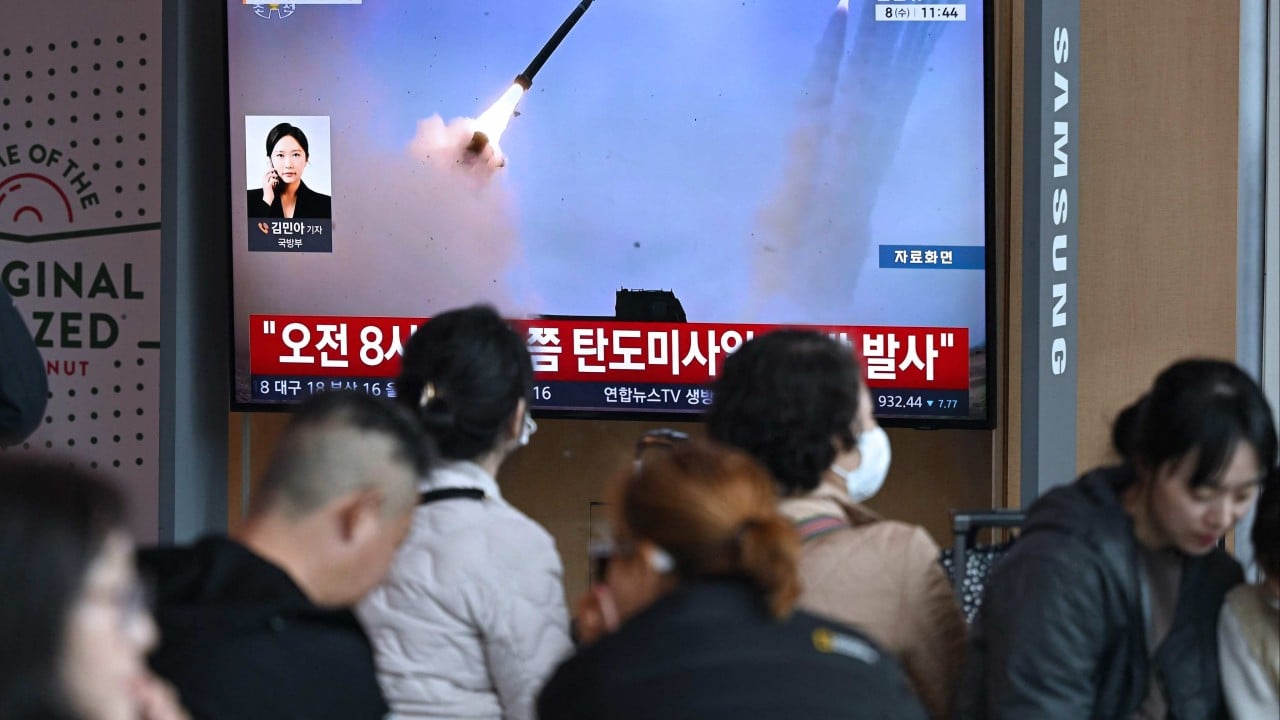
North Korea recently confirmed the testing of specialized electromagnetic pulse (EMP) weaponry and carbon fiber munitions, marking a transition from blunt nuclear intimidation to targeted infrastructure strangulation. While the world watches for another subterranean nuclear blast, Pyongyang is refining tools designed to plunge entire cities into a pre-industrial era without firing a single kinetic projectile at a human target. These tests represent a calculated shift in the regime’s asymmetric warfare doctrine. They aren't just building bigger bombs; they are building more precise "blackout" weapons.
The dual-track announcement involves two distinct but complementary technologies. The first is an EMP device, likely a high-altitude nuclear variant or a non-nuclear high-power microwave (HPM) generator, designed to fry delicate electronics. The second is the "blackout bomb," a cluster munition that disperses chemically treated carbon filaments over power substations. One erases the data and the hardware; the other kills the current. Together, they form a terrifyingly effective blueprint for neutralizing a modern, digitally dependent adversary.
The Invisible Surge
An electromagnetic pulse is not a physical shockwave. It is a burst of electromagnetic radiation that creates a massive, instantaneous surge of voltage in everything capable of conducting electricity. Think of it as a lightning strike that occurs everywhere at once, inside every wire and every circuit board.
At the heart of the North’s EMP ambitions is the "Compton Effect." When a nuclear device is detonated at high altitudes—typically above 30 kilometers—gamma rays collide with air molecules, stripping away electrons and sending them spiraling toward the Earth at nearly the speed of light. These electrons interact with the Earth's magnetic field to create a massive pulse of energy.
The pulse usually arrives in three distinct waves:
- E1: This is the fast-rising component. It lasts less than a microsecond and is too quick for standard surge protectors to catch. It destroys local control systems, computers, and sensors.
- E2: Similar to a lightning strike, this intermediate pulse is easier to defend against but hits systems already weakened by the E1 wave.
- E3: This is a slow, long-lasting surge that couples with long-haul power lines and undersea cables. It is the E3 pulse that melts the massive, hard-to-replace transformers that form the backbone of the national grid.
Modern Western infrastructure is more vulnerable than it was thirty years ago. We have replaced rugged, analog switches with high-speed microelectronics and "smart" sensors. These components operate on tiny voltages. A surge that wouldn't have bothered a vacuum tube will instantly vaporize a modern semiconductor. Pyongyang knows that a single well-placed detonation could theoretically disable the Southern peninsula’s economy or threaten the American West Coast’s ability to coordinate a response.
Carbon Fiber and the Death of the Circuit
While the EMP is the "hammer" of North Korea's new arsenal, the carbon fiber bomb is the "scalpel." Often referred to as "blackout bombs" or "soft bombs," these weapons do not destroy buildings or kill people directly. Instead, they target the electrical distribution network with surgical precision.
The mechanism is deceptively simple. A canister is dropped over a power plant or a major switching station. At a predetermined altitude, the canister bursts, releasing hundreds of sub-munitions. Each sub-munition then deploys a cloud of ultra-fine, chemically treated carbon filaments. Carbon is an excellent conductor. When these filaments drift onto high-voltage power lines and transformers, they create massive short circuits.
The results are spectacular and devastating. The air fills with blue electrical arcs as the filaments bridge the gap between phases. Protective relays trip, and if the surge is significant enough, the equipment itself catches fire or explodes.
The beauty of this weapon, from Pyongyang's perspective, is its deniability and the difficulty of the cleanup. You cannot simply "turn the power back on." Every inch of the substation must be physically cleaned of the microscopic conductive threads. If even a few filaments remain, the system will short-circuit again the moment the juice is restored. It is a logistical nightmare that can keep a city dark for weeks while the military tries to scrub a thousand miles of wire.
Why the Shift in Strategy Matters
For decades, the North Korean threat was viewed through the lens of Mutually Assured Destruction (MAD). The assumption was that any use of a nuclear weapon would lead to the total erasure of the Kim dynasty. However, EMP and carbon fiber weapons occupy a "gray zone" in international law and military ethics.
If North Korea detonates a high-altitude EMP, they aren't technically hitting a city. No one dies instantly from the blast. There is no fallout in the traditional sense. It creates a massive "proportionality" headache for Western leaders. Do you respond with a nuclear strike on a city because your computers stopped working? The ambiguity is the point.
Pyongyang is betting that the hesitation caused by this ambiguity provides them with a window of opportunity. In a conflict scenario, these weapons would be used in the opening minutes to blind satellite communications, ground the South's high-tech air force, and create domestic chaos that prevents a coherent civilian or military response.
The Fragility of the Modern Grid
The primary reason these tests are so concerning is the state of the global electrical grid. In the United States and much of Europe, the power grid is an aging patchwork of private and public systems. It was never designed to withstand a coordinated electromagnetic assault.
High-voltage transformers are the most significant point of failure. These units are the size of small houses, weigh hundreds of tons, and are often custom-built. If a dozen of these were destroyed in a single EMP event or through the cascading failures triggered by a carbon fiber attack, the lead time for replacements could be eighteen months or more.
We are talking about a permanent blackout. No refrigeration. No water pumps. No cellular networks. No digital banking.
Hardening the Shield
Defending against these threats is possible, but it is expensive and politically difficult to prioritize. "Hardening" the grid involves two main strategies: Faraday cages and blocking devices.
For sensitive electronics, the solution is the Faraday Cage—a conductive enclosure that blocks external static and non-static electromagnetic fields. Military command centers are often built inside these shells. However, you cannot put an entire city or a 500-mile power line inside a cage.
For the grid itself, engineers suggest installing Neutral Ground Resistors and specialized capacitors that can block the E3 pulse from entering the large transformers. These devices act like a dam, preventing the solar-storm-like surges from melting the copper windings inside the equipment.
Despite these known solutions, progress is slow. The cost to protect the American grid alone is estimated in the tens of billions. Most utility companies are hesitant to pass these costs on to consumers for a "low-probability, high-impact" event. North Korea is counting on this inertia.
The Asymmetric Advantage
The most chilling aspect of this development is the disparity in vulnerability. North Korea is a country that is famously dark at night. Their economy is not reliant on a sophisticated, interconnected digital grid. They still use human messengers, manual labor, and ruggedized, older technology.
A massive EMP over the Korean Peninsula would be an inconvenience for the North, but it would be a total civilization-ending catastrophe for the South. In this theater of war, the less advanced player has the structural advantage. Pyongyang is weaponizing the very technological progress that has made their enemies wealthy and powerful.
This is not a theoretical problem for the distant future. The testing of these munitions proves that the regime has moved past the research phase. They are now operationalizing the ability to turn off the modern world.
The real threat isn't a mushroom cloud over a skyline. It’s the silence that follows when the screens go black and the lights never come back on.