On a rainy Tuesday in Knightsbridge, a courier cycles past a row of white-stuccoed townhouses. To the casual observer, these buildings are merely the expensive wallpaper of London’s elite—silent, imposing, and scrubbed clean of any history that doesn't involve old money or new tech wealth. But behind one of these heavy oak doors lies a financial ghost. There is no name on the buzzer that reveals the true owner. There is no flag flying to signal that the ground beneath these floorboards is, in a very literal sense, a strategic outpost of the Islamic Republic of Iran.
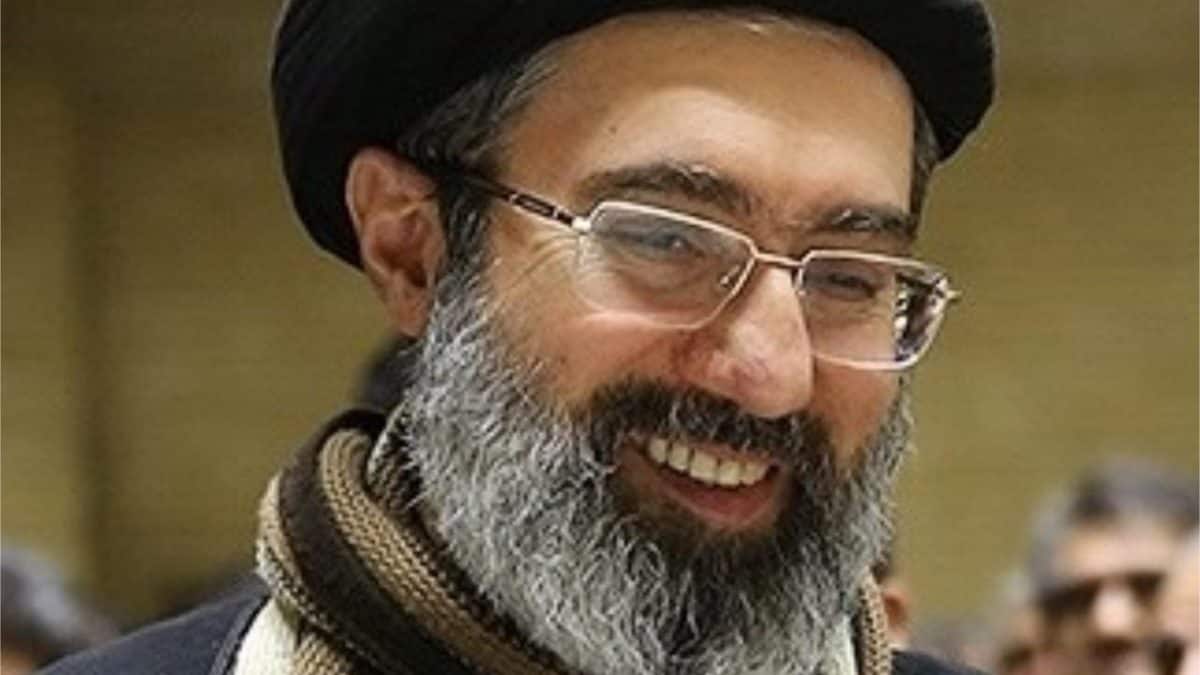
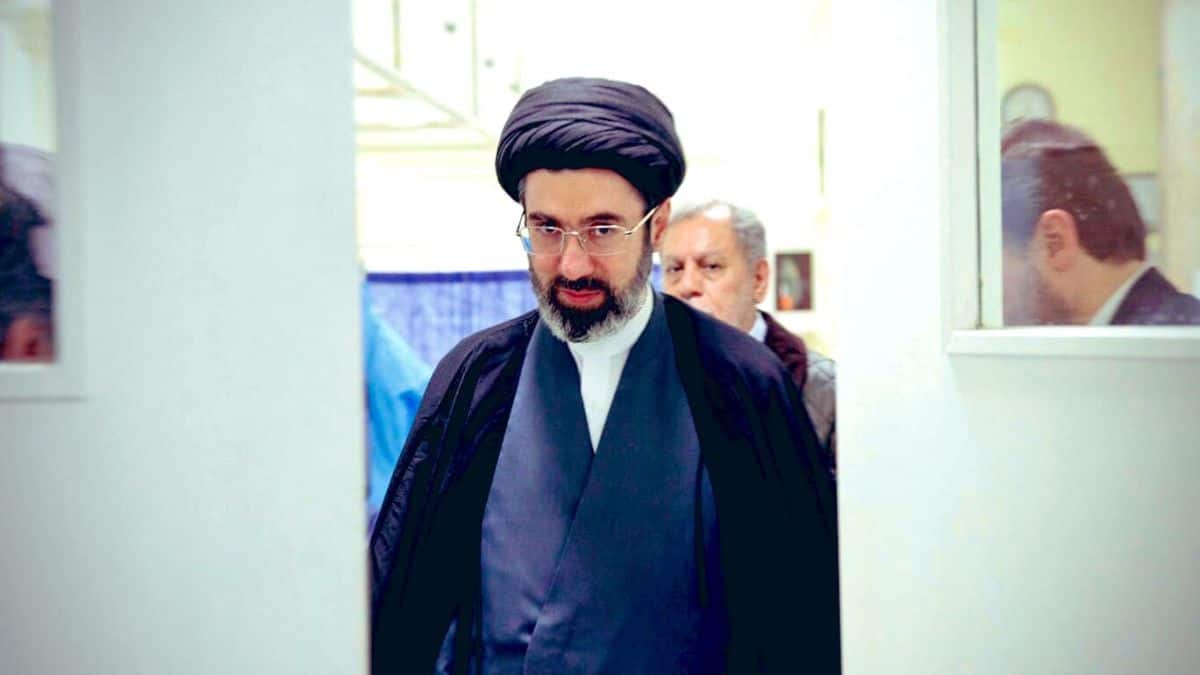
This is the shadow world of Mojtaba Khamenei.
While the world watches the fiery rhetoric of Tehran’s street protests or the technical data of uranium enrichment, a different kind of power has been consolidating in the boring, bureaucratic records of land registries and shell companies. Mojtaba, the second son of Supreme Leader Ali Khamenei, has spent decades transitioning from a phantom in his father’s office to a global landlord with a property portfolio valued at over £100 million.
It is a story of how a man becomes an emperor not through conquest, but through title deeds.
The Son Who Stayed in the Shadows
In the labyrinthine politics of Iran, visibility is often a liability. The elder Khamenei has long cultivated an image of asceticism, often pictured in simple robes, eating modest meals. It is a calculated aesthetic of the "pious revolutionary." Mojtaba understood this early. Unlike the flamboyant children of other global autocrats who crash Ferraris in Dubai, Mojtaba operated in the gray.
He began his ascent within the Beit-e Rahbari—the Office of the Supreme Leader. Think of it not as a standard government department, but as a nerve center that sits above the law, the military, and the economy. It was here that Mojtaba mastered the art of the "bonyad." These are ostensibly charitable foundations that control massive swaths of the Iranian economy, from hotels to oil refineries. They pay no taxes. They answer to no one but the Leader.
But Iranian rials are volatile. Power in Tehran is a fickle beast. To truly secure a dynasty, one needs the cold, hard stability of Western capital. This creates a fascinating paradox: the very men who lead "Death to the West" rallies are the same men who trust the British legal system more than their own to protect their wealth.
The London Laundromat
Imagine a hypothetical accountant named Sarah. She works in a high-end firm in Mayfair. One day, a file lands on her desk for a British Virgin Islands company with a generic name like "Blue Sky Holdings." The ultimate beneficial owner is hidden behind three layers of proxy directors—nominees in Cyprus or solicitors in London who ask no questions.
Sarah isn't looking for a revolutionary cleric’s son. She’s looking for a signature.
Through a sophisticated network of these "Sarahs," Mojtaba’s agents began acquiring prime London real estate. We are talking about the "Golden Postcodes." These aren't just homes; they are gold bars shaped like houses. They appreciate in value while the Iranian middle class watches their life savings evaporate through inflation.
The mechanics are intentionally dull. A commercial property in South Kensington might be bought through a Dutch foundation, which is owned by a trust in Liechtenstein, which is ultimately controlled by a loyalist in Mojtaba’s inner circle. This isn't just about luxury living. It’s about creating a "black box" of liquidity. If the regime in Tehran were to ever face a true existential crisis, this £100-million empire serves as a lifeboat.
It is the ultimate insurance policy.
The Invisible Stakes of a Changing Guard
Why does this matter now? Because the "Quiet Son" is no longer just a manager of the family business. He is the business.
As Ali Khamenei ages, the question of succession has moved from the whispers of the bazaar to the forefront of global intelligence. The appointment of Mojtaba to the rank of Ayatollah was the first loud signal. But the real signal is the money. In the brutal mathematics of authoritarianism, you cannot hold a throne without the loyalty of the Praetorian Guard—in this case, the Islamic Revolutionary Guard Corps (IRGC).
Money buys that loyalty.
Mojtaba’s control over international assets allows him to bypass the traditional state budget. He can fund operations, reward generals, and silence dissenters using a global ATM that the Iranian parliament cannot touch. When a protester in Isfahan is arrested for demanding bread, the resources used to track them may very well have been laundered through a commercial lease in a London shopping district.
The tragedy is the distance. The person sipping an espresso in a London cafe has no idea that their rent might be indirectly stabilizing a clerical autocracy 3,000 miles away.
The Ghost in the Machine
The sheer scale of the holdings—over £100 million in the UK alone—suggests a level of institutional capture that is hard to wrap one's head around. It involves more than just buying houses. It involves the acquisition of commercial hubs, office spaces, and high-end apartments that serve as a quiet, constant revenue stream.
Consider the logistical nightmare of tracking this. Investigators have to peel back decades of shell company registrations. By the time a regulator identifies a suspicious link, the assets have often been shifted, the company dissolved, and a new entity birthed in a different jurisdiction.
It is a game of financial Whac-A-Mole.
Mojtaba has proven himself a master of this game. He has navigated international sanctions with the precision of a surgeon. While the Iranian state is locked out of the SWIFT banking system, the private wealth of the leadership moves through the veins of global commerce with surprising fluidity. They use the very "decadent" capitalist tools they claim to despise to ensure their children never have to live under the conditions they impose on their subjects.
The Human Cost of the Ledger
Behind every million-pound acquisition in London is a corresponding loss in Iran. To understand the emotional core of this story, you have to look at the streets of Tehran.
Think of a young engineer named Arash. He is brilliant, hardworking, and trapped. He watches as the price of meat triples in a year. He sees his friends leave for Europe or Canada because there is no future in a country where the economy is cannibalized by the elite. Arash doesn't know about the shell companies in the British Virgin Islands. He doesn't know the names of the solicitors in Mayfair. But he feels the vacuum they create.
The "Global Property Empire" isn't just a list of addresses. It is a map of stolen potential. Every luxury flat in Knightsbridge represents thousands of unbuilt schools, unpaid pensions, and crumbling infrastructure in the Iranian provinces.
This is the invisible thread that connects a quiet street in London to a noisy protest in Mashhad. The wealth doesn't just sit there; it acts. It preserves a status quo that keeps millions in a state of managed poverty while a single family ensures its survival across generations.
A Dynasty in the Making
We often think of revolution as a sudden, explosive event. We imagine the fall of a leader as a moment of high drama. But the rise of Mojtaba Khamenei suggests a different path: the slow, methodical transformation of a revolutionary state into a corporate monarchy.
He is not his father. He lacks the charisma of the original revolutionaries who overthrew the Shah. He is a creature of the shadows, a man of the ledger. His power is not based on the fervor of the masses, but on the cold reality of the balance sheet.
By building this £100-million empire, Mojtaba has changed the nature of the Iranian leadership. He has moved it from the mosque to the boardroom. He has ensured that even if the ideology dies, the capital lives on.
The white-stuccoed houses of London remain silent. They do not tell the secrets of where the money came from or whose blood paid for the mahogany finishes inside. They simply stand there, appreciating in value, while the man who owns them prepares to take his place on the most powerful throne in the Middle East.
The courier cycles on. The rain continues to fall. The ghost remains in the machine, waiting for the moment to step into the light.
The world focuses on the missiles and the rhetoric. But the real story of the next Supreme Leader is written in the fine print of a property deed, filed away in a dusty archive, miles away from the country he intends to rule. Power, it turns out, isn't always seized in a palace coup. Sometimes, it is simply bought, one square foot at a time.