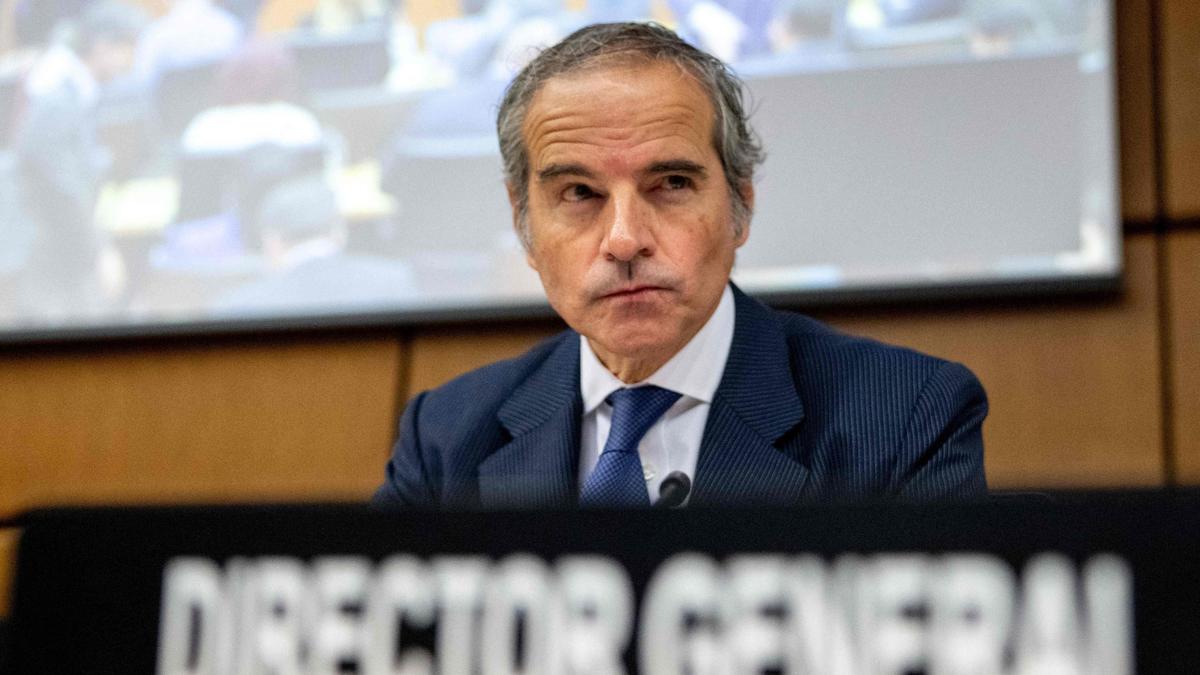
The world just brushed against a red line that should never have been approached. When reports surfaced of strikes near Iranian nuclear facilities, the collective heart of the international community skipped a beat. IAEA Director-General Rafael Grossi didn’t mince words when he called these events a massive risk. He’s right. Targeting nuclear infrastructure isn't just another move on a geopolitical chessboard. It’s a gamble with environmental and humanitarian consequences that could last for centuries. If we don’t treat these sites as strictly off-limits, we’re inviting a disaster that no amount of diplomacy can fix.
You might think these facilities are just bunkers in the desert. They aren't. They are complex industrial hubs holding materials that, if released, don't care about borders or political allegiances. Grossi’s warning highlights a shift in modern warfare where the "unthinkable" is becoming a talking point. We’ve entered an era where the sanctity of nuclear sites is being tested. That's a dangerous game. Meanwhile, you can read related stories here: The Fatal Truth Behind the MRI Lawsuit That Everyone Should Read.
Why hitting Iran nuclear sites changes everything
When an explosive hits a conventional military base, the damage is localized. When it hits a nuclear site, the math changes. You're looking at potential radioactive contamination that could sweep across the Middle East and beyond. The IAEA has spent decades trying to keep these sites transparent and secure. Now, those efforts face the threat of physical destruction.
Grossi’s alarm isn't just about the immediate blast. It’s about the precedent. If one nation decides a nuclear facility is a fair target, others will follow. This erodes the international consensus built after the Chernobyl and Fukushima disasters. We agreed as a species that certain places are too dangerous to blow up. Breaking that agreement is a one-way door. To see the full picture, we recommend the recent article by Reuters.
The IAEA role in a zone of fire
Rafael Grossi occupies one of the most stressful jobs on the planet. He has to balance technical oversight with high-stakes diplomacy. The IAEA isn't a police force; it’s a watchdog. Its inspectors need access to verify that Iran’s program remains civilian. When missiles start flying, that access evaporates.
Inspectors can’t work in a war zone. If they leave, we lose our eyes on the ground. This creates a "black box" scenario where nobody knows exactly how much uranium is being enriched or where it’s going. Uncertainty in a nuclear context leads to paranoia. Paranoia leads to more strikes. It's a feedback loop that ends in catastrophe.
The technical nightmare of containment
Nuclear facilities like Natanz or Fordow are deeply buried for a reason. They're meant to be hard to hit. But "hard to hit" doesn't mean "invulnerable." A strike that fails to destroy a facility but succeeds in damaging cooling systems or power grids can lead to a meltdown. You don't even need to hit the core to cause a disaster.
- Cooling failures: Without power, spent fuel pools heat up.
- Structural breaches: Even small cracks can lead to leaks.
- Environmental fallout: Prevailing winds could carry particles to major population centers like Tehran or even neighboring Gulf states.
The diplomatic cost of a strike
Every time a drone or missile gets close to these sites, the chance for a negotiated settlement drops to zero. Iran views its nuclear program as a point of national pride and a deterrent. Physical attacks don't make them want to negotiate; they make them want to dig deeper and build faster.
I’ve seen this pattern before. Pressure is supposed to bring parties to the table, but there’s a tipping point where pressure just causes the table to break. Grossi knows this. His plea for restraint is a plea for the survival of the Non-Proliferation Treaty (NPT). If the NPT fails, we face a world where dozens of countries feel they need their own nukes just to stay safe. That’s a world no one wants to live in.
Common misconceptions about surgical strikes
People love the term "surgical strike." It sounds clean. It sounds precise. In the world of nuclear physics, there’s no such thing as a surgical strike on an active facility.
- "We can just destroy the centrifuges." Centrifuges are small and often housed in massive underground halls. To get to them, you need "bunker busters." Those weapons cause massive seismic shocks.
- "The radiation will be contained." Maybe. But "maybe" isn't good enough when talking about isotopes with half-lives of thousands of years.
- "It stops the program." History shows it usually just delays it by a few years while radicalizing the leadership.
The ripple effect on global energy
Beyond the immediate radiation risk, attacking nuclear sites destabilizes global energy markets. The Middle East remains the world's gas station. A localized nuclear incident would lead to a total shutdown of shipping lanes in the Strait of Hormuz. We aren't just talking about a rise in gas prices; we're talking about a global economic heart attack.
Grossi’s focus is on safety, but the economic fallout is the silent killer. Investors hate instability. A radioactive cloud over one of the world's most critical trade routes would trigger a flight of capital that could take decades to recover.
What needs to happen right now
We can’t just wait for the next set of headlines. De-escalation isn't a luxury; it’s a necessity. The international community needs to reaffirm that nuclear sites are "no-go" zones under all circumstances. This shouldn't be a partisan issue or a national security debate. It’s a basic survival instinct.
First, the rhetoric needs to cool down. Leaders need to stop talking about nuclear sites as if they are just another warehouse. Second, the IAEA needs guaranteed, unhindered access. We need to know what's happening inside those walls to prevent misunderstandings. Finally, there needs to be a clear, international legal consequence for targeting these facilities.
Stop thinking of this as a localized conflict. It’s a global safety issue. We are all downwind from a nuclear disaster. Respecting the "never again" mantra that Grossi is shouting from the rooftops is the only way to ensure we don't wake up to a world that's permanently changed for the worse.
Demand that your representatives prioritize nuclear site protection in every diplomatic talk. Support the IAEA’s mission by advocating for increased funding and political backing. Watch the news not just for who hit what, but for where the radiation monitors are placed. We're all in this together, whether we like it or not.