The humidity in Dhaka doesn't just sit on your skin; it weights the lungs. On this particular afternoon, the air felt even heavier. Thousands of people had gathered, a sea of white prayer caps and mourning black, stretching as far as the eye could see toward the horizon of the city’s concrete heart. They weren't there for a celebration. They were there to witness the closing of a chapter that had defined Bangladesh for nearly four decades.
Khaleda Zia was gone.
With her passing, a specific kind of Himalayan political gravity shifted. For years, the rivalry between the "Battling Begums" had been the pulse of the nation. Now, one half of that heartbeat had stopped. But as the funeral rites began, the real story wasn't just in the grief of the crowds. It was in a quiet, high-stakes meeting happening behind closed doors, away from the cameras and the chanting masses.
The Weight of a Letter
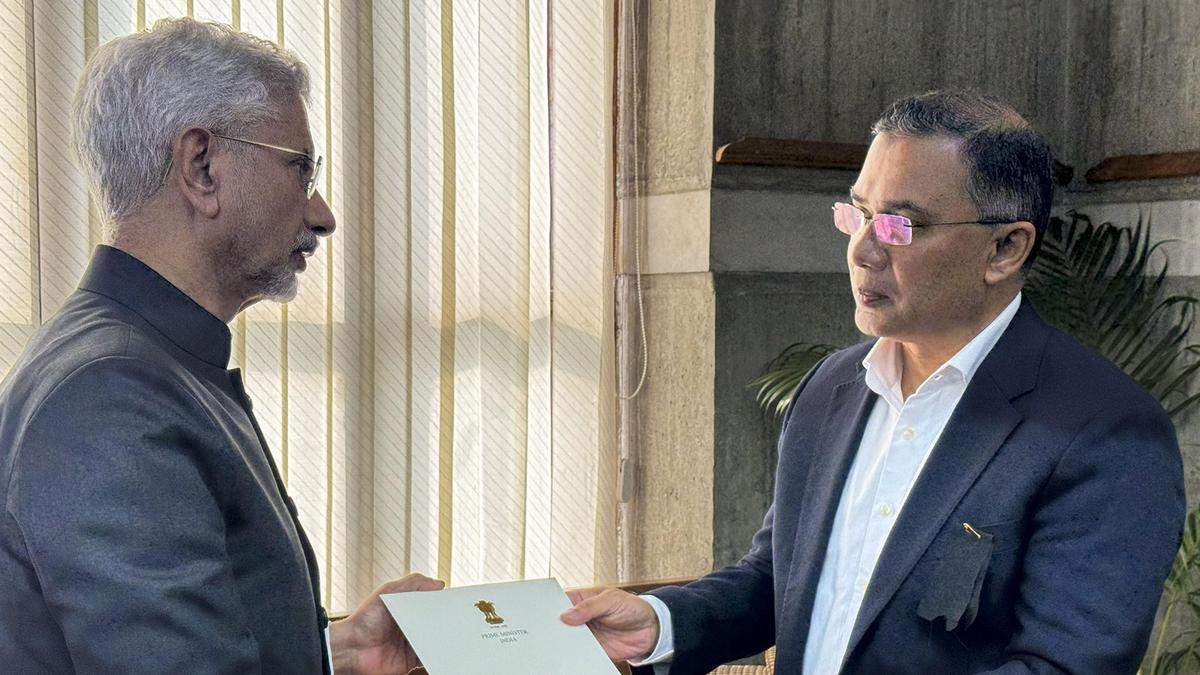
S. Jaishankar, India’s External Affairs Minister, does not move without purpose. Every gesture is a calculated piece of a larger mosaic. When he stepped off the plane in Dhaka, he wasn't just a diplomat attending a funeral. He was a messenger. In his pocket—or more accurately, in his briefcase—was a letter from Prime Minister Narendra Modi.
Condolence letters are often dismissed as boilerplate diplomacy. They are the "thoughts and prayers" of the geopolitical world. But this was different. This letter was being hand-delivered to Tarique Rahman, the man who now carries the mantle of the Bangladesh Nationalist Party (BNP).
Consider the optics. For years, the relationship between New Delhi and the BNP had been, at best, icy. At worst, it was a deep-seated mutual suspicion. India had long been seen as the stalwart ally of the Awami League. To see India’s top diplomat sitting across from Tarique Rahman was a pivot that sent shockwaves through the tea stalls and embassies of South Asia.
It was a recognition of a new reality.
The Ghost at the Table
Tarique Rahman has lived much of his recent life in the shadows of London’s exile, a digital leader connected to his homeland through fiber-optic cables and Zoom calls. To see him back, standing on the soil of Dhaka, was a visceral shock to the system. He looked older than the posters plastered across the city. The lines on his face told the story of a decade spent watching his country from a distance, of legal battles, and of the crushing weight of a family legacy that is as much a burden as it is a gift.
When Jaishankar handed over the letter, the room was silent.
This wasn't just about mourning a former Prime Minister. It was about the future of the border. It was about the transit of goods, the sharing of Teesta’s waters, and the security of a region that feels like a tinderbox. India needs a stable Bangladesh. It doesn't matter who is in power; the geography dictates the necessity of friendship.
India’s message was clear: The past is a foreign country. We are ready to talk about tomorrow.
Beyond the Handshake
To understand why this matters, you have to look at the map. Bangladesh is wrapped in India’s embrace on three sides. They share over 4,000 kilometers of border—a porous, winding line of rivers, jungles, and villages where families often have a kitchen in one country and a living room in the other.
When the BNP held power in the past, Delhi often felt the chill of a government that looked elsewhere for its primary alliances. There were concerns about insurgencies and radical shifts in regional balance. By engaging directly with Tarique Rahman at his mother’s funeral, Jaishankar was performing a delicate surgery on decades of scar tissue.
It was a masterclass in "Realpolitik."
The funeral became the backdrop for a reset. While the streets outside echoed with the prayers for the departed, the conversation inside was about the living. They spoke of connectivity. They spoke of the youth of Bangladesh, a generation that cares less about the grievances of the 1970s and 1990s and more about high-speed internet, jobs in the tech sector, and the price of onions.
The Human Cost of Power
We often talk about these figures as chess pieces. But stand in Dhaka for an hour, and you realize the stakes are human.
The rickshaw puller who can't afford a meal because trade is blocked. The student who wants to study in Kolkata but can't get a visa because of political tensions. The garment worker whose factory depends on raw materials flowing smoothly across the border. These are the people who were actually in that room with Jaishankar and Rahman, even if they weren't invited.
The "Dhaka Reset" is a recognition that the old ways of picking sides are dying. In a world of shifting global powers, India cannot afford a hostile neighbor, and the BNP cannot afford to lead a country isolated from its largest partner.
History is a heavy thing in Bangladesh. It is written in blood and cyclical vengeance. But for a few hours in the quiet of a diplomatic encounter, the weight seemed to lift just a fraction.
The Silent Transition
As the funeral procession moved toward the final resting place, the city seemed to hold its breath. The era of Khaleda Zia was officially over. She was a woman who had transitioned from a quiet housewife to a "Mother of Democracy" for millions, surviving house arrests and personal tragedies that would have broken a lesser spirit.
Her absence leaves a vacuum.
Nature abhors a vacuum, and so does politics. Tarique Rahman knows this. S. Jaishankar knows this. The letter from Modi wasn't just a tribute to a fallen leader; it was a bridge built over a grave. It was a signal to the people of Bangladesh that their neighbors were watching, not with judgment, but with an outstretched hand.
The rain finally began to fall as the last rites were concluded. It washed the dust off the corrugated tin roofs and turned the streets into mirrors of gray light. In the halls of power, the delegates began to disperse. The handshake was over. The letter was filed away.
But the air had changed.
The invisible stakes of that meeting will play out over the next decade. It will be seen in the trade agreements, the border security protocols, and the rhetoric used in the next election cycle. For now, there is only the silence that follows a great noise.
A son stands at the helm of a party in a changing nation. A diplomat returns to a capital that is warily optimistic. And a nation buries its past, wondering if the future will finally be different.
The street lights flickered on across Dhaka, casting long, orange shadows over the departing crowds. The Begum was gone, but the game of nations had never been more alive.