India’s high-stakes gamble to secure a reliable supply of copper and cobalt from Zambia has hit a wall, and it isn’t just a matter of typical bureaucratic delays. The negotiations between New Delhi and Lusaka have reached a standstill because Zambia refuses to guarantee the conversion of exploration permits into commercial mining rights. Without this legal bridge, the massive 9,000-square-kilometer exploration zone assigned to India last year effectively becomes a multi-million-dollar science project with no path to industrial utility.
The math for India is increasingly desperate. Since the 2018 closure of the Sterlite Copper smelter in Tamil Nadu, the country has swung from a net exporter to a massive importer of the red metal. In the fiscal year ending March 2025, copper imports climbed to 1.2 million metric tonnes. Cobalt, the silent backbone of the battery revolution, saw shipments of cobalt oxide rise by 20% in the same period. For a nation positioning itself as a global hub for electric vehicle manufacturing, these are not just numbers; they are structural vulnerabilities that threaten to derail the entire "Make in India" initiative.
The Mirage of the 9,000 Square Kilometers
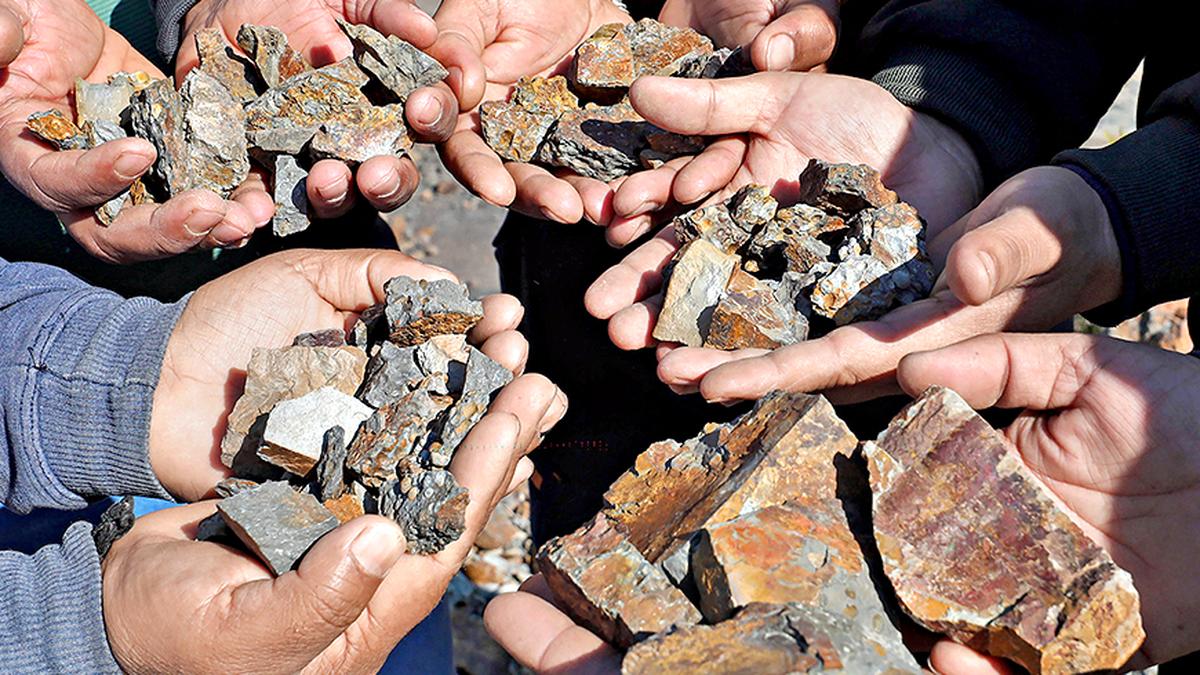
Last year, the Ministry of Mines celebrated a landmark deal that granted Khanij Bidesh India Limited (KABIL)—a joint venture of three state-run miners—exclusive access to a vast tract of Zambian land. A team of Indian geologists was dispatched, and they returned with high-grade samples of copper and cobalt. Technically, the mission was a success.
However, the "why" behind the current stall reveals a fundamental disconnect in diplomatic expectations. India’s framework involves the government-backed KABIL performing the high-risk, expensive exploration work for three years before inviting private Indian corporations to take over the heavy lifting of extraction and refinement. Zambia, under the newly enacted Minerals Regulation Commission Act of 2024, has tightened its grip on how these transitions happen. The Zambian government is no longer interested in handing out blank checks for commercial exploitation at the beginning of an exploration phase.
For an Indian private entity, entering a project without a guaranteed pathway to production is a non-starter. No board of directors will approve billions in capital expenditure for a mine that the host country could legally snatch back or re-tender once the minerals are proven.
The Competition for African Resources
Zambia is currently the darling of the mining world, and Lusaka knows it. With copper prices surging and inflation in Zambia falling into its target band of 7.5%, the country has transitioned from a debt-stricken state to a growth-oriented market. It has already secured nearly $12 billion in mining investments between 2021 and 2025.
While India waits for a signature on a guarantee, other players are moving with more aggressive, vertically integrated strategies.
- China has leveraged its zero-tariff policy on Zambian exports to cement its position as the dominant trade partner.
- The United States and its allies have launched FORGE (Forum on Resource Geostrategic Engagement), a successor to the Minerals Security Partnership, which aims to create "preferential trade zones" with enforceable price floors for critical minerals.
- Regional players like the Nacala Corridor project are integrating processing plants in Angola and Botswana to keep value-addition within the continent.
Zambia’s reluctance to give India preferential guarantees is likely a calculated move to avoid "resource locking." By keeping the conversion of mining rights discretionary, Lusaka maintains the leverage to demand higher royalties, local processing requirements, or even equity participation for its own state-owned entities.
The Sterlite Shadow
India’s urgency is born of a self-inflicted wound. The shuttering of the Sterlite Copper plant removed nearly 40% of the country’s domestic smelting capacity. This didn't just create a supply gap; it destroyed India’s bargaining power on the global stage. When you are a desperate buyer with no domestic fallback, your leverage in a 9,000-square-kilometer negotiation in Africa is virtually zero.
The current impasse in Zambia is a cold reminder that geological success is irrelevant without legal certainty. India’s geological teams can bring back all the samples they want, but until New Delhi can convince Lusaka to provide a watertight legal framework for the private sector, the copper needed for India’s power grids and EV batteries will remain buried in the Zambian soil.
Fixing this requires moving beyond simple government-to-government MOUs. India must offer Zambia more than just exploration capital; it needs to offer infrastructure, technology transfers, or the one thing Zambia’s new laws clearly favor: citizen-empowered partnerships where local entities hold significant equity. If India continues to push for a traditional colonial-style extraction model, it will find itself permanently stuck at the negotiation table while the rest of the world builds the future.