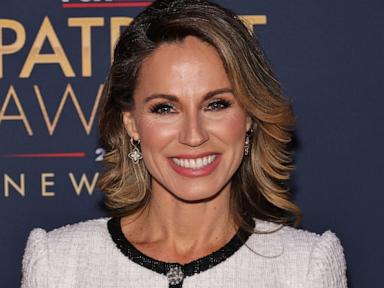
Donald Trump has abandoned his second attempt to install a "health disruptor" at the helm of the U.S. Public Health Service, pulling the nomination of Dr. Casey Means in favor of Fox News contributor and radiologist Dr. Nicole Saphier. This sudden pivot, announced via Truth Social, marks the third time the administration has tried to fill the role of "the nation’s doctor" in just over a year. While the official narrative frames Saphier as a "star communicator," the reality is a story of a stalled political movement and a tactical retreat from the more radical edges of the Make America Healthy Again (MAHA) agenda.
The nomination of Saphier is a direct response to the collapse of Casey Means' candidacy. Means, a Stanford-trained physician turned metabolic health influencer, was the standard-bearer for Robert F. Kennedy Jr.’s vision of a complete overhaul of the American food and medical systems. However, her nomination hit a wall of bipartisan skepticism in the Senate. Lawmakers, led by GOP Senator Bill Cassidy, grilled Means on her past skepticism toward traditional vaccine protocols and her lack of administrative experience. When it became clear that the votes weren't there, the White House didn't just change the person; they changed the archetype. Meanwhile, you can find other developments here: The Ghost in the Situation Room.
The Retreat to Professional Polish
Nicole Saphier represents a known quantity for the Trump administration. As a board-certified radiologist at Memorial Sloan Kettering and a staple of cable news for nearly a decade, she offers a blend of elite medical credentials and media savvy that her predecessors lacked. Janette Nesheiwat, the first pick, was pulled before hearings even began. Means was too controversial for the Republican mainstream. Saphier, by contrast, sits comfortably in the middle of the MAGA-Fox News Venn diagram.
She is an expert in breast imaging, but her public profile is built on her ability to translate complex health policy into political messaging. Her 2021 book, Panic Attack: Playing Politics with Science in the Fight Against COVID-19, serves as a manifesto for the administration’s health philosophy. It critiques government overreach and the "politicization" of public health—themes that resonate with the base while remaining just within the bounds of traditional medical discourse. To explore the complete picture, check out the excellent article by The New York Times.
The Power and the Uniform
The Surgeon General is often misunderstood as a policy-maker. In truth, the role is largely symbolic, yet uniquely influential. The office holder carries the rank of Vice Admiral in the U.S. Public Health Service Commissioned Corps, a uniformed service of over 6,000 health professionals. They don't pass laws; they issue Advisories.
These advisories have historical weight. When Luther Terry issued the 1964 report on smoking, he shifted the cultural and economic landscape of the country. By nominating Saphier, Trump is looking for a communicator who can use that "bully pulpit" to push back against the "administrative state" within health agencies like the CDC and FDA, without the baggage of being labeled an "anti-vaxxer" during Senate confirmation.
The MAHA Movement in Limbo
The withdrawal of Casey Means is a significant blow to the RFK Jr. wing of the administration. Means was meant to be the vanguard of a movement focused on chronic disease, ultra-processed foods, and a radical skepticism of the pharmaceutical industry. Saphier has echoed some of these sentiments—her book Make America Healthy Again addresses the trillion-dollar crisis of "bad behavior and big government"—but she approaches it from a more conventional, clinical perspective.
The tension here is palpable. Trump praised Means as a "strong MAHA Warrior" even as he threw her under the bus, blaming "political games" for her exit. By choosing Saphier, the President is signaling that he still wants the message, but he’s no longer willing to spend political capital on a nominee who can't survive a basic vetting process.
The Confirmation Gauntlet
Saphier now faces a Senate that has already proven it is willing to bark at the President’s health picks. While she lacks the "influencer" baggage of Means, she has her own trail of controversial statements. In 2022, she was criticized for inaccurately claiming the CDC would mandate COVID-19 vaccines for schoolchildren—a power the federal agency does not possess.
Senators will likely focus on three areas:
- Administrative Experience: Does a clinical radiologist have the chops to lead a 6,500-person uniformed corps?
- Scientific Independence: Can she separate her role as a partisan commentator from her duty to provide objective health data to the public?
- Vaccine Policy: Will she defend the existing immunization schedule, or will she lean into the "personal choice" rhetoric that stalled the previous nominee?
The Surgeon General's office has been vacant or led by acting officials for far too long. This vacancy creates a vacuum in national health leadership during a period where public trust in medical institutions is at an all-time low. Saphier’s primary challenge won't be her medical knowledge; it will be proving she can be the nation’s doctor, not just the party’s doctor.
The pivot to Saphier is a tactical move to secure a win on Capitol Hill. It shows an administration learning that while firebrands are great for rallies, they are often liabilities in the marble halls of the Senate. Whether Saphier can bridge the gap between "medical expert" and "political warrior" will determine if this third attempt is the charm or just another casualty of a chaotic appointment process.