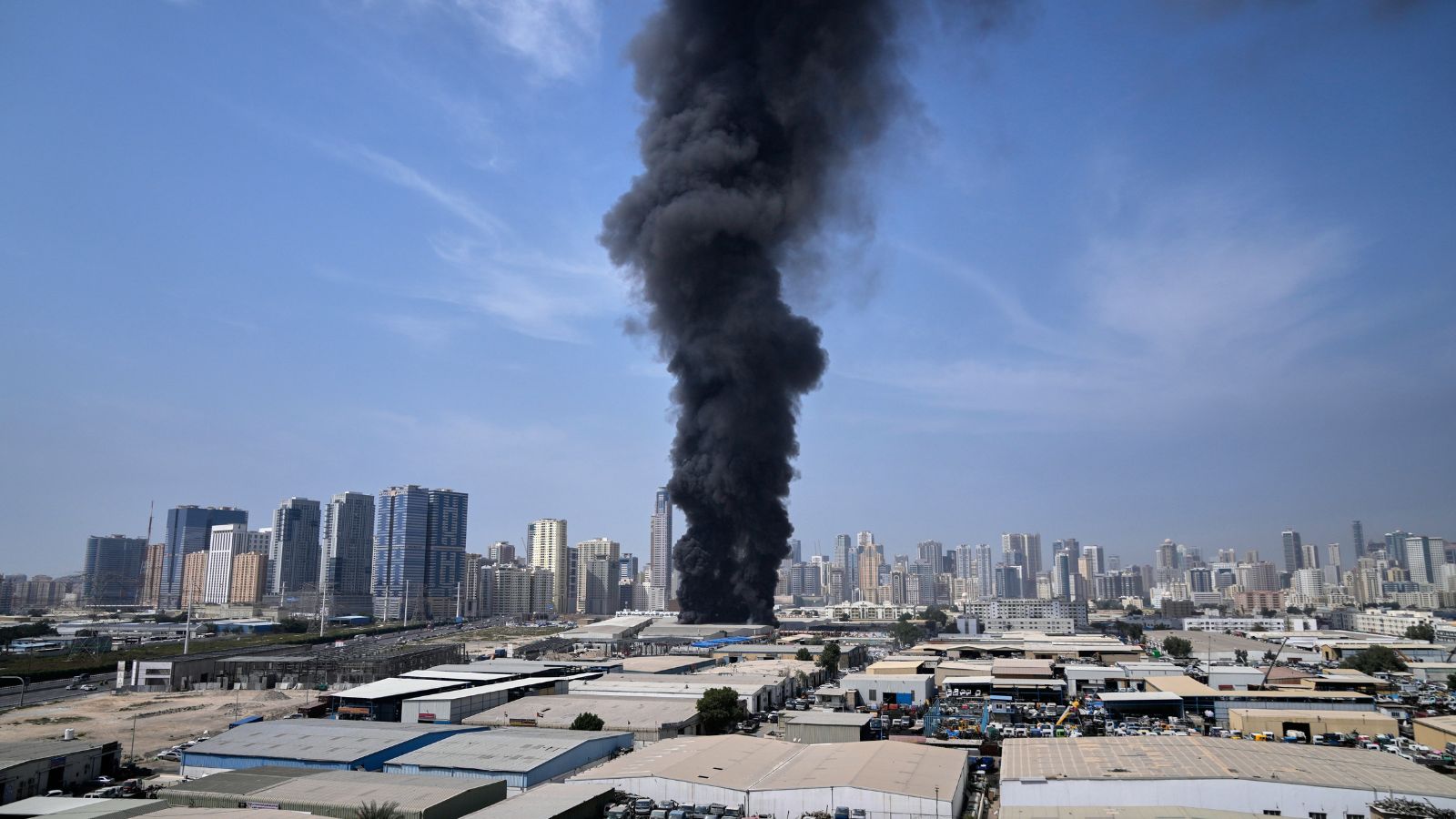
Dubai International Airport (DXB) came to a standstill in the early hours of Monday, March 16, 2026, after a drone strike ignited a fuel tank facility on the airport’s perimeter. While the Dubai Civil Defence contained the blaze within an hour and reported no casualties, the ripple effect was immediate: a total suspension of flights that left thousands of passengers stranded and forced carriers like Emirates to scrap their morning schedules. This isn't an isolated accident. It is the latest escalation in a "geopolitical beta" test where the United Arab Emirates has become the primary lightning rod for a West Asia conflict that officially began on February 28.
Since the outbreak of hostilities between the United States, Israel, and Iran, the UAE has intercepted an staggering 1,600 drones and nearly 300 ballistic missiles. The numbers suggest a targeted campaign to dismantle the image of the Emirates as a friction-free sanctuary for global capital. While Saudi Arabia and Qatar have faced their own barrages, the sheer volume of ordinance directed at Dubai and Abu Dhabi indicates that the strategy isn't just about military damage—it is about repricing the cost of doing business in the Gulf.
The Asymmetric Math of Defense
The financial reality of this conflict is becoming unsustainable for traditional defense models. The UAE relies heavily on US-made interceptors like the Patriot PAC-3 and THAAD. Each Patriot missile carries a price tag of roughly $4 million. In contrast, the Iranian-made Shahed-type drones being swarmed toward the coast cost approximately $20,000 to produce.
To bridge this gap, the UAE Air Force has shifted tactics. Instead of relying solely on expensive ground-based batteries, F-16 Block 60 and Mirage 2000 jets are now conducting the majority of interceptions using air-to-air missiles. This provides more mobility and covers a wider engagement zone, but it hasn't stopped the physical and psychological toll. Even a "successful" interception 30,000 feet above a city like Dubai means pounds of jagged, burning debris falling onto luxury hotels in The Palm or the financial district.
Strategic Redundancy Under Pressure
One reason the UAE remains the focus of these strikes is its refusal to blink. Unlike other regional hubs that might shutter operations at the first sign of a threat, Dubai and Abu Dhabi have maintained a policy of "aggressive resilience." On Monday, even as smoke rose from the fuel farm near DXB, authorities were already diverting traffic to Al Maktoum International (DWC) in Jebel Ali.
This distributed ecosystem is designed to prevent a total economic blackout, but it faces a growing threat from the insurance sector. Aviation underwriters have begun issuing notices of cancellation for standard coverage, forcing airlines to purchase "additional war-risk" premiums. For a wide-body aircraft, a single round trip to the Gulf now carries an insurance surcharge that can reach $120,000. When you add the fuel costs of navigating long-haul detours to avoid active combat zones, the "super-connector" business model starts to look increasingly brittle.
A Targeted Infrastructure Campaign
The intelligence behind these strikes reveals a sophisticated understanding of the UAE’s economic pressure points. The hits are rarely random.
- Energy Logistics: Drones have repeatedly targeted the Mussafah industrial area and ADNOC infrastructure in Abu Dhabi.
- Transit Hubs: The frequent "drone-related incidents" at DXB and AUH are calculated to disrupt the 200% surge in failed transfers that occurs when a hub closes for even sixty minutes.
- Diplomatic Targets: A drone impact in the parking area of the US consulate in Dubai earlier this month sent a clear signal regarding the UAE's security partnerships.
Tehran’s logic appears to be centered on "proximity and price." The UAE sits well within the range of Iran’s massive arsenal of short-range, low-cost assets. This allows for a high-tempo attrition war that tests the depth of Emirati missile stockpiles. While the Ministry of Defence claims a 93% interception rate, the 7% that gets through—or the debris that falls—is enough to shake investor confidence.
The Crackdown on the Digital Narrative
The war is being fought as much on social media as it is in the skies. The UAE government recently arrested 19 Indian nationals for posting "fabricated and misleading" video clips of the attacks. This move highlights the state's anxiety over the "visibility" of the conflict. In a country where the brand is built on safety and futuristic luxury, images of plumes of smoke over Jebel Ali are a direct threat to the national narrative.
The Attorney-General’s office has tightened monitoring of digital platforms, aiming to stop the spread of "artificial content" intended to provoke public disorder. This domestic crackdown serves as a defensive wall against the psychological warfare intended to drive tourists and expats out of the country.
The Shift to Operational Silence
Observers have noted a subtle shift in how the UAE communicates its defense successes. In the first ten days of the war, the Ministry of Defence released granular data on every missile and drone detected versus intercepted. Recently, that has changed to more vague reports of "engaging" with threats.
This pivot toward operational security suggests that the depletion of interceptor stocks is a genuine concern. As the conflict enters its third week, the question isn't just whether the UAE can hit the drones, but how long they can afford to keep shooting. With the US and Israel launching fresh strikes on Iranian targets including Kharg Island, the cycle of retaliation shows no sign of cooling.
The Gulf is currently navigating a period of "geopolitical repricing." If these disruptions persist for another six months, the global aviation industry may be forced to treat the region as a permanent high-risk zone, shifting the center of gravity for international travel back toward more stable, albeit less central, hubs. For now, the UAE is betting that its multi-billion dollar air defense umbrella can hold long enough for diplomacy—or a decisive military shift—to end the barrage.
If you need a briefing on the current flight restrictions or a breakdown of the specific insurance surcharges for Gulf-bound cargo, I can compile that data for you.