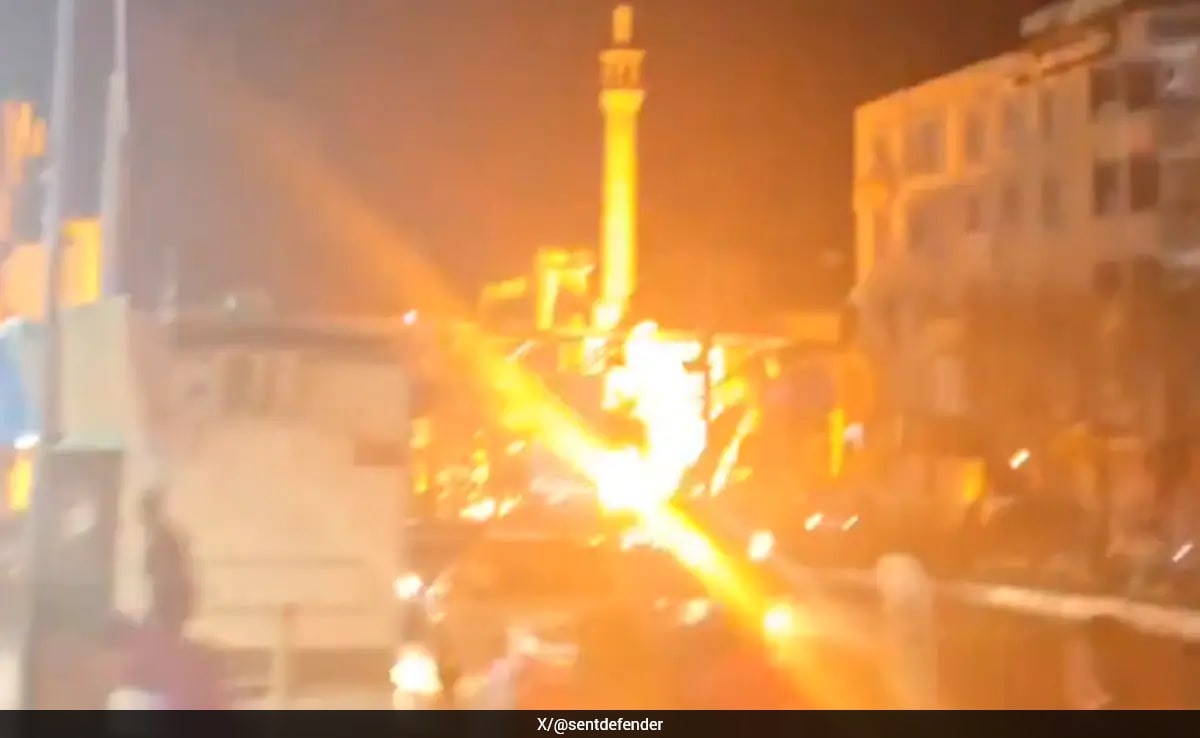
Videos are flooding social media showing storm drains in Tehran literally erupting into geysers of fire and oily sludge. It’s a chaotic scene that looks like something out of a disaster movie, but the cause is much more grounded in the brutal reality of the current conflict. If you’ve seen the footage of manhole covers being blasted into the air, you’re looking at the direct physical consequence of recent strikes on oil facilities in and around the Iranian capital.
The logic is simple and terrifying. When high-capacity oil depots or petroleum transport centers are hit by precision munitions, the containment fails instantly. Thousands of gallons of fuel don't just sit there; they find the lowest point of gravity. In a dense urban environment like Tehran, that means the municipal drainage system. Once volatile fuel vapors mix with the oxygen in those tunnels and hit an ignition source—whether it’s a secondary strike or a simple electrical spark—the entire underground network becomes a massive pipe bomb.
Why the City Is Literally Raining Oil
It’s not just the drains. Residents across Tehran woke up to a city covered in a thick, greasy soot. The Iranian Red Crescent has already issued urgent warnings about "acid rain," but it’s actually worse than that. The massive fires at the Shahran Oil Refinery and other depots sent massive plumes of unburned hydrocarbons into the atmosphere.
When it rains, those particles don't just wash away. They bind with water droplets and fall back to earth as a toxic, oily sludge.
- It ruins clothes instantly.
- It coats vehicles in a film that’s incredibly hard to scrub off.
- Most importantly, it’s a nightmare for anyone with respiratory issues.
Health authorities are telling people to stay indoors, and they aren't kidding. Breathing in atomized petroleum products and nitrogen oxides can cause permanent lung scarring. If you’re in the area, don't just "be careful"—stay inside and seal your windows.
The Infrastructure Trap Nobody Talked About
Most analysts focus on the "strategic value" of hitting oil. They talk about "depriving the regime of revenue" or "crippling the military industrial complex." What they miss is how integrated these facilities are with the civilian life of 10 million people.
The National Iranian Oil Products Distribution Company (NIOPDC) confirmed that the strikes hit transport centers used for domestic fuel. By hitting these specific nodes, the ripple effect on the city's infrastructure was immediate. We’re seeing massive lines at gas stations because the fuel supply network is physically severed. When the Governor of Tehran says the problem is "being resolved," he’s trying to prevent a panic. The reality is that repairing a burnt-out fuel transport hub while the city's drains are still venting explosive gases is a slow, dangerous process.
What This Means for Global Energy Prices
Don't think this stays contained in Tehran. Oil prices haven't been this volatile since 2023 for a reason. While Iran claims to have "sufficient gasoline reserves," the market doesn't believe it. Every time a video of an exploding storm drain goes viral, it signals to the world that Iran’s internal logistics are failing.
If the conflict moves to Kharg Island—which handles roughly 90% of Iran's exports—we’re looking at a global economic shockwave. For now, the focus is on these "dual-use" facilities that serve both the military and the public. It’s a surgical way to apply maximum pressure on the government through the frustration of the citizenry.
If you live in a high-risk area or are tracking the environmental impact, prioritize your immediate health.
- Avoid any standing water or "puddles" on the street; they are likely high-concentration fuel runoff.
- Use N95 masks if you absolutely must go outside to filter out the larger soot particles.
- Watch for "venting" sounds near street level; if a storm drain is whistling or hissing, it’s off-gassing fuel vapors and could ignite at any moment.
The situation in Tehran is a stark reminder that modern warfare doesn't just happen at the "front." It happens under the streets, in the air people breathe, and in the very water that falls from the sky.