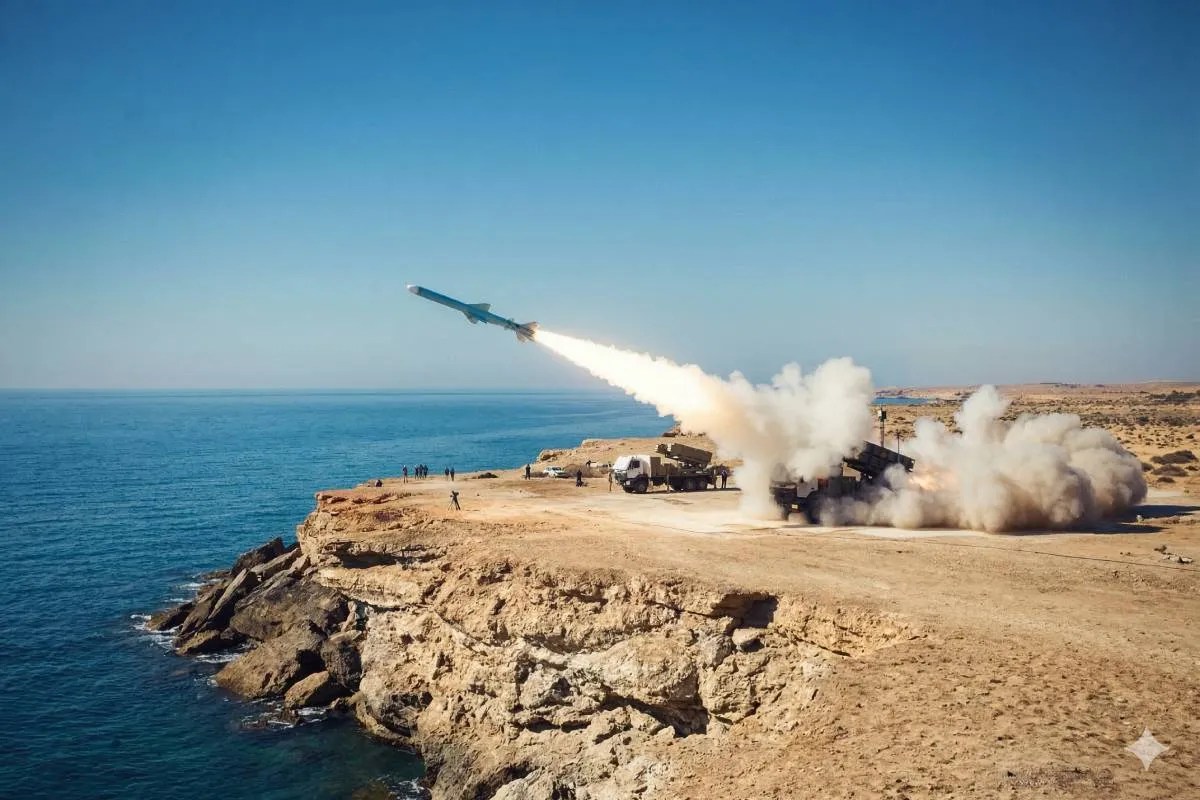
The siren didn’t just signal an incoming projectile. It signaled a shift in how wars are fought in the 21st century. When Iran launched its massive ballistic missile barrage against Israel, the world watched a live-streamed experiment in high-stakes brinkmanship. We aren't just talking about a few rockets from a border skirmish. This was a sophisticated, multi-layered strike aimed at the heart of Israel’s military infrastructure.
Israel admitted that several missiles hit their mark. Specifically, the Nevatim Airbase took some of the heat. If you've been following the region, you know Nevatim isn't just any runway. It's the home of the F-35 Lightning II stealth fighters. These jets are the crown jewels of the Israeli Air Force (IAF). Iranian state media and military officials were quick to claim a "strategic victory," while Israeli officials maintained that the damage was "minimal" and didn't impact operational capacity.
The real story isn't just about what blew up. It's about what almost happened. Israeli military spokesperson Rear Admiral Daniel Hagari made a chilling observation. He noted that if those missiles had hit a few meters in a different direction—or if they'd struck during a shift change when personnel were out in the open—the casualties would've been catastrophic. That "what if" is exactly why the Israeli cabinet has been locked in heated sessions ever since.
The Nevatim Factor and Why It Matters
Let's look at the geography of this strike. Nevatim is located in the Negev desert. It’s tucked away, highly guarded, and reinforced with some of the most advanced hangars on the planet. For Iran to land hits there—even if they only damaged taxiways or storage sheds—sends a clear message. It says, "We can touch your most protected assets."
Iran used a mix of weapons, including the Fattah-1 hypersonic missile. Hypersonic tech is a nightmare for traditional air defenses. These things travel at five times the speed of sound. They don't fly in a predictable arc like a standard ballistic missile. They maneuver. Even with the Iron Dome, David’s Sling, and the Arrow-3 system working overtime, some of these "rocks" are going to get through.
Israel’s defense philosophy has always been built on the idea of a "qualitative military edge." They have better tech, better training, and better intel. But quantity has a quality of its own. When you're facing 180 to 200 ballistic missiles at once, the math gets ugly. Every interceptor fired costs millions of dollars. The Iranian missiles, while expensive, are cheaper than the tech used to stop them. It’s an economic war of attrition played out in the stratosphere.
Misconceptions About the Iron Dome
People often see footage of the Iron Dome's glowing interceptors and think Israel is invincible. That's a mistake. The Iron Dome is designed for short-range threats—Katyusha rockets and mortars from Gaza or Southern Lebanon. For the heavy stuff coming from Iran, Israel relies on the Arrow-2 and Arrow-3 systems.
These systems intercept missiles in space. Think about that for a second. You're trying to hit a bullet with another bullet while both are traveling thousands of miles per hour outside the atmosphere. During this recent attack, the success rate was high, but it wasn't 100%. No system is.
What's rarely talked about is the psychological toll. When a missile hits near a populated area or a sensitive military site, the "invincibility" of the state is questioned. Iran knows this. They don't need to destroy the whole base to win a PR battle. They just need to show a crater near an F-35 hangar.
The Regional Impact and the Arab Response
This wasn't just a two-player game. Jordan and other regional actors found themselves in the middle of a literal crossfire. Jordan’s air force actually intercepted some Iranian projectiles. This puts them in a weird spot. They have a massive Palestinian population, yet they're technically helping protect Israeli airspace to maintain their own stability.
Saudi Arabia and the UAE stayed mostly quiet, but their radars were definitely spinning. They're terrified of a full-scale regional war that would tank their "Vision 2030" goals and stop the flow of oil. If Iran can hit Israel, they can certainly hit the oil fields in the Gulf.
The US also played a massive role here. Navy destroyers in the eastern Mediterranean fired interceptors. This highlights a hard truth for Israel. Even with the best tech in the world, they still need the American "umbrella" to handle a full Iranian surge.
What Happens When the Red Line is Crossed
Israel promised a "painful response." In the world of Middle Eastern geopolitics, "deterrence" is the only currency that matters. If you don't hit back harder than you were hit, you're seen as weak. And in this neighborhood, weakness is an invitation for more attacks.
The targets for a counter-strike are obvious but incredibly risky.
- Oil Refineries: Hitting Iran’s economic lifeblood would hurt their ability to fund proxies like Hezbollah.
- Nuclear Facilities: This is the "nuclear option." Sites like Natanz or Fordow are buried deep underground. Striking them would be a declaration of total war.
- Leadership Targets: Taking out IRGC commanders is a classic Israeli move, but it often leads to immediate retaliation.
Iran has warned that any response will be met with an even larger barrage. They've explicitly mentioned targeting Israeli infrastructure like power plants and water desalination facilities. We're looking at a cycle where both sides are one miscalculation away from a conflict that would make the last few decades look like a warmup.
The Tech Gap is Closing
For years, the West laughed at Iranian military "unveilings," calling them cardboard mockups or photoshopped fakes. Nobody is laughing now. Iran has developed a robust domestic defense industry because they had to. Decades of sanctions forced them to stop buying and start building.
Their drone program is world-class. Their missile guidance has improved significantly. They've learned from watching the war in Ukraine. They've seen how cheap drones and massed missile fire can overwhelm even the best NATO-standard defenses. Israel isn't just fighting a country; they're fighting an ideology that has turned "asymmetric warfare" into a science.
The Israeli public is divided. Some want the government to "finish it" and strike Iran's nuclear program now. Others realize that a war with Iran means thousands of missiles hitting Tel Aviv every day for weeks. There are no easy exits here.
Watch the diplomatic cables and the movements of US carrier groups. If the US starts moving more assets into the Red Sea or the Persian Gulf, you'll know a strike is imminent. If things stay quiet, it means the back-channel negotiations—likely through Oman or Qatar—are actually working.
You should keep a close eye on the price of Brent Crude oil. It's the most honest indicator of how close we are to the edge. If it spikes past $100, the market is betting on a major escalation. Prepare for more volatility in the region as both Tehran and Jerusalem try to redefine where the new "red lines" are drawn.