A humid afternoon in Manila feels different than a humid afternoon in Houston, but inside the store, the smell is identical. It is the scent of sugar, garlic, and frying poultry. It is the smell of a localized defiance.
In the 1970s, the global fast-food playbook was already written. It was a gospel of standardization exported from Illinois to the rest of the planet. When McDonald’s landed in the Philippines in 1981, the outcome seemed predestined. History usually shows that when a multi-billion-dollar American juggernaut enters a developing market, the local mom-and-pop shops and small regional chains quietly fold their tents. They become footnotes.
But a Chinese-Filipino entrepreneur named Tony Tan Caktiong didn’t close his ice cream parlors. He looked at the burgers the Americans were selling and realized they tasted like an instruction manual. They were balanced, efficient, and entirely foreign to the Filipino palate.
He decided to bet on the "langhap-sarap"—the scent that promises deliciousness. He bet on a bee.
The Taste of Home is Not Neutral
To understand why Jollibee is the only brand in Southeast Asia to successfully beat the global giants at their own game, you have to understand the specific anatomy of a Filipino palate. It is a profile defined by "linamnam"—a complex, savory umami—and an unapologetic love for sweetness.
Standard American fast food is built on a profile of salt and acid. Jollibee’s flagship Jolly Spaghetti, however, is topped with a sauce made from banana ketchup and sliced hot dogs. To an outsider, it sounds like a culinary fever dream. To a Filipino, it is the taste of a childhood birthday party.
This wasn't just a menu tweak. It was a psychological moat. By the time McDonald’s realized that they couldn't just export a Chicago cheeseburger and expect total dominance, Jollibee had already captured the emotional real estate of the nation. They didn't just sell calories; they sold a sense of belonging.
Consider a hypothetical worker named Mateo. Mateo spent five years driving a bus in Dubai, sending 80% of his paycheck back to Quezon City. When he finally walks into a Jollibee at a mall in the Emirates, he isn't buying a chicken drumstick. He is buying a three-minute plane ticket home. That emotional tether is something a spreadsheet can't easily quantify, but it’s the reason Jollibee now operates over 6,000 stores globally.
The Chickenjoy Hegemony
The center of this universe is a piece of fried chicken called Chickenjoy.
In the high-stakes world of Quick Service Restaurants (QSR), chicken is the ultimate global currency. It is more culturally flexible than beef and cheaper to produce than pork. But Jollibee’s approach to the bird is obsessive. They don't just bread it; they marinate it to the bone.
While competitors focus on the speed of the drive-thru, Jollibee focuses on the crunch of the skin. They recognized early on that in Southeast Asia, rice is not a side dish. It is the foundation of the meal. By pairing fried chicken with a side of steamed rice and a signature savory gravy, they turned a snack into a staple.
This strategy of "localization as a weapon" allowed them to do what no other Southeast Asian brand has managed: successful outward expansion. Usually, brands from the region stay within their borders or perhaps venture into a neighboring country. Jollibee took a different path. They followed the diaspora.
There are over 10 million Filipinos living and working abroad. They are the vanguard. Every time Jollibee opens a store in Earl’s Court in London or Manhattan’s Times Square, the lines stretch around the block for days. The diaspora provides the initial surge of revenue and the "cool factor" of a cult following, which then introduces the brand to the local population. It is a Trojan Horse strategy powered by nostalgia.
Winning the Invisible War
The business world often treats culture as a barrier to be overcome. Corporate consultants talk about "minimizing local friction." Jollibee did the opposite. They maximized the friction. They leaned so heavily into their "Filipino-ness" that it became their primary competitive advantage.
But the story isn't just about fried chicken and sweet spaghetti. It’s about the ruthless acquisition of other identities.
While the red bee remains the face of the company, Jollibee Foods Corporation (JFC) has quietly become an empire of brands. They didn't just stop at their own doors. They bought Coffee Bean & Tea Leaf. They bought Smashburger. They took over the operations of Tim Ho Wan.
They are no longer just a Philippine restaurant chain; they are a global holding company that understands a fundamental truth: the future of food is not a single global flavor. It is a collection of very specific, very intense local loves.
They realized that the "standardized world" promised by 20th-century globalization was a myth. People don't want to eat the same thing everywhere. They want to eat the thing that makes them feel like they are somewhere specific.
The Stake in the Ground
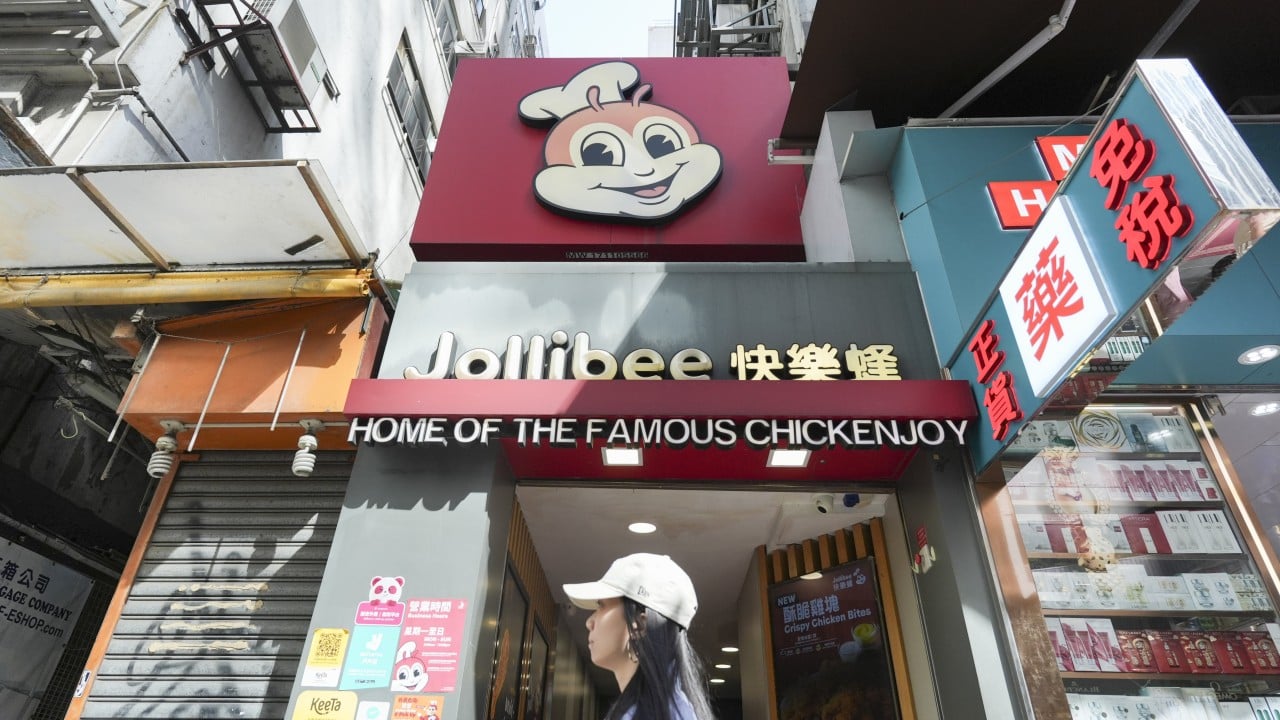
When you walk into a Jollibee, the mascot—a large, red-and-yellow bee wearing a chef’s hat—is smiling. It looks innocent. But that bee is a predator in the best sense of the word. It has successfully defended its home turf against the largest corporation in the history of food, and now it is methodically planting flags on every continent.
The stakes aren't just about market share or year-over-year growth. The stakes are about cultural agency. For decades, the flow of influence was a one-way street from West to East. Jollibee represents the reversal of that flow.
It is a reminder that a local brand, if it respects the soul of its consumers, can not only survive but thrive. It proves that you don't have to erase your identity to scale your business. You just have to make sure your chicken is crispier than the guy’s next door.
The lines in New York aren't getting shorter. The gravy is still being poured by the gallon. Somewhere in a boardroom in suburban Manila, they are looking at a map of the world and seeing not a series of markets, but a series of neighborhoods waiting for a taste of something that isn't standardized.
The bee is still hungry.
Would you like me to analyze Jollibee's specific acquisition strategy for Western brands like Smashburger?