The flickering blue light of a television in a darkened living room used to be a symbol of a shared reality. Whether you leaned left or right, the box on the mantle was a neutral conduit, a pipe through which the world flowed into your home. But lately, that pipe feels like it’s being fitted with a shut-off valve.
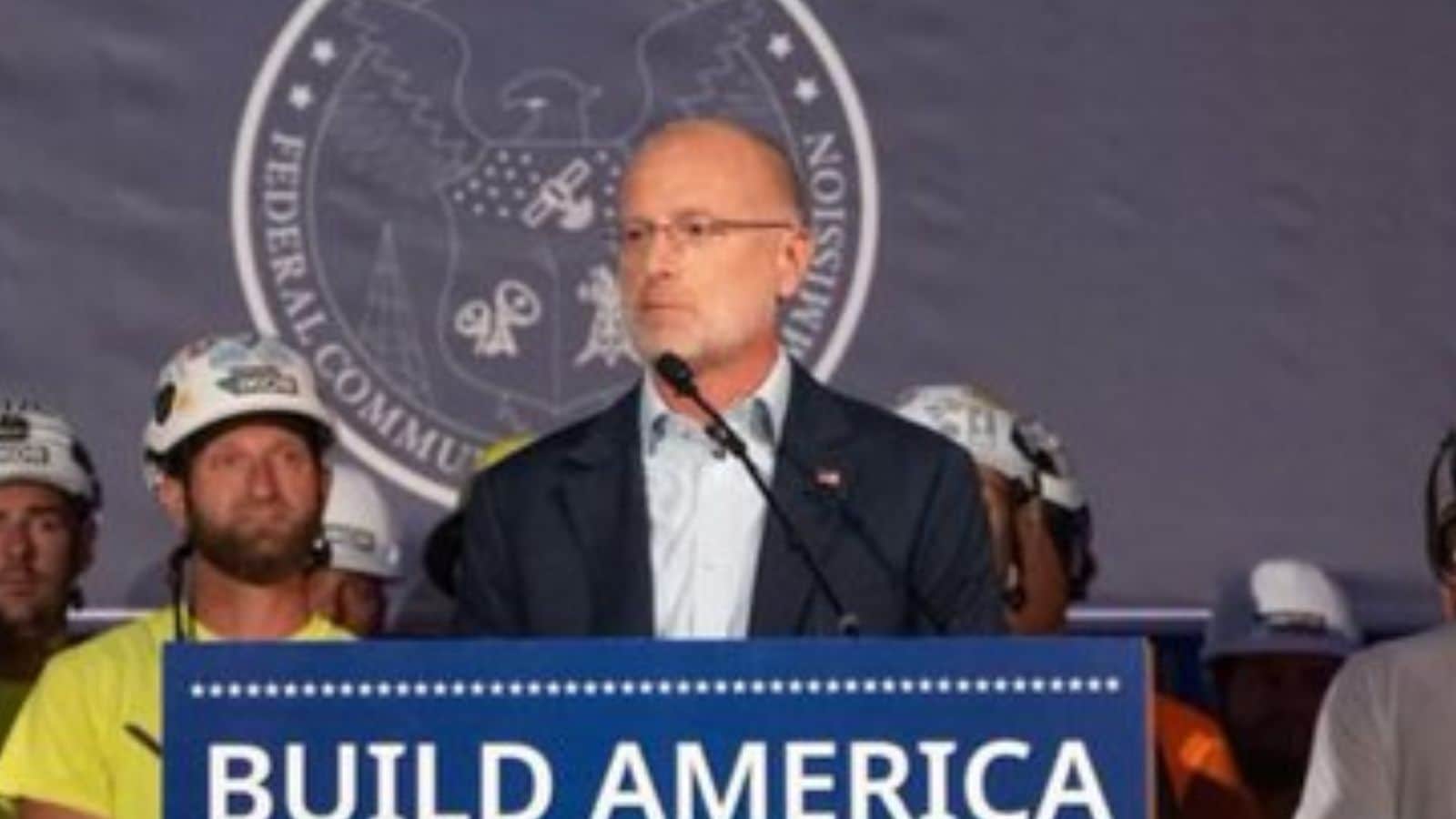
Brendan Carr, the Chairman of the Federal Communications Commission, recently stood before the digital pulpit of social media and the literal podiums of Washington to issue a warning that should make every person who values a free press shiver. He didn't just critique the coverage of the escalating conflict in Iran. He didn't just suggest the reporting was biased. He drew a line in the sand and pointed a finger at the very right of these networks to exist on the airwaves.
"The FCC has the power to revoke licenses," he noted, a statement that landed with the weight of a gavel in a silent courtroom. It was a sentiment immediately echoed and amplified by Donald Trump, turning a regulatory threat into a political lightning rod.
To understand why this matters, you have to look past the scrolling tickers and the shouting heads on cable news. You have to look at the mechanics of how information reaches your eyes.
The invisible contract
Most people don't think about broadcast licenses. Why would they? You turn on the TV, and the picture appears. But those airwaves—the literal frequencies moving through the air around you right now—are not private property. They belong to the public. They are a national resource, like a national park or a waterway.
Decades ago, the government struck a deal with broadcasters: We will let you use these valuable frequencies for free, but in exchange, you must operate in the "public interest, convenience, and necessity." It’s a vague phrase. It’s a beautiful phrase. It’s also a dangerous one, because whoever defines "the public interest" holds the keys to the kingdom.
When a regulator suggests that "biased" coverage of a war—in this case, the complex, bloody, and terrifying developments in Iran—is grounds for pulling a license, the definition of public interest shifts from "informative" to "compliant."
Think of a local news station in a mid-sized city. They have a newsroom full of producers, camera operators, and reporters who have spent twenty years covering school board meetings and warehouse fires. If the parent company of that station is told their billion-dollar license is at risk because a late-night pundit in New York was too critical of a drone strike, the chill doesn't just stay in Manhattan. It freezes the blood of every journalist in the chain.
The weight of the gavel
The FCC has historically been a sleepy agency concerned with things like signal interference, "wardrobe malfunctions" during the Super Bowl, and making sure your garage door opener doesn't accidentally trigger a neighbor’s pacemaker. It was never intended to be the National Content Board.
When Carr suggests that the coverage of Iran has crossed a line into "propaganda" or "misinformation" worthy of license revocation, he is stepping into a role that the First Amendment was specifically designed to prevent. The Supreme Court has been remarkably clear over the last century: the government cannot punish a speaker just because it dislikes the message.
But the threat itself is the point.
You don't actually have to revoke a license to win. You just have to make the threat credible enough that the lawyers at the big networks start "suggesting" edits to the scripts. You make the editorial boards wonder if a specific segment is worth a three-year legal battle with a federal agency.
Caution. Self-censorship. The slow, quiet death of a difficult question.
A tale of two realities
Imagine a hypothetical producer named Sarah. Sarah is sitting in a control booth, looking at raw footage from a protest in Tehran. She has two minutes to fill. She sees footage of a government building on fire, and she also sees footage of civilian casualties from a retaliatory strike.
If Sarah knows that the FCC is actively monitoring her network’s "tone" to decide if they get to keep their license next year, does she pick the footage that tells the whole, messy truth? Or does she pick the footage that keeps the Chairman happy?
This isn't about whether the coverage of Iran is actually biased. Coverage of war is almost always flawed, seen through a narrow lens, and shaped by the chaos of the moment. The issue is who gets to decide what "fair" looks like. If it’s a government official with a political agenda, we no longer have a news industry. We have a state information bureau.
The backlash was immediate. Civil liberties groups, former FCC commissioners, and constitutional scholars erupted. They pointed out that Carr’s rhetoric mirrors the tactics used in autocracies where "license renewals" are the primary tool used to crush dissent.
Yet, the applause from the former President suggests a significant portion of the country is tired of the media and wants someone to "do something" about it. There is a deep, burning resentment toward traditional news outlets. Many feel the "public interest" has been abandoned by the networks long ago in favor of ratings and partisan bickering.
But the solution to a biased press isn't a silenced one.
The ghost of the fairness doctrine
To navigate this, we have to look back at the Fairness Doctrine. Rescinded in 1987, it once required broadcasters to present controversial issues of public importance and to do so in a manner that was—in the FCC’s view—honest, equitable, and balanced.
When it was killed, the "Opinion News" era was born. Talk radio exploded. Cable news became a team sport. Many look back at the pre-1987 era as a time of civility, while others see it as a time of forced blandness where the government had too much say in what was "equitable."
Carr’s current threats are a distorted, weaponized version of that old ghost. He isn't asking for balance; he is threatening extinction for perceived hostility.
The irony is that the FCC’s authority over cable news—where most of the "war coverage" people are angry about actually lives—is virtually non-existent. CNN, MSNBC, and Fox News don't use public airwaves. They travel through private wires or satellite beams. The FCC chair knows this. But the local stations that these companies own do use the airwaves. By threatening the local affiliates, you hold the parent company hostage.
It is a bank shot. A regulatory move designed to bypass the Constitution by squeezing the pocketbook.
The human cost of silence
When we talk about Iran, we are talking about life and death. We are talking about the possibility of a wider war, the price of oil, the lives of soldiers, and the stability of the globe. These are not topics that benefit from a "safe" or "sanitized" narrative.
If a network is too afraid of the FCC to report on the failures of a military strategy, or the human rights abuses of an adversary, or the dissenting voices within our own government, the American public becomes the most uninformed people on the planet.
We are being asked to trust that a government appointee knows what's best for us to hear. But history is a long, repetitive story of what happens when the people in power get to decide what's true. It usually ends with a lot of people in the dark, wondering how things got so bad so fast.
The stakes aren't just about a broadcast license. They aren't about one term of an FCC Chairman or one election cycle.
The stakes are the fundamental architecture of the American mind. If we allow the threat of a "license revocation" to dictate the stories we are told, we aren't just losing a TV channel. We are losing the ability to see the world as it actually is, rather than how the government wants it to be.
The red ink on that license doesn't just belong to the FCC. It belongs to every citizen who stops asking questions because the answer might be too expensive to broadcast.
The screen goes black not when the power cuts out, but when the people behind it decide it’s no longer safe to speak.