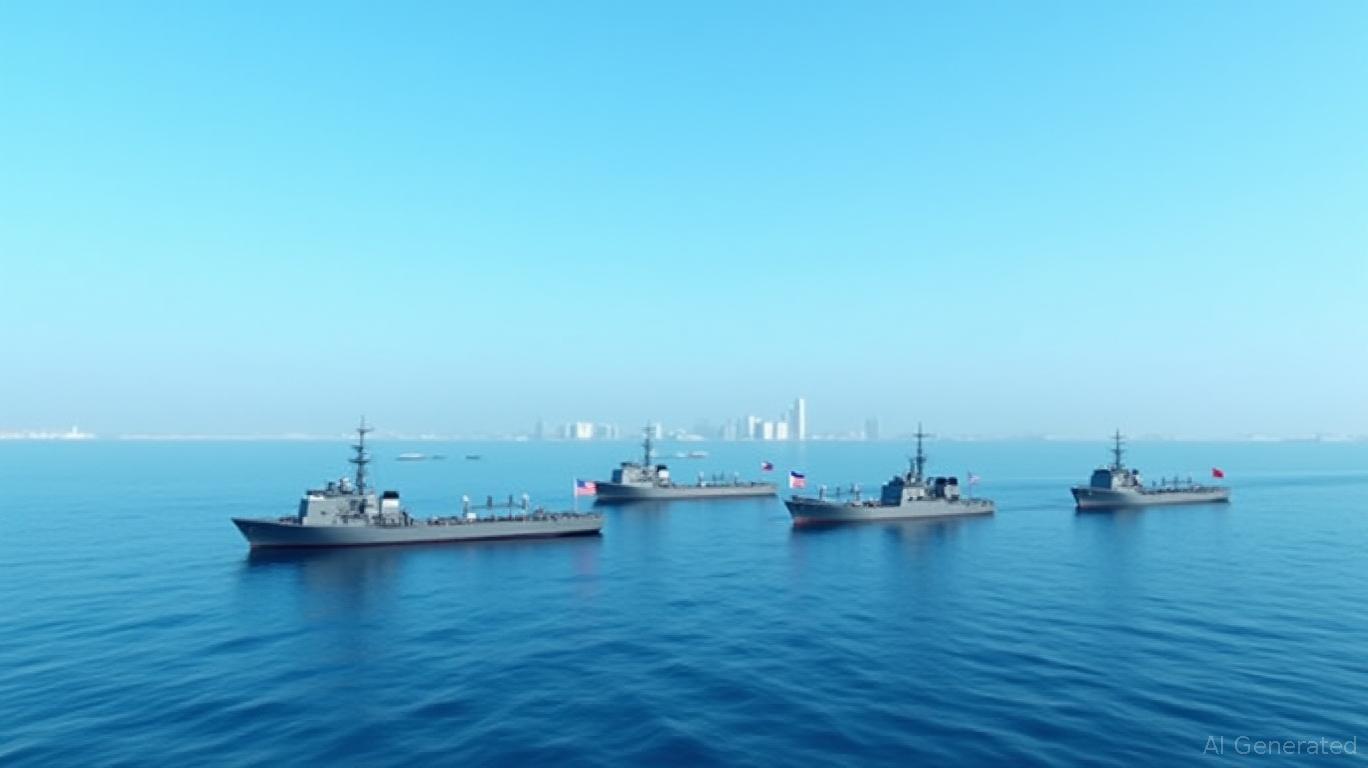
The fragile architecture of the Middle East ceasefire has suffered a terminal blow. Following a direct kinetic engagement where a U.S. Navy destroyer intercepted and struck a cargo vessel allegedly linked to Iranian logistics, Tehran has officially accused Washington of a direct breach of international law. This isn't just another skirmish in a long-standing shadow war. It is a definitive shift toward open, conventional conflict. Iran’s promise of a swift response suggests that the period of tactical restraint is over. The global economy, already reeling from maritime instability, now faces a reality where the primary shipping lanes of the Suez Canal are effectively a combat zone.
The incident involving the U.S. destroyer was not an isolated maritime accident. It represents a fundamental change in American engagement rules. For months, the United States maintained a defensive posture, focused on intercepting drones and missiles. By targeting a physical cargo vessel—a move the Pentagon justifies as "preemptive interdiction" of advanced weaponry—the U.S. has crossed a line that Tehran views as an act of war. The diplomatic fallout is immediate. Iranian officials have spent the last twelve hours briefed on "retaliatory packages" that likely target not just American naval assets, but the economic arteries of the West. Meanwhile, you can find similar stories here: Structural Mechanics of Turkish Firearm Reform and the School Safety Mandate.
The Strategy of Escalation Through Interdiction
Maritime law is often a gray area during regional conflicts, but the specific targeting of a cargo ship under the suspicion of arms smuggling is a high-stakes gamble. The U.S. Navy asserts that the vessel was carrying sophisticated guidance systems destined for proxy forces. However, in the court of international opinion—and certainly in the rhetoric emerging from the Iranian Foreign Ministry—this is being framed as an unprovoked attack on commercial sovereignty.
The "why" behind this move is clear for Washington. They are tired of playing goalie. Intercepting five-thousand-dollar drones with multi-million-dollar missiles is a losing game of attrition. By striking the source—the transport ships—the U.S. hopes to break the supply chain. The "how" is more complex. Using a destroyer to disable a merchant vessel in international waters requires a level of intelligence certainty that is rarely absolute. If the manifest shows any civilian necessity, the U.S. loses the moral high ground and provides Tehran with the perfect justification for its "soon to follow" counter-strike. To see the full picture, check out the recent analysis by NBC News.
The Breakdown of the Backchannel
For decades, the U.S. and Iran have relied on Swiss intermediaries or Omani diplomats to pull back from the brink. Those channels are currently silent. The current administration in Washington is under immense domestic pressure to show "strength" after months of perceived passivity in the face of Houthi and militia attacks. Conversely, the hardliners in Tehran feel that the current ceasefire was a trap designed to hollow out their regional influence while Israel consolidates its positions.
When Tehran claims a "ceasefire breach," they are referring to the unspoken understanding that commercial shipping—even that which is strategically sensitive—remains off-limits for direct kinetic strikes by superpowers. By shattering that norm, the U.S. has signaled that the rules of the last two years are null and void. We are entering a phase where the target isn't just the proxy, but the patron.
The Logistics of a Persian Gulf Response
Tehran rarely acts in a vacuum. Their military doctrine relies on asymmetric pressure. If they intend to "respond soon," we should look at the vulnerabilities they have mapped over the last twenty years.
- The Strait of Hormuz: This is the ultimate kill switch. Roughly 20% of the world’s petroleum passes through this narrow choke point. Iran doesn't need to win a naval battle; they only need to sink two tankers to send global insurance rates into a vertical climb that would paralyze trade.
- Subsurface Assets: Iran has invested heavily in "midget" submarines and smart mines. These are difficult for even the most advanced U.S. Aegis systems to detect in the cluttered, shallow waters of the Gulf.
- Cyber Offensive: The response may not be physical. Iranian state-sponsored hacking groups have spent years mapping the industrial control systems of Western energy grids and water treatment plants. A "response" could easily manifest as a blackout in a major European or American city.
The move by the U.S. destroyer was a tactical success but a strategic nightmare. It provided the tactical win of stopping a shipment while giving the opponent the political capital to escalate without appearing to be the primary aggressor.
Economic Aftershocks for the Mediterranean and Beyond
The cargo ship incident has sent a shockwave through the maritime insurance industry. We are no longer talking about "war risk" surcharges. We are looking at the potential for entire regions to be declared "no-go zones" for commercial hulls.
When a destroyer hits a cargo ship, the ripple effect isn't just about the cargo. It's about the crew, the flag state, and the precedent. Shipping companies like Maersk and MSC have already diverted significant portions of their fleets around the Cape of Good Hope. This adds ten to fourteen days to transit times and millions in fuel costs. The American strike ensures that these diversions will become permanent fixtures of the global economy for the foreseeable future. Inflation isn't a theory here; it’s an inevitable byproduct of a navy that has decided to stop defending and start attacking.
The Intelligence Failure of De-escalation
The core premise of Western diplomacy over the last six months was that Iran could be "managed" through a combination of targeted sanctions and back-door threats. That premise has failed. The analyst community in D.C. underestimated the internal pressure within the IRGC to respond to what they perceive as a "containment" strategy.
The U.S. destroyer's action indicates that the intelligence community believes Iran is already committed to a larger conflict. This is a "pre-war" mindset. If you believe the war is inevitable, you stop worrying about escalation and start worrying about the enemy’s opening move. The problem with this logic is that it becomes a self-fulfilling prophecy. By acting as if the ceasefire is already dead, the U.S. has ensured its demise.
The Role of Regional Players
Saudi Arabia and the UAE are watching this with growing dread. They have spent the last three years trying to diversify their economies and move away from the "oil and war" narrative. A direct Iran-U.S. confrontation on their doorstep ruins the "Vision 2030" goals. They are stuck between a security guarantor (the U.S.) that is increasingly erratic and a neighbor (Iran) that is increasingly desperate.
Their silence is deafening. Usually, we would see calls for "restraint from all parties" within minutes. The delay suggests they are currently renegotiating their own security positions, possibly looking toward Beijing or Moscow to act as the new adults in the room.
Analyzing the "Soon to Respond" Threat
Tehran’s phrasing is specific. "Soon" in Persian diplomatic circles usually means a calculated delay long enough to ensure the U.S. stays on high alert, draining resources and morale, followed by a strike when the news cycle has moved on. It is a psychological game as much as a kinetic one.
The target will likely be symbolic. Iran needs to prove that it can touch the "untouchable" American assets. This could mean a swarm drone attack on a base in Iraq or Syria, or perhaps a more daring attempt to disable a Western naval vessel using a "suicide" unmanned surface vehicle (USV). The U.S. has shown it can hit a cargo ship. Iran now feels the need to show it can hit a warship.
The Cargo Ship as a Proxy for Sovereignty
We must look at the ship itself. While the U.S. claims it was a vessel of "illicit intent," it operated under a flag of convenience. This involves complex legalities. If the ship was flying the flag of a neutral nation, the U.S. just committed a massive violation of the Law of the Sea. This gives Iran the ability to build a coalition of "non-aligned" nations who are tired of American maritime hegemony.
The investigative reality is that the U.S. likely used "dark fleet" tracking data to identify this vessel. The "dark fleet" consists of ships that turn off their transponders to move sanctioned goods. By hitting a dark fleet ship, the U.S. is attacking the secret financial engine of the Iranian state. This is why the reaction from Tehran is so visceral. You aren't just stopping guns; you are stopping the money that keeps the regime’s elite units paid.
The Failure of the Destroyer Doctrine
Relying on multi-billion dollar destroyers to police commercial traffic is an unsustainable model of warfare. It is the equivalent of using a Ferrari to patrol a high-crime neighborhood; it’s effective until it gets a scratch, at which point the cost of repair outweighs the value of the patrol.
The U.S. Navy is overstretched. Between the Indo-Pacific tensions and the Mediterranean requirements, the fleet in the Red Sea is exhausted. Iran knows this. Their strategy is to bleed the U.S. through a thousand small cuts. Every time a destroyer is forced to fire a missile, or worse, engage a cargo ship and trigger a diplomatic crisis, the U.S. loses a piece of its global standing.
Why the Ceasefire Was Always a Ghost
The ceasefire was never a signed document with clear parameters. It was a collection of "understandings" that were interpreted differently by every player involved.
- The U.S. interpretation: We won't attack Iranian soil if you stop your proxies from killing our soldiers.
- The Iranian interpretation: We will keep the proxies on a leash if you stop strangling our economy and allow us to move "materials" to our allies.
- The Israeli interpretation: We will ignore the ceasefire if we see a threat that requires immediate neutralization.
The U.S. destroyer’s strike on the cargo ship proves that the American interpretation has shifted. They are now treating "materials" as an active threat, effectively adopting the Israeli stance. This alignment leaves no room for Iranian face-saving.
The Hard Truth of Maritime Conflict
There is no "clean" way to hit a cargo ship. There is always environmental damage, potential loss of civilian life, and the permanent scarring of trade routes. The U.S. Navy has essentially declared the Red Sea a "free-fire zone" for anything they deem suspicious.
This move doesn't project power; it projects a lack of options. When a superpower has to start sinking freighters to make a point, it has already lost control of the narrative. The "soon to respond" message from Tehran isn't a bluff. It is a notification. The shadow war has ended, and the hot war has begun.
The next few days will determine if this remains a localized conflict or if we are witnessing the opening salvo of a broader regional collapse. If Iran chooses to strike a Western energy hub or a major naval asset, the U.S. will be forced into a "proportional" response that could involve strikes on Iranian port infrastructure. At that point, the ceasefire isn't just breached; it is extinct.
The global economy is built on the assumption that the seas are safe. That assumption died today in the waters off the coast of Yemen.
Watch the insurance markets. Watch the bunkering ports in Fujairah. If the tankers start to anchor and wait, you know the world expects the Iranian "response" to be catastrophic. The U.S. destroyer may have hit its target, but it may have also sunk the last hope for stability in the decade.
The mission of the U.S. Navy used to be "Presence." Now, it is "Provocation." In the volatile geography of the Red Sea, those two words are increasingly indistinguishable. Tehran isn't just vowing a response; they are preparing a lesson in the cost of overreach.
The cargo ship was the trigger. The explosion is still to come.