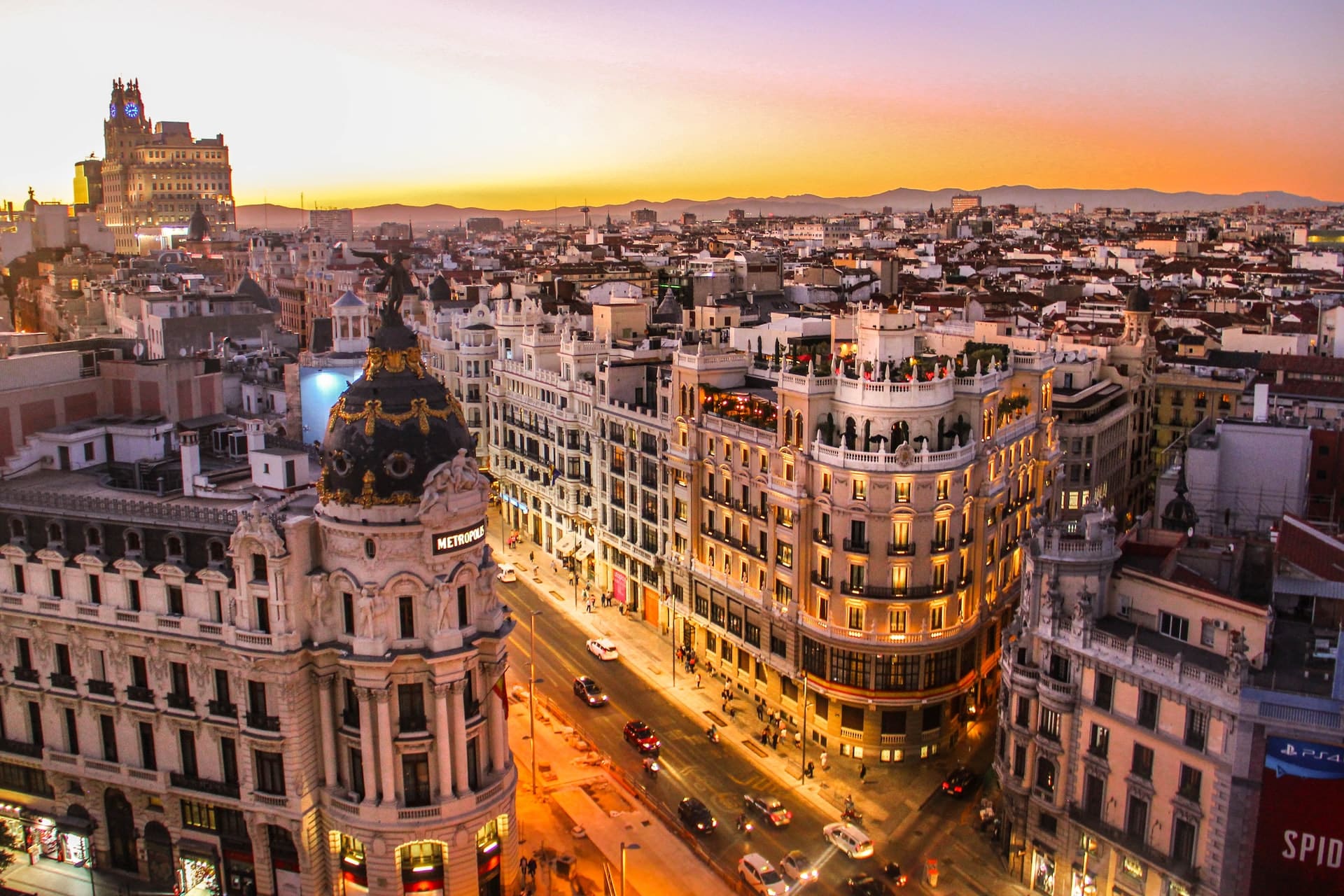
The cobblestones of Madrid have a way of sweating heat long after the sun goes down. It is a dry, persistent warmth that clings to the ankles of the thousands gathered in the Plaza de la Red de San Luis. Looking out over the sea of crimson flags, you don't just see a political rally. You see a frantic, collective reaching for the emergency brake.
They came from the rainy docks of Glasgow, the high-rises of Paris, and the precarious gig-economy hubs of Berlin. They are the European Left, a fractured family of socialists, greens, and labor firebrands who have spent the last decade losing. Losing ground. Losing the room. Losing the very people they claim to represent. But today, in the shadow of the Gran Vía, the air feels different. It feels like a wake that might just turn into a riot.
The Man in the Front Row
Consider Miguel. He is sixty-four, with hands that look like topographic maps of the Spanish construction boom and the subsequent bust. He remembers his grandfather talking about the Civil War in hushed tones, the kind of whispers that seep into the floorboards of a family home and stay there for generations. For Miguel, the rise of the far right isn't a headline or a "political trend" discussed on a late-night talk show. It is a physical sensation. It’s a tightening in the chest when he sees the rhetoric of the 1930s being polished and reissued for the smartphone era.
He stands near the stage where leaders like Spain’s Yolanda Díaz and international figures speak of a "resurgence." They use words like solidarity and resistance. But Miguel is looking at the younger faces in the crowd—the ones with tattoos and degrees but no permanent contracts. He wonders if they understand the stakes.
The far right isn't winning because they have better policy papers. They are winning because they have captured the sound of the snap. That sound when a person’s sense of security finally breaks. When the rent goes up for the fifth year in a row, when the local factory becomes a luxury loft, when the future starts looking less like a promise and more like a threat, people look for a culprit. The right gives them one. The left, for a long time, gave them a lecture.
The Failure of the Intellectual Shield
For years, the response to the populist surge across Europe was a technical one. Bureaucrats in Brussels and academic socialists in Madrid tried to fight fire with white papers. They spoke about GDP growth and fiscal responsibility. They behaved as if the rise of hardline nationalism was a logic puzzle that could be solved with the right data set.
It failed.
Logic is a poor shield against the raw emotion of being left behind. While the left was busy "fostering dialogue" and "leveraging synergies"—to use the hollow language of the corporate state—the far right was talking about home, blood, and belonging. They offered a story. A dark story, a dangerous story, but a story nonetheless.
The gathering in Spain is an admission of that failure. It is a pivot away from the boardrooms and back toward the street. The leaders on the stage aren't just talking about tax brackets; they are trying to reclaim the concept of a "good life." They are arguing that a person's worth should not be dictated by their productivity, and that a society is defined by how it treats the people it no longer finds useful.
The Invisible Borders
There is a metaphor that often gets tossed around in these circles: the "cordon sanitaire." It’s the idea that if you simply refuse to work with the far right, if you wall them off, they will eventually wither.
But the wall is crumbling. In country after country, the far right has moved from the fringes to the center of the frame. They are no longer the "protest vote." They are the government. They are the ones setting the tempo of the conversation, forcing the left to react to their every move.
Walking through the crowd, you hear a dozen languages, but the grievances are identical. A woman from a Swedish labor union describes the erosion of the "people’s home." A young man from Italy talks about the "nostalgia for a future that never arrived." They are united by a sense of vertigo. The world is moving too fast, the money is moving too far away, and the old safety nets have been cut into ribbons.
The stakes are invisible until they aren't. They are invisible when they are just a change in a labor law or a subtle shift in the way a judge is appointed. They become visible when a neighbor is deported, or when a bookstore is shuttered, or when a protest is met with a new kind of institutionalized violence.
The Ghost of the Future
Spain is a deliberate choice for this rally. This is a country where the past is never actually past. It is a place where you can still find the bullet holes in the walls of the old villages if you know where to look. By holding this summit here, the European Left is trying to invoke the spirit of the International Brigades—the volunteers who once flocked here from across the globe to fight a rising tide of authoritarianism.
But history doesn't repeat; it rhymes. And the rhyme this time is more complex.
The enemy isn't just a man in a uniform. It is a feeling of exhaustion. It is the belief that things cannot get better, only different shades of worse. The "far right" is often just the name we give to the chaos that fills the vacuum when hope leaves the room.
To win, the people in this plaza have to do more than shout "No Pasarán." They have to offer something that feels more real than the fear. They have to prove that the collective can still provide what the individual cannot: a sense of shelter in a storm that shows no sign of breaking.
As the rally winds down, Miguel folds his flag. He doesn't look like a man who has just been "empowered" by a speech. He looks like a man who is going home to a small apartment in a changing neighborhood, wondering if his pension will cover the light bill. He stops at a small bar for a caña. The television in the corner is muted, showing the polling numbers for the upcoming elections. The bars are red and blue and green, fluctuating like a heartbeat on a monitor.
The sun has finally dropped behind the silhouettes of the grand buildings. The heat remains. It stays in the stones, radiating upward, a reminder that the environment we build for ourselves—the laws, the stories, the cities—doesn't cool down just because we want it to. We live in the temperature we create.
The crowd begins to disperse into the side streets, the red flags disappearing into the shadows of the alleyways. Tomorrow, the dry facts of the European parliament will resume. The debates over migration quotas and interest rates will fill the airwaves. But for tonight, there is only the sound of thousands of footsteps on the hot pavement, a rhythmic, steady pulse that feels, for a fleeting moment, like a heart that has started beating again.