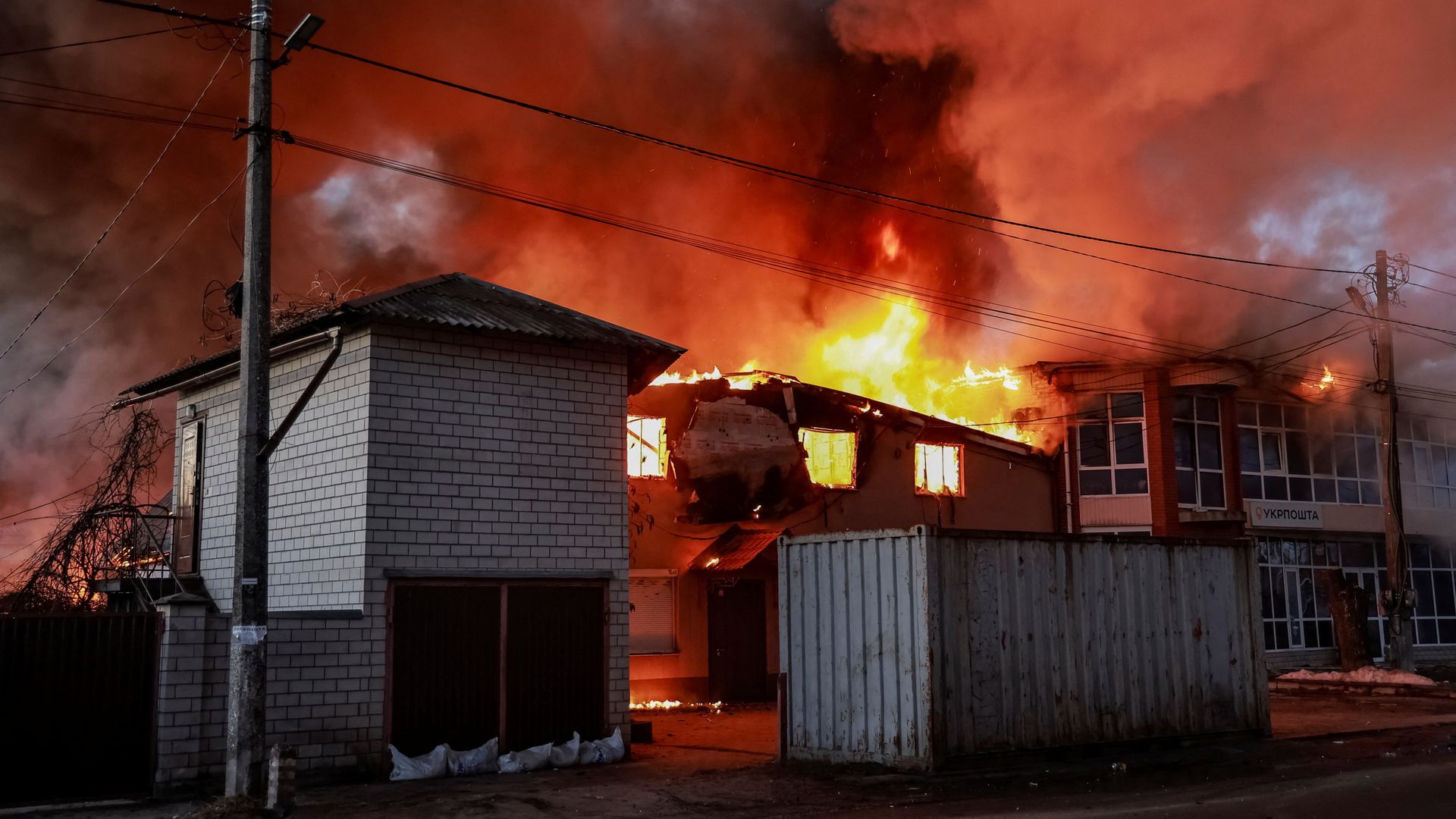
The headlines are as predictable as they are hollow. Another round of shelling in Ukraine. Six more lives lost. Another emergency meeting in Brussels. Another "unprecedented" expansion of the sanctions list.
We are told this is the path to victory. We are told that by freezing the bank accounts of mid-tier oligarchs and banning the export of luxury handbags, we are strangling the Russian economy. Building on this topic, you can also read: Why the Green Party Victory in Manchester is a Disaster for Keir Starmer.
It is a lie. Not because the intent is wrong, but because the math is broken.
If you want to understand why the war continues despite "crippling" Western pressure, you have to stop looking at the moral outrage and start looking at the balance sheets. The EU isn't just failing to stop Russia; it is inadvertently subsidizing the very aggression it claims to despise. Experts at BBC News have shared their thoughts on this trend.
The Myth of the Economic Fortress
The prevailing narrative suggests that Russia is an isolated pariah, a gas station with nukes that is slowly running out of fuel. This "lazy consensus" ignores the fundamental reality of globalized commodity markets.
Sanctions are not a wall; they are a sieve. When the West pulls back, the East leans in. But it’s worse than a simple substitution. By attempting to restrict Russian supply without a massive, immediate reduction in global demand, the West has periodically spiked the price of the very resources Russia sells.
Russia doesn't need to sell a million barrels of oil to the EU if it can sell 700,000 barrels to India and China at a 30% premium driven by Western market panic.
I’ve spent twenty years watching how global trade flows react to political interference. Markets are like water; they find the path of least resistance. You can’t "sanction" a molecule of methane. Once it hits the global market through a third-party intermediary in the Caucasus or a "dark fleet" tanker in the mid-Atlantic, its origin is a ghost.
The Sanctions Industrial Complex
We have created a "Sanctions Industrial Complex." It is a feedback loop of performative policy-making where bureaucrats measure success by the number of names added to a list rather than the impact on the battlefield.
- The Compliance Trap: Western banks spend billions on compliance to ensure they aren't accidentally processing a wire for a Russian cousin's dry cleaning business. This creates a facade of "doing something" while the macro-economic reality remains unchanged.
- The Shadow Economy: By forcing Russia out of the SWIFT system, we didn't kill their ability to transact. We simply incentivized the creation of an opaque, alternative financial architecture that is now beyond Western oversight. We have traded influence for a sense of moral superiority.
- The Oligarch Fallacy: The idea that seizing a yacht in Antibes will cause a coup in the Kremlin is a fantasy born of 1990s nostalgia. The modern Russian power structure isn't a board of directors; it’s a vertical of power. The men who lose their villas in London have zero leverage over the men who command the tanks in Donbas.
Why "Smart" Sanctions Are Dumb
The EU prides itself on "targeted" or "smart" sanctions. The theory is that we can hurt the Russian state without hurting the Russian people or, more importantly, without hurting European voters.
This is an impossibility.
True economic warfare requires sacrifice. If you aren't willing to endure a recession to win a war, you aren't fighting a war; you're managing a PR crisis. The EU's refusal to fully decouple from Russian energy dependencies in the first 48 hours of the conflict was the original sin. Everything since has been an attempt to fix a gunshot wound with a designer Band-Aid.
We see the results in the data. Russia's GDP hasn't collapsed. In fact, by pivoting to a war economy, they have achieved a perverse kind of industrial stimulation. While the West waits for the "collapse," the Russian military-industrial complex is running three shifts a day.
The Intelligence Failure of the West
The biggest misconception is that the Russian economy is fragile. It isn't. It is resilient because it is primitive.
High-tech economies are vulnerable to supply chain disruptions because they rely on precision components. An economy built on digging holes and pulling out raw materials is remarkably difficult to kill. You can't "de-platform" a coal mine. You can't "cancel" a wheat harvest.
The EU's sanctions focus on high-tech exports—chips, sensors, specialized machinery. This is supposed to degrade the Russian military over time. But "over time" is a luxury the civilians in Kharkiv do not have. Russia has proven adept at cannibalizing consumer electronics and sourcing dual-use tech through front companies in Dubai and Turkey.
The Brutal Reality of Sovereign Interests
People ask: "Why doesn't the world just stop buying Russian goods?"
The question itself is flawed. It assumes that "the world" shares a Western liberal worldview. For a leader in Brasilia, Pretoria, or New Delhi, the war in Ukraine is a European border dispute. Their priority is cheap fertilizer for their farmers and affordable fuel for their transport sectors.
By forcing a binary choice—"Us or Them"—the West has inadvertently strengthened the BRICS alliance. We have turned an economic tool into a geopolitical wedge that is currently splitting the world into two distinct trading blocs. One is regulated, transparent, and shrinking. The other is chaotic, growing, and increasingly fueled by Russian commodities.
The Cost of Incrementalism
The incremental approach—adding a few dozen individuals to a list every few months—is the worst possible strategy. It gives the target time to adapt. It allows for the gradual rerouting of supply chains. It’s like trying to kill a virus with a sub-therapeutic dose of antibiotics; all you do is create a resistant strain.
If the goal was truly to stop the war, the first package of sanctions should have been the last. A total, immediate embargo. No exceptions for Italian luxury goods. No exceptions for Belgian diamonds. No "transition periods" for Hungarian oil.
Instead, we chose a path that maximizes the bureaucratic paperwork while minimizing the actual economic shock. We are currently witnessing the "Vietnam-ization" of economic policy—a slow, grinding escalation that fails to achieve its stated objectives while draining the resources and patience of the home front.
The Hidden Winners of the Sanctions War
If Russia isn't losing as fast as the brochures promised, who is winning?
- Intermediary Nations: Countries like India and Turkey have become the world’s most profitable "laundromats." They buy Russian crude at a discount, refine it, and sell it back to the West at a premium.
- The Shadow Fleet: A massive industry of aging, uninsured tankers has emerged to move Russian oil. This increases the risk of a catastrophic oil spill in international waters, for which no one will be held accountable.
- The Domestic Russian Producers: With Western brands like IKEA and McDonald's gone, domestic players—often with ties to the state—have seized the assets and the market share. We didn't destroy the Russian middle class; we just changed who they pay.
Admitting the Failure
The hardest truth for the Brussels elite to swallow is that sanctions are not a substitute for a military or diplomatic strategy. They are a supplement. When used as the primary weapon, they reveal a lack of resolve.
We are currently in a stalemate of our own making. We provide enough aid to Ukraine to keep them from losing, and we apply enough sanctions to Russia to feel like we are winning, but neither is sufficient to change the fundamental reality on the ground.
The death toll in Ukraine is not a failure of "bad" people ignoring the sanctions. It is the logical outcome of a Western policy that prioritizes economic stability at home over decisive action abroad.
Stop checking the sanctions list. Start checking the ammunition production figures. That is the only metric that matters. Everything else is just expensive noise.
Stop pretending that a frozen bank account in Cyprus is going to stop a T-90 tank. If you want to end the war, you have to make the cost of continuing it higher than the cost of stopping. Right now, thanks to the inefficiency of the global sanctions regime, Putin still finds the price of war to be an affordable investment.
Get off the moral high ground and get into the mud of real-world logistics. Until we stop the flow of money by actually shutting down the pipes—not just putting "Do Not Use" stickers on them—the shells will keep falling.
The EU's paper tigers are out of ink.
If you aren't prepared to turn off the lights in Berlin to save the lives in Kyiv, then stop lying to yourself about the power of your sanctions.
Pick a side or get out of the way.