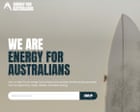
The illusion of "grassroots" activism is one of the most expensive products in Australian politics. When a group calling itself Energy for Australians began flooding social media feeds and airwaves with high-production advertisements attacking the Labor government’s climate policies, it presented itself as a band of concerned citizens. They were the voice of the quiet Australian, or so the marketing suggested. In reality, the paper trail reveals a sophisticated financial pipeline moving seven-figure sums from the coal industry’s inner sanctum directly into the machinery of political influence. This isn’t a story about a few angry voters; it is a clinical study in how $1.1 million from the Minerals Council of Australia (MCA) can manufacture a national movement from thin air.
The mechanics of this operation rely on a tactic known as "astroturfing." Like the synthetic grass on a football field, these organizations are designed to look natural while being entirely man-made. Energy for Australians didn’t emerge from town hall meetings or local community boards. It emerged from a ledger. By funneling massive amounts of capital through third-party entities, the coal lobby successfully distanced its corporate brand from aggressive, negative campaigning. This allows the primary donors to maintain a seat at the negotiating table with the very government their money is trying to unseat.
The Financial Architecture of Influence
To understand how a million dollars disappears into the political ecosystem, you have to look at the reporting gaps. Under current Australian electoral laws, the threshold for disclosing political donations is remarkably high. This creates a shadow zone where "educational" or "issue-based" campaigning can flourish without the immediate transparency required of direct party donations. Energy for Australians capitalized on this loophole.
The $1.1 million wasn’t a single wire transfer. It was a sustained injection of capital from the MCA, the peak body representing the heavyweights of the mining sector. While the MCA often engages in formal policy debates and parliamentary inquiries, Energy for Australians served as its "dark" counterpart. While the suit-and-tie lobbyists were arguing about royalty rates in Canberra, the digital ads were telling suburban families that their lights would go out and their bills would skyrocket because of renewable energy targets.
Breaking Down the Spend
Where does $1.1 million go in a single campaign cycle? It doesn't go to staff or office rent. In the modern era, that kind of money is weaponized through micro-targeted digital advertising and professional media placement.
- Social Media Saturation: The group spent hundreds of thousands on Facebook and Instagram ads, specifically targeting swing electorates where energy prices were a "kitchen table" issue.
- Production Value: The advertisements weren't grainy home videos. They featured high-end graphics, professional voiceovers, and scripts designed by psychological profiling firms to trigger specific anxieties about economic stability.
- Data Acquisition: A significant portion of the budget likely went toward building voter lists, allowing the group to bypass traditional media and speak directly to "persuadable" voters via email and SMS.
The Strategic Cloak of Independence
The most valuable asset for Energy for Australians wasn't the cash—it was the word "Independent." When a coal company says coal is good, the public reaches for the salt shaker. When an "independent" group of citizens says coal is the only thing keeping the economy alive, the message carries a different weight. It feels like a warning from a neighbor rather than a pitch from a CEO.
This deception is vital for the coal lobby's survival in a decarbonizing world. The industry knows its public image is battered. By creating these front groups, they can keep their fingerprints off the most toxic parts of the political discourse. It is a form of brand protection. They get the benefits of a scorched-earth campaign against their political enemies without the reputational fallout that comes with being seen as the aggressor.
This isn't just about one election. It is about shifting the "Overton Window"—the range of policies acceptable to the mainstream population. By constantly pounding the drum of energy insecurity and "unreliable" renewables through a seemingly neutral third party, the industry makes aggressive climate action feel risky or radical to the average voter.
The Lobbying Loophole
Australia’s transparency laws are currently a sieve. While the Australian Electoral Commission (AEC) eventually catches up with these figures, the delay is often long enough to allow the campaign to finish its work. In this case, the disclosure of the $1.1 million came long after the ads had stopped running and the votes had been counted. The damage, or the "success" depending on your perspective, was already done.
The Minerals Council of Australia has defended these payments as legitimate advocacy for their members' interests. And legally, they are right. There is nothing inherently illegal about a trade association funding a campaign group. However, the ethical vacuum lies in the presentation. If Energy for Australians had been forced to include a "Funded by the Coal Industry" watermark on every video, the campaign would have collapsed under the weight of its own bias.
Instead, they operated in a gray area where the source of the money was obscured by layers of corporate bureaucracy. This is the "How" of modern Australian politics. It is a system designed to favor those with the deepest pockets and the most sophisticated accountants.
Why the "Why" Matters
Why spend over a million dollars on a group that technically doesn't exist anymore? Because it works. The return on investment for the coal lobby is massive. If these campaigns can delay a single piece of legislation or push a government to soften its stance on emissions caps for just six months, the resulting profits for the mining giants far exceed the $1.1 million "investment."
The coal industry is playing a defensive game of inches. They aren't trying to win the hearts and minds of the next generation; they are trying to preserve the cash flow of the current one. Every day a coal-fired power station stays open past its predicted retirement date is another day of revenue. Every delay in a carbon pricing mechanism is a win for the bottom line. From a purely business perspective, funding Energy for Australians was a bargain.
The Role of Third-Party Campaigners
Energy for Australians is just one node in a larger network. Across the globe, and particularly in resource-heavy economies like Australia, we are seeing the rise of the "Third-Party Campaigner." These entities don't run for office. They don't have members. They have "supporters" who are often just names on an email list gathered through a petition about a separate issue.
These groups act as mercenaries. They can say things that political parties can't say for fear of alienating moderate voters. They can use harsher language, more frightening imagery, and more aggressive rhetoric. When the backlash comes, the group can simply dissolve, only to be replaced by a new entity with a different name—perhaps "Australians for Affordable Power" or "Farmers for Fuel Security"—under the same funding umbrella.
The Cost of Manufactured Dissent
The real victim of this million-dollar masquerade isn't any specific political party; it is the integrity of the public debate. When the discourse is flooded with manufactured fear funded by hidden interests, genuine community concerns get drowned out. It becomes impossible for the average citizen to distinguish between a legitimate grassroots movement and a corporate-backed astroturf operation.
This creates a pervasive sense of cynicism. If every group claiming to represent the public is actually a front for a multi-billion dollar industry, why should anyone believe anything? This cynicism is, in itself, a victory for the status quo. A cynical public is a disengaged public, and a disengaged public is much easier to manage than an informed one.
The coal lobby understands that they don't need to win the argument; they just need to muddy the waters. They need to create enough doubt about the cost of the energy transition that people become paralyzed by fear. The $1.1 million spent on Energy for Australians wasn't an attempt to educate the public. It was an attempt to confuse them.
The Path to Transparency
Fixing this isn't a matter of banning advocacy. It’s a matter of real-time disclosure. The current system allows for a "campaign now, explain later" approach that rewards deception. If we want to see the end of these manufactured movements, the light needs to be turned on while the ads are still on the screen.
- Real-Time Disclosure: Any political spend over a certain threshold (e.g., $10,000) should be reported to the AEC within 24 hours.
- Source Attribution: Ads should be required to clearly state the ultimate source of their funding, not just the name of the immediate "group" that paid for them.
- Lowering the Threshold: The current $16,300 disclosure threshold is a gift to dark money. Dropping it to $1,000 would force much of this shadow spending into the open.
Without these changes, the $1.1 million coal-to-campaign pipeline will continue to flow. The names of the groups will change, the slogans will be refreshed, and the faces in the ads will look just as concerned as ever. But the ledger will remain the same.
The coal industry isn't going away quietly. It is spending its way into the conversation, buying the appearance of public support one million-dollar campaign at one time. The only way to stop the deception is to follow the money, even when it leads into the dark.
Audit the donors. Demand the receipts. Stop treating every "concerned citizen" group as a legitimate voice until you see who is signing the checks.