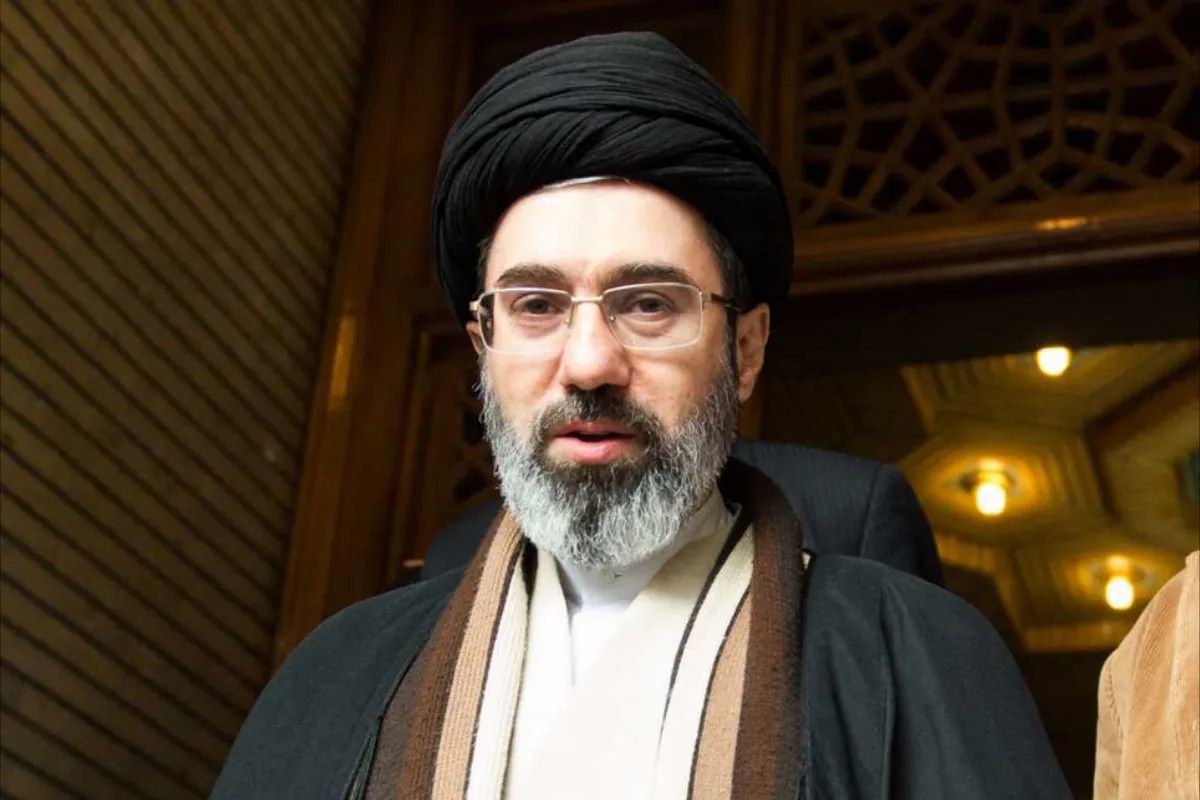
The air in Tehran does not carry secrets easily. It is a city of heavy concrete, winding alleys, and a persistent, metallic hum that feels like anxiety made audible. For weeks, that hum centered on a single name whispered in the tea houses of South Tehran and the polished living rooms of the north: Mojtaba Khamenei.
Rumors in Iran function like a desert wind. They start small, a mere dusting of doubt, before gathering into a blinding storm that obscures everything in sight. This time, the storm was about blood and survival. Reports began to bleed across digital borders suggesting that the second son of the Supreme Leader—a man often described as the power behind the curtain—had been caught in a moment of violent vulnerability. He was injured. He was incapacitated. Perhaps, some whispered, he was gone.
In a political system where visibility is a form of currency, Mojtaba’s absence was a bankruptcy of information. Then came the update. It was brief, calculated, and designed to steady the scales. He had been hurt, the reports finally conceded, but the recovery was swift. He was mending.
The Architect in the Room
To understand why a few fractured ribs or a lingering wound on one man matters to millions, you have to look past the official titles. Mojtaba Khamenei holds no formal government office. He has no seat in the Parliament. He does not lead a ministry. Yet, to the people navigating the bureaucratic labyrinth of the Islamic Republic, he is the phantom architect.
Think of a massive, ancient clock. You see the hands moving on the face—the president, the ministers, the public faces of the Guard. But Mojtaba is the internal gear. He is the one who ensures the tension remains constant. When that gear slips, the whole mechanism shudders.
For years, the narrative of "The Succession" has hovered over Iran like a low-hanging cloud. The Supreme Leader, Ali Khamenei, is in the winter of his life. In a country where the transition of power has only happened once since 1979, the stakes are not merely political. They are existential. The news of Mojtaba’s injury wasn't just a medical update; it was a stress test for a nation’s future.
The Cost of a Secret
Imagine a father watching his son from across a divide of duty and dogma. This isn't just about family. It is about a legacy that spans decades of revolution, war, and resistance. When news broke that Mojtaba was "recovering quickly," it was a message sent to three distinct audiences.
First, to the internal rivals. Within the upper echelons of the Iranian power structure, there are no permanent friends, only overlapping interests. An injured Mojtaba is a perceived opening. A recovering Mojtaba is a closed door.
Second, to the outside world. To the analysts in Washington, London, and Tel Aviv, any sign of physical weakness in the Khamenei line is scrutinized under a microscope. Is the injury a result of an accident? An assassination attempt? Internal friction? By admitting the injury but emphasizing the recovery, Tehran attempted to seize the narrative before it could be spun into a tale of crumbling stability.
Third, and perhaps most importantly, to the Iranian people. For a population grappling with inflation, social restrictions, and the weight of history, the health of the "Shadow Heir" is a barometer for the coming years. Stability is a fragile thing. In the absence of clarity, fear takes root.
The Human Toll of the High Stakes
There is a specific kind of loneliness that comes with being a figure like Mojtaba Khamenei. He exists in the space between being a person and being a symbol. When a standard news report says a figure is "recovering," we rarely think about the actual room. The scent of antiseptic. The muffled footsteps of guards in the hallway. The weight of a phone that could signal a crisis at any moment.
But we must look at the logical deductions of this update. If the recovery is indeed "rapid," it suggests a controlled environment and a rejection of the more dire theories circulating online. However, the very fact that an update was deemed necessary proves that the previous silence was becoming dangerous.
Silence in politics is rarely empty; it is usually full of what people fear most. By speaking now, the Iranian state is trying to drain the pool of speculation. They are saying: The gear is still turning. The clock is still ticking.
The Moving Pieces
Consider the timing. Iran is currently navigating a geopolitical minefield. Tensions with regional neighbors are at a boiling point. The shadow war with Israel has moved into the light. Domestic dissent remains a simmering fire just beneath the surface.
In this context, Mojtaba is more than a son; he is a stabilizer. He is the bridge between the traditional clerical establishment and the military might of the Revolutionary Guard. If he were sidelined, that bridge would begin to sway.
The update on his health serves as a tactical "all clear." It tells the mid-level commanders and the provincial governors that the center still holds. It tells the shopkeeper in Isfahan that the transition, when it eventually comes, will not be a free-fall into chaos.
Yet, questions remain. A "rapid recovery" implies a physical trauma that was significant enough to notice but not enough to break the spirit. It leaves the door cracked just enough for the imagination to wander. Was it a lapse in security? A physical toll of a high-stress life?
Beyond the Headlines
The truth of Mojtaba Khamenei’s condition is likely buried under layers of state security that few will ever penetrate. But the human element of the story is undeniable. It is a story of a dynasty trying to prove its permanence in a world that is inherently shifting.
We often view world leaders and their families as chess pieces on a board of cold strategy. We forget the pulse. We forget that behind the heavy curtains of the palaces in Tehran, there are recovery rooms, there are whispered conversations between fathers and sons, and there is the very human reality of aging and injury.
The update given by Iran wasn't just about a man’s health. It was a declaration of continuity. It was an attempt to tell the world that the "Shadow Heir" is still standing, still watching, and still prepared for the weight of the crown that has long been whispered to be his.
The streets of Tehran might still be humming with rumors, but for now, the state has provided its answer. Whether that answer satisfies the hunger for truth or merely staves off the storm for another day remains to be seen. In the theater of power, the most important scenes often happen when the stage is dark, and the only proof of life is the steady, rhythmic sound of a man finding his breath again.
The sun sets over the Alborz mountains, casting long, jagged shadows across the city. Somewhere in the quiet, a man heals, while a nation waits to see what his recovery will mean for the dawn.



