The sea does not care about rhetoric. It is a vast, salt-heavy weight that pushes against the hulls of steel tankers and the wooden ribs of dhows alike. But in the narrow throat of the Persian Gulf—the Strait of Hormuz—the water has begun to feel different. It feels crowded. It feels watched.
When Mojtaba Khamenei, a man whose influence often outpaces his public appearances, speaks of a "new phase" in these waters, he isn't just talking about naval maneuvers or the placement of sea mines. He is talking about a fundamental shift in how power is projected in the modern world. It is the transition from the visible to the invisible, from the battleship to the swarm, and from the soldier to the algorithm. If you found value in this post, you should read: this related article.
The Invisible Tripwire
To understand the stakes, we have to look past the maps. Imagine a merchant sailor named Elias. He is third-generation maritime, a man who knows the smell of the Gulf before he sees the coastline. For Elias, the Strait of Hormuz used to be a point of transit, a predictable choke point where you checked your radar and kept a steady course.
Now, Elias looks at his monitors and wonders if what he sees is real. The "new phase" Khamenei alludes to is defined by electronic warfare and the democratization of disruption. It is no longer about who has the largest carrier group; it is about who can make a thousand-foot vessel disappear from GPS or go "dark" while still in plain sight. For another angle on this story, see the recent update from The Washington Post.
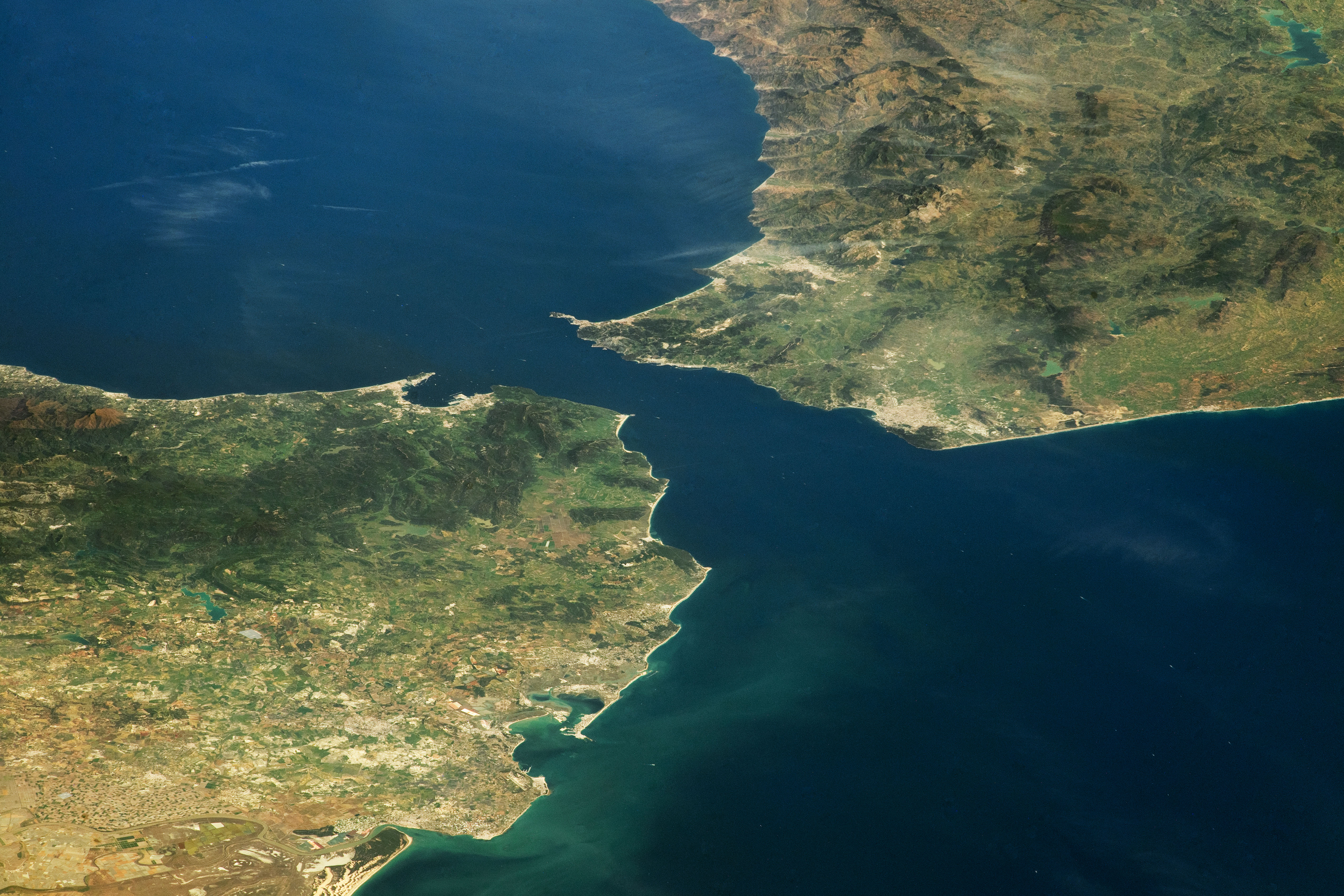
The Strait is twenty-one miles wide at its narrowest. That is a tiny door through which a fifth of the world’s oil must pass. If that door sticks, the lights go out in cities thousands of miles away. The price of bread in a Cairo bakery or the cost of a commute in suburban Ohio is tethered to the ripples in this specific stretch of blue.
The Architecture of the Swarm
The old way of war was a chess match of giants. Huge investments, decade-long procurement cycles, and massive, vulnerable targets. Tehran has realized that the giant can be brought down by a thousand bees.
This new phase is built on the "Swarm Theory." Iran has invested heavily in fast-attack craft and loitering munitions—drones that can sit in the sky or bob on the waves for hours before choosing a target. They are cheap. They are replaceable. And they are terrifyingly effective at overwhelming the sophisticated defense systems of traditional navies.
Consider the logic: a multi-billion dollar destroyer is a marvel of engineering, but it has a finite number of interceptor missiles. If you send fifty drones that cost less than a used car, the math eventually breaks. The destroyer wins the battle but loses the economic war. This is the "asymmetric reality" that is now the baseline for Gulf security.
A Dynasty in the Making
The messenger is as important as the message. Mojtaba Khamenei occupies a unique space in the Iranian hierarchy. As the son of the Supreme Leader, his words carry the weight of a shadow government. When he steps into the light to discuss military doctrine, he is signaling more than just tactical shifts. He is signaling continuity.
For years, observers wondered if Iran would pivot toward a more conventional diplomatic stance as its leadership aged. This "new phase" announcement suggests the opposite. It is a doubling down on the "Forward Defense" strategy—the idea that to keep Tehran safe, the fight must be brought to the waterways and the borders of rivals. It is a claim of regional hegemony that uses the Strait of Hormuz as its primary lever.
The Ghost in the Machine
The conflict is no longer just kinetic. We are entering an era of "Grey Zone" operations. This is the space between peace and total war, where actions are taken that are damaging but stop just short of triggering a full-scale military response.
- GPS Spoofing: Making a ship think it is in international waters when it has actually drifted into territorial limits.
- Cyber Interdiction: Hacking the logistics systems that tell a port which container goes where.
- Proxy Pressure: Utilizing non-state actors to carry out strikes, providing just enough plausible deniability to stall an international reaction.
This isn't a hypothetical scenario. It is the daily reality for the shipping companies that insure these voyages. They are now calculating risk based on lines of code as much as they are on the thickness of a hull.
The Human Cost of High Stakes
Back on the deck of his ship, Elias feels the tension in the silence of his crew. They watch the horizon for the small, fast boats that move with a predator’s grace. They know that a single mistake, a single misinterpreted signal, could spark a conflagration that would reshape the decade.
The tragedy of the "new phase" is that it turns one of the world's most vital economic arteries into a laboratory for high-tech brinkmanship. The invisible stakes involve more than just oil prices; they involve the erosion of the "freedom of navigation"—a concept that has underpinned global trade since the end of the Second World War. When a nation claims the right to dictate who moves through a global strait based on a "new phase" of aggression, the rules of the world change.
The Shifting Sands
We often think of history as a series of grand events—treaties signed, walls falling, kings crowned. But history is more often a slow, grinding change in the environment. The "new phase" in the Gulf is exactly that. It is the sound of the status quo cracking under the pressure of new technology and old ambitions.
The Strait of Hormuz is becoming a place where the 20th century’s heavy armor meets the 21st century’s digital ghost. It is a confrontation between the world that was and the world that is becoming.
The sun sets over the water, turning the Gulf into a sheet of hammered gold. It looks peaceful. It looks eternal. But beneath the surface, the sensors are humming, the drones are waiting, and the new phase is already well underway. The sea remains indifferent, but for those who sail it, the water has never felt more like a cage.