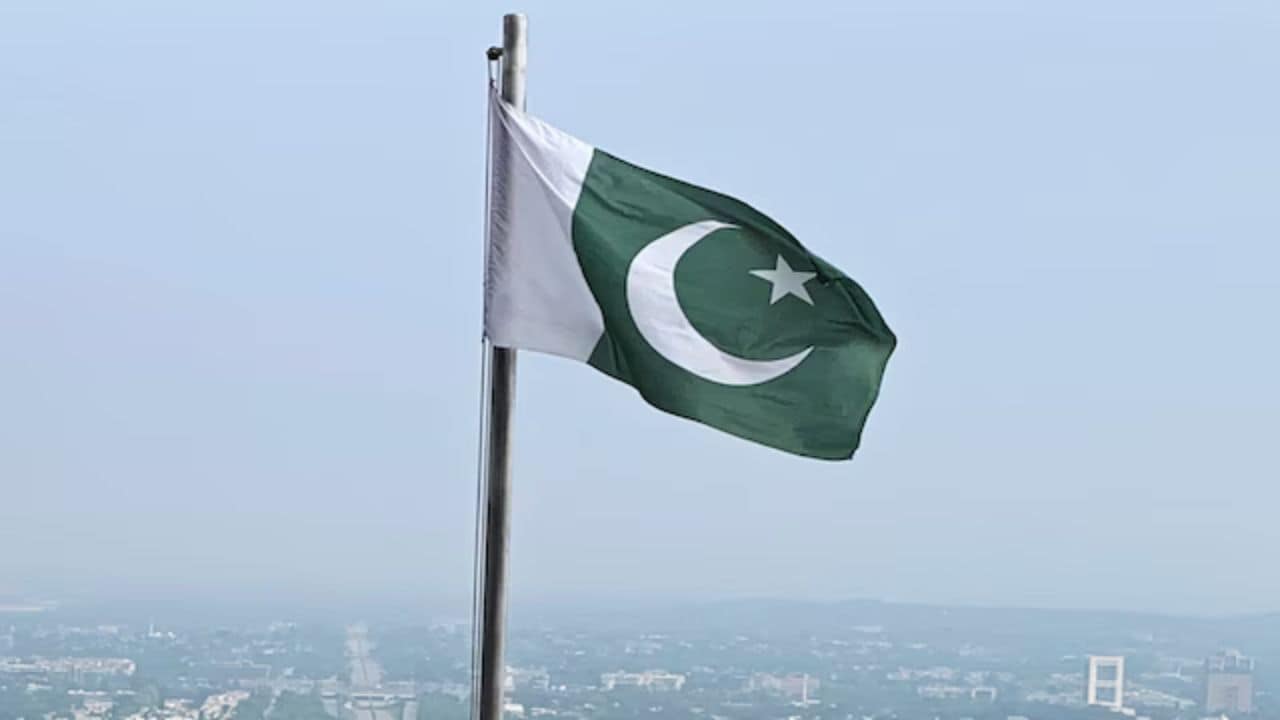
The tea stall owner in Islamabad’s Blue Area doesn’t care about the intricacies of the Joint Comprehensive Plan of Action. He doesn't read the white papers on maritime security in the Strait of Hormuz. What he knows is the sound of silence. Usually, the air here is a thick soup of honking Suzukis, the screech of tires, and the rhythmic clatter of construction. But on April 9, the city will go quiet.
The government has declared a two-day public holiday for the capital. Offices will shutter. Schools will fall still. On paper, it is a logistical necessity to manage security and traffic for the high-stakes peace talks between the United States and Iran. In reality, it is a collective holding of the breath.
For forty-eight hours, the Margalla Hills will look down upon a city that has become the unlikely center of the world’s gravity.
The Geography of Hope
Islamabad was built to be a city of order, a grid of wide avenues and green belts carved out of the Punjab plateau. It is a place of diplomacy by design. Yet, the stakes arriving on the tarmac at Nur Khan Airbase this week are anything but orderly.
Consider the hypothetical situation of a family living in a small flat in Sector G-6. To them, the holiday means a break from the grind, a chance to sleep in. But as they sit on their balcony, they are mere miles away from a room where men in dark suits are deciding if the next decade will be defined by trade or by fire.
The US-Iran relationship has been a scar across the map of the Middle East for nearly half a century. We have grown used to the rhetoric of "Great Satans" and "Axis of Evil." We have watched the slow-motion car crash of sanctions and proxy conflicts. Now, for reasons of exhaustion or pragmatism, the two sides are sitting in the same room. Pakistan, often caught in the crossfire of someone else's influence, is playing the role of the quiet host. The waiter who ensures the water glasses are full while the giants argue over the bill.
The Mechanics of a Standstill
Closing a capital city is no small feat. It is a surgical operation on the heart of a nation. When the government shuts down Islamabad on April 9 and 10, they aren't just giving people a day off; they are creating a vacuum.
Security cordons will snake through the Red Zone. The usual flow of human life is diverted, rerouted, and paused. This is the physical manifestation of diplomacy. For a peace talk to happen, the world around it must stop moving. The noise of the everyday must be suppressed so that the quietest whispers of a compromise can be heard across a mahogany table.
This pause has a cost. There are the daily wage laborers whose income vanishes when the city closes. There are the shopkeepers whose shutters remain down. These are the invisible investors in peace. They pay for the security of the diplomats with their own lost hours. They are the silent stakeholders in a deal they didn't ask for but desperately need to succeed.
Why Islamabad?
One might ask why this isn't happening in Geneva or Vienna. Those cities are cold. They are sterile. They are the traditional graveyards of failed treaties.
Islamabad is different. It is a city that understands the price of instability. Pakistan shares a border with Iran and a complicated, multi-decade marriage with the United States. It is a bridge that has been walked on by both sides until the stone is worn smooth.
By hosting these talks, the city is betting on its own future. If the US and Iran find a path toward de-escalation, the tremors of that relief will be felt first in the markets of Peshawar and the ports of Karachi. This isn't just about high-level politics. It’s about the price of fuel. It’s about the safety of shipping lanes. It’s about the possibility of a region finally putting down its guard.
The Ghost at the Table
In every diplomatic meeting, there is a third party that never speaks: the past.
The ghosts of 1979, the shadows of the 2015 nuclear deal, and the jagged memory of 2020's escalations are all present in the room. The diplomats aren't just fighting each other; they are fighting the momentum of history. It is easier to continue an old hatred than to build a new trust.
Imagine the tension in a motorcade as it sweeps past the empty Faisal Mosque. The tinted glass hides faces etched with the exhaustion of long-haul flights and the weight of representing millions of people who are tired of the threat of war.
The holiday on April 9 and 10 is a rare moment where a government forces its citizens to acknowledge that something bigger than their daily routine is happening. It is a "stop and look" order. It forces the public to recognize that the peace being negotiated a few kilometers away is the same peace that allows their children to go to school without fear.
The Weight of the Handshake
What does success look like? It likely won't be a grand ceremony or a definitive treaty signed with a flourish of fountain pens. More often than not, diplomacy is about the absence of disaster. It is the slow, agonizing process of moving from "impossible" to "maybe."
If the talks in Islamabad result in nothing more than a commitment to meet again, they will have been a triumph. In the world of nuclear ambitions and global sanctions, "to be continued" is a victory.
The holiday will end. On April 11, the Suzuki pickups will return to the streets. The tea stall in Blue Area will light its burners again. The honking will resume, louder than before, as the city tries to make up for lost time.
But for those two days, the silence will speak. It will tell the story of a world that is capable of stopping, even for a moment, to see if there is a better way to live. The empty streets of Islamabad are not a sign of a city that has given up, but of a city that is making room for a miracle.
Behind the concrete barriers and the stern-faced guards, two old enemies are looking for a way out of a corner they spent forty years painting themselves into. The world is watching. The city is waiting.
The sun will set over the Margallas on the evening of the tenth, casting long, purple shadows over the quieted avenues. Whether those shadows represent the end of an era or the beginning of a new darkness depends entirely on what happens in the silence of the holiday.