A single bank note is just paper and ink until it crosses a border. Then, it becomes a promise. In the glass towers of Central, Hong Kong, that promise is currently vibrating with a frequency that most people—those grabbing a quick siu mei lunch or rushing to the MTR—never actually hear. But Starry Lee hears it. As Hong Kong’s sole representative to the National People’s Congress Standing Committee, her ears are pressed to the ground of global liquidity.
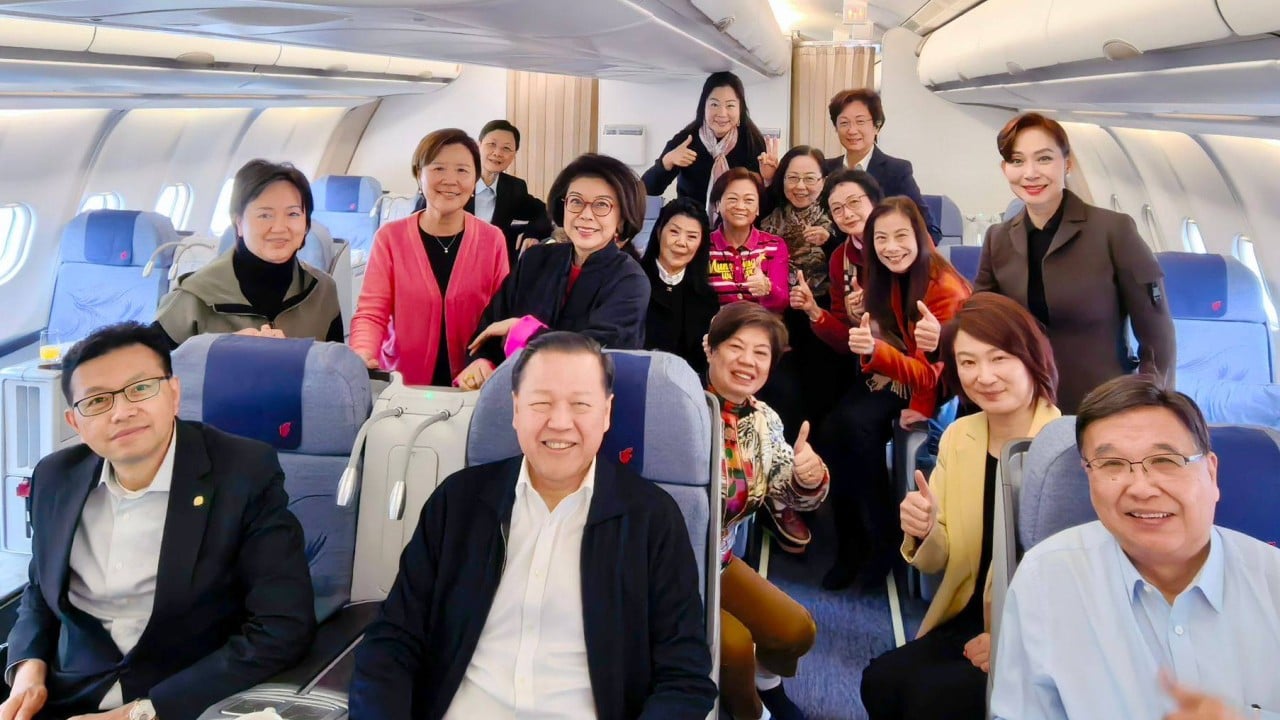
When she boards the flight to Beijing for the "two sessions," she isn't just carrying a briefcase. She is carrying the blueprint for how a city remains indispensable in a world that is rapidly uncoupling its gears.
Consider a hypothetical trader named Elias. He sits in a darkened office in Luxembourg, staring at a screen where the Renminbi (RMB) flickers like a heartbeat. Elias wants to invest in a massive wind farm project in Inner Mongolia, but he doesn't want to deal with the friction of onshore regulations. He needs a bridge. He needs a place that speaks the language of the mainland but breathes the air of the global market.
For decades, Hong Kong has been that bridge. But bridges wear down. They require reinforcement. Starry Lee’s proposal to the Beijing leadership isn't just a technical adjustment to financial policy; it is a bid to turn the city into a global powerhouse of "offshore" yuan—the version of the currency that lives, breathes, and multiplies outside of mainland China’s direct control.
The Friction of the Status Quo
The problem is one of plumbing. Money is like water; it flows where there is the least resistance. Right now, the offshore yuan market in Hong Kong is the largest in the world, handling about 75% of offshore payments. That sounds dominant. It sounds safe.
It isn't.
If the pipes aren't widened, the water stagnates. Lee knows that for the yuan to become a true global heavyweight—a currency that a merchant in Dubai or a pension fund in London holds without a second thought—Hong Kong must do more than just sit on its laurels. It has to become a "hub" in the most literal sense: a spinning center of gravity that pulls in liquidity from every corner of the map.
Her proposal centers on a few technical, yet deeply human, shifts. She wants to see more diversified RMB-denominated products. This isn't just about stocks. It’s about bonds, insurance, and risk management tools.
Think back to Elias in Luxembourg. If he can't hedge his risk—if he can't buy a "safety net" for his investment in the same currency he’s using to build the wind farm—he will take his money elsewhere. He might look at Singapore. He might look at London. Lee’s mission in Beijing is to ensure that the safety net is woven in Hong Kong, using the unique threads of the "One Country, Two Systems" framework.
The Ghost of 2004
To understand where Lee is going, you have to look at where we started. In 2004, Hong Kong banks first began offering personal RMB services. It was a trickle. A small, experimental opening of the valves. At the time, skeptics wondered if a closed capital account could ever truly coexist with a free-market city.
The answer was a resounding, if complicated, yes.
Over twenty years, that trickle became a flood. But the world of 2026 is not the world of 2004. Geopolitical shifts have turned currency into a tool of statecraft. When Lee speaks of "boosting" the hub, she is talking about resilience. She is talking about creating a financial ecosystem that can survive a storm where traditional dollar-based systems might become turbulent or restricted.
She is also looking at the "Southbound" leg of the Bond Connect. This is the mechanism that allows mainland investors to buy bonds in Hong Kong. It’s a door that has been cracked open, but Lee wants to swing it wide. Imagine a retired teacher in Guangzhou who wants to diversify her savings. By making it easier for her to invest in Hong Kong’s offshore yuan products, the city isn't just helping "the markets"—it’s providing a release valve for the wealth of 1.4 billion people.
The High Stakes of the "Two Sessions"
The "two sessions"—the annual meetings of the National People’s Congress and the Chinese People’s Political Consultative Conference—are often viewed by outsiders as a theater of choreographed consensus. That view misses the friction beneath the surface. This is where the competition for resources, attention, and policy favor happens.
Lee’s presence there is a reminder that Hong Kong’s value is not a given. It must be argued for. It must be proven.
One of her key points involves the "Wealth Management Connect" in the Greater Bay Area. Currently, there are limits. There are caps on how much an individual can invest and what kind of products they can touch. Lee is pushing for these caps to be lifted. She knows that a "hub" that limits its intake is just a bucket with a lid on it.
The emotional core of this isn't found in a spreadsheet. It’s found in the anxiety of a city trying to redefine its "super-connector" status. For a long time, Hong Kong was the only game in town. Now, it has to be the best game in town. That requires more than just being a gateway; it requires being an innovator.
The Digital Frontier
There is a silent revolution happening in the form of the e-CNY—China’s sovereign digital currency. While the world debates the merits of crypto, the PBOC has been quietly building a digital version of the yuan that could bypass traditional banking bottlenecks.
Lee’s vision includes Hong Kong as the testing ground for this digital frontier. If a wholesaler in Thailand can settle a debt with a supplier in Shenzhen using digital yuan through a Hong Kong platform in seconds, the old world of three-day settlement periods and high intermediary fees dies.
The human impact? Small business owners who don't have to wait for "clearance" to pay their staff. Manufacturers who don't lose 3% of their margin to currency exchange friction.
A Journey of Convergence
As the meetings in Beijing progress, Lee will likely face questions about the city’s integration. Integration is a scary word for some. It implies a loss of identity. But in the world of high finance, integration is oxygen.
She isn't proposing that Hong Kong becomes just another Chinese city. She is proposing that Hong Kong becomes the most Chinese city in the world of international finance, and the most international city in the world of Chinese finance. It is a razor-thin tightrope to walk.
Consider the "Dim Sum" bond market—yuan-denominated bonds issued in Hong Kong. It’s a colorful name for a serious business. When these bonds thrive, it means the world trusts the yuan. When the world trusts the yuan, Hong Kong’s tax base grows, its schools stay funded, and its position as a global tier-one city is secured.
Lee’s proposal to increase the quota for the "Qualified Domestic Institutional Investor" (QDII) scheme is another brick in this wall. It’s about allowing more capital to flow out of the mainland and into the Hong Kong market. It’s a vote of confidence in the city’s regulatory maturity.
The Invisible Architect
We often think of history being made by generals or revolutionaries. In the 21st century, history is made by people like Starry Lee, who sit in committee rooms and argue about liquidity pools and swap lines.
It isn't "sexy" work. It doesn't make for a dramatic movie trailer. But if she succeeds, the result is a city that remains a beacon for the Elias’s of the world—the investors, the builders, the savers who need a neutral, efficient ground to do business.
The stakes are nothing less than the city’s soul. Without its financial heartbeat, Hong Kong risks becoming a museum of its own past. With a beefed-up role as an offshore yuan hub, it becomes the laboratory for the future of global money.
As Lee sits in the Great Hall of the People, the air will be thick with the scent of old wood and the weight of history. She will be looking at a room full of people who hold the keys to the world's second-largest economy. Her task is to convince them that the best way to grow that economy is to let its currency run free in the streets of Hong Kong.
The red note is waiting. It is ready to move. It just needs the path to be cleared.
When the "two sessions" conclude, the headlines will likely focus on GDP targets and military spending. But the real story—the one that will dictate the flow of billions of dollars over the next decade—will be hidden in the fine print of Lee’s proposals. It is the story of a bridge being reinforced, one policy at a time, to ensure that when the world wants to talk to China, it still chooses to do so through a telephone with a +852 area code.
The pulse is there. It’s steady. It’s growing louder.