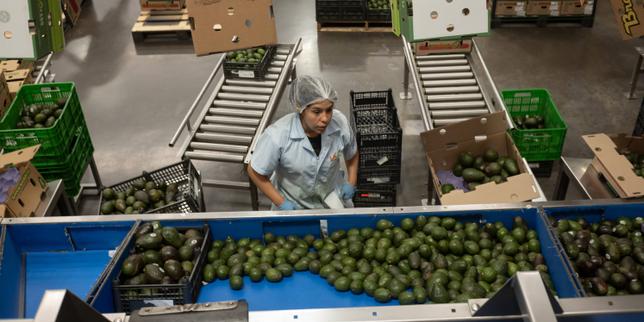
The fluorescent lights of a manufacturing plant in Querétaro do not hum; they scream. It is a high-pitched, electric vibration that burrows into the skull after the tenth hour of a shift. For millions of Mexican workers, this sound is the soundtrack of a life lived in the margins of exhaustion. Mexico is a country that works until it breaks, yet the gears of its economy seem to turn with a friction that no amount of human sweat can lubricate.
We are talking about a nation where the "standard" work week is forty-eight hours. That is the legal ceiling, but in reality, it is often the floor. When you add the grueling commutes of Mexico City or Monterrey—three hours a day spent in the humid, cramped belly of a bus or a collective—the math of a human life stops adding up. There is no time left for the person beneath the uniform. Meanwhile, you can explore other developments here: The Caracas Divergence: Deconstructing the Micro-Equilibrium of Venezuelan Re-Dollarization.
The Cost of a Sunday
Consider a hypothetical worker named Mateo. Mateo is not a statistic, though he is captured in the data of the OECD, which consistently ranks Mexico as the hardest-working country in the developed world. Mateo works in an automotive parts factory. He officially clocks out at 6:00 PM, but the "culture of presence" dictates he stay until the supervisor leaves. By the time he reaches his front door, his children are asleep. His only interaction with them is the sight of their breathing chests under blankets.
This is the "Mexican Miracle" in reverse. The country boasts high productivity in terms of hours logged, but the economic return for the individual remains stubbornly low. The legislative struggle to move from a forty-eight-hour week to a forty-hour week is not just a debate over labor laws. It is a battle for the right to see the sun on a Tuesday afternoon. To understand the complete picture, check out the detailed article by Bloomberg.
The proposal to amend Article 123 of the Constitution is currently caught in a legislative purgatory. It has been debated, delayed, and diluted. Business chambers argue that a sudden shift would crush small and medium-sized enterprises. They point to the "cost of labor" as if labor were a dry commodity like oil or grain, rather than the pulse of a father who hasn't had a conversation with his wife in three days.
The Myth of the Lazy Hour
There is a persistent, ugly myth that shorter hours lead to lower output. History suggests the opposite. When the Ford Motor Company famously moved to a forty-hour week in 1926, it wasn't out of the goodness of Henry Ford's heart. It was because he realized that overworked men make mistakes. They drop tools. They lose fingers. They lose focus.
In Mexico, the gap between hours worked and GDP per hour is a canyon. You can spend twelve hours at a desk or a lathe, but the human brain begins to flicker like a dying lightbulb after the eighth hour. The resistance from the private sector hinges on the fear of a 20% spike in labor costs. Yet, they rarely calculate the "hidden tax" of the current system: the cost of chronic fatigue, the high turnover rates, and the healthcare burden of a population that is literally working itself into an early grave.
The Chamber of Commerce (CANACO) and other industrial groups have called for a "gradual" implementation. They want a "flexible" transition. In political speak, "gradual" often means "eventually, but hopefully never." While the politicians haggle over percentages and implementation phases, the workers continue to pay the interest on a debt they never signed for.
Why the Resistance is So Loud
The pushback isn't just about money; it's about a deeply ingrained corporate theology. In many Mexican workspaces, staying late is a performance of loyalty. To leave at the stroke of eight hours is seen as a lack of "camaraderie." This cultural pressure acts as a shadow law that overrides the written one.
Even if the forty-hour week passes tomorrow, the infrastructure of Mexican life is built around the long haul. The informal economy—the street vendors, the family-run taco stands, the independent couriers—operates entirely outside these legal protections. More than 50% of the workforce lives in this gray zone. For them, a forty-hour week is a fantasy from a different planet.
But for the formal sector, the change would be seismic. It would force companies to innovate rather than simply throwing more human hours at a problem. It would demand better management, sharper technology, and a shift away from the "sweatshop" mentality that has plagued the region’s industrial reputation.
The Ghost in the Room
During the recent legislative sessions, the tension was palpable. On one side, you have the governing party, Morena, trying to balance its populist promises with the need to keep big business from fleeing to cheaper markets. On the other, you have the workers' unions, which have regained some teeth under the USMCA trade agreement, demanding that Mexico finally catch up with the rest of the industrialized world.
The invisible character in these rooms is the "Ghost of Competitiveness." Business leaders warn that if Mexico becomes "too expensive," the nearshoring boom—the massive influx of foreign investment moving from China to North America—will vanish. They argue that Mexico's primary competitive advantage is its cheap, tireless workforce.
Think about that logic for a moment. It suggests that for Mexico to succeed, its citizens must remain exhausted. It posits that the only way to win the global race is to be the country that asks the most of its people for the least in return. It is a race to the bottom where the winner gets a trophy made of burnout.
A New Definition of Wealth
What is a Saturday worth? To a policy analyst, it is eight hours of lost productivity. To a mother in Ecatepec, it is the difference between being a ghost in her own home and being a parent.
The move toward a forty-hour week is a recognition that the "Mexican Dream" cannot be built on the ruins of the Mexican family. We have seen this play out in other parts of the world. In Chile, the transition to a forty-hour week was met with similar doomsday predictions, yet the sky did not fall. The economy adjusted. People breathed.
In Mexico, the transition will be harder because the stakes are higher and the poverty more entrenched. But the current path is unsustainable. You cannot run an engine at redline forever without the pistons seizing. The "timid" steps mentioned by critics are actually a frantic crawl toward a more human reality.
The Real Bottom Line
We often treat economic policy as a series of cold equations. We talk about "labor flexibility" and "unit labor costs." We forget that every unit is a person. Every hour subtracted from the factory floor is an hour added to a kitchen table, a park bench, or a bed.
The struggle for the forty-hour week in Mexico is a litmus test for the country's soul. It asks a simple question: Does the economy serve the people, or do the people serve the economy?
Until that question is answered, the lights in the factories will continue to scream. The buses will continue to haul tired bodies through the dark. And millions of people will continue to wait for the day when they can finally go home while it is still light outside.
The sun is setting over the Zócalo, casting long shadows across the stones. In the offices nearby, the second shift is just beginning. They will work through the night, fueled by caffeine and the quiet hope that one day, their time will belong to them. Until then, the ghost of the sixty-hour week haunts the streets, a reminder that in the world of high-stakes business, the most expensive thing you can buy is a moment of rest.
The bill remains on the table, a stack of paper that weighs more than it looks. It is the weight of millions of stolen hours, waiting to be returned to their rightful owners.