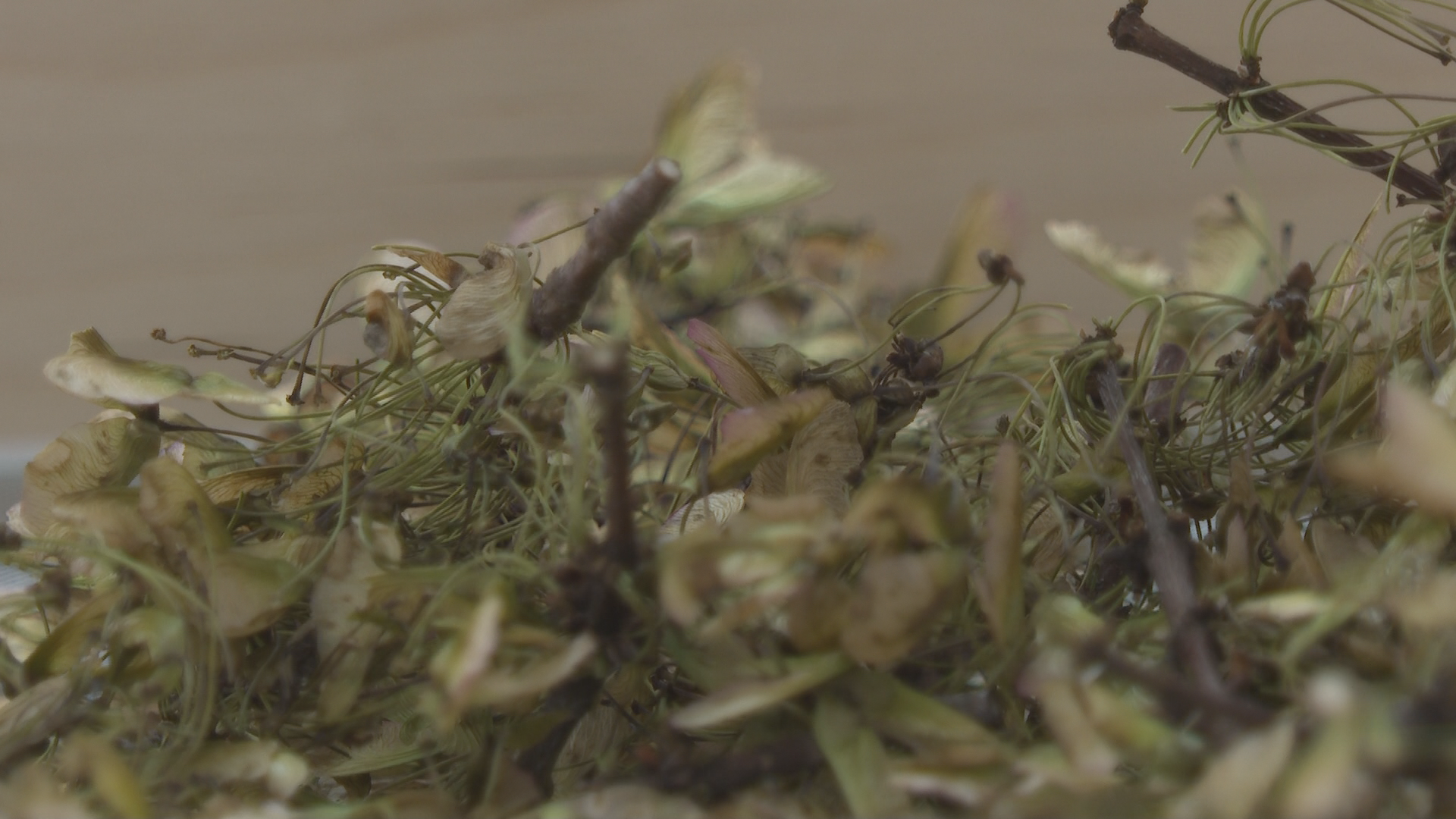
In a quiet lab in Ottawa, a handful of seeds sits in a sterile container. They look like nothing. They are tiny, dried specks of potential, no heavier than a few breaths. If you dropped them in your garden, you’d forget where they landed within seconds. But these specific seeds—sugar maples, white spruces, and several others native to the Canadian wilderness—are currently the most important biological cargo on the planet.
They are about to leave the wind, the soil, and the soft rain of Earth behind. They are going to the moon. You might also find this connected coverage useful: South Korea Maps Are Not Broken And Google Does Not Need To Fix Them.
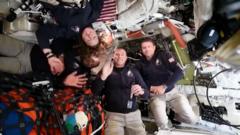
When the Artemis II mission orients itself toward the lunar horizon, it will carry four humans. We know their names. We see their faces on the news. But tucked into the corners of the Orion spacecraft will be these thousands of silent travelers. They aren't just snacks for the journey or decorative greenery. They are the heralds of a new biological era. We are asking them a question that humans have been afraid to ask for sixty years: Can life as we know it actually survive the deep?
The Invisible Wall
Most of us think of "space" as a single, homogenous void. We see the ISS orbiting 400 kilometers up and think we’ve already conquered the frontier. We haven't. The ISS sits comfortably within the Earth’s magnetosphere—a protective magnetic bubble that deflects the worst of the sun’s temper. The astronauts there are shielded. They are, in a sense, still home. As highlighted in recent reports by The Next Web, the results are worth noting.
Artemis II is different.
Once the crew breaks past the Van Allen belts, they enter deep space. There is no bubble there. Instead, there is a constant, invisible sleet of high-energy cosmic rays and solar particles. This radiation doesn't just burn skin; it shreds the very blueprints of life. It snaps DNA strands like brittle dry twigs. For a human, this is a calculated risk. For a seed, it is an existential trial.
The Canadian Space Agency isn't sending these seeds because they are easy to transport. They are sending them because Canada’s flora is built for hardship. Think of a spruce tree clinging to a rock in the Canadian Shield, surviving -40°C winters and sun-scorched summers. These plants are the ultimate survivalists. If anything can withstand the silent bombardment of deep space and still remember how to grow, it’s them.
The Weight of a Speck
Consider a scientist named Sarah. She isn't a real person, but she represents the dozens of researchers currently obsessing over "vibration profiles" and "thermal gradients" in Montreal and Guelph. Sarah spends her nights wondering if the frantic shaking of a Rocketdyne engine will crack the delicate embryos inside those seeds before they even leave the atmosphere.
To Sarah, these aren't just "Canadian seeds." They are a biological legacy.
When the Orion capsule loops around the moon, it will be the furthest any life from Earth has traveled in over half a century. The seeds will experience the heavy G-forces of launch, followed by the disorienting stillness of microgravity, and finally, the chaotic heat of re-entry.
Why do we care if a maple seed survives a trip to the moon? Because one day, we intend to stay there.
If we want to build a base on the lunar surface, we cannot rely on a cosmic grocery delivery service. It’s too expensive. It’s too fragile. We need to grow our own food, our own oxygen, and perhaps even our own materials. But we don't know if the "memory" of a plant—the way it understands "up" and "down," the way it repairs its own cells—remains intact after being bathed in lunar radiation.
If these seeds come back and refuse to sprout, or if they grow into twisted, unrecognizable versions of themselves, we have a problem. It means the moon isn't just far away; it’s hostile to the very chemistry of our world.
The Great Return
The journey doesn't end when the capsule splashes down in the Pacific. That is actually when the real story begins.
The seeds will be whisked away to labs across Canada. They will be compared to "control" seeds—their siblings that stayed behind on Earth, sitting in a dark drawer, living a boring, safe life.
Researchers will plant them side-by-side. They will watch the soil. They will wait for that first, tiny bit of green to break the surface. It’s a moment of profound tension. Imagine the quiet of a greenhouse as a scientist leans over a tray, looking for a sign that the lunar traveler is still "awake."
We are looking for more than just growth. We are looking for the scars. By sequencing the DNA of the moon-seeds, we can see exactly where the radiation hit them. We can see how the plant tried to heal itself. This data is a goldmine. It tells us how to build better shields for humans. It tells us which species are the most "radiotolerant."
In a way, these plants are our scouts. They are going where we cannot yet live, testing the water, and bringing back the secrets of survival.
The Maple in the Lunar Dust
There is something hauntingly beautiful about the image of a Canadian maple seed—the kind kids call "helicopters" as they spin to the sidewalk in autumn—drifting 400,000 kilometers away from the nearest forest.
It represents a bridge. We often talk about space as a cold, metallic endeavor. We talk about fuel ratios, heat shields, and telemetry. But the Artemis II seeds remind us that we are biological creatures. We are bringing our ecosystem with us. We aren't just visiting the moon; we are trying to invite the moon into the circle of life that started in our oceans billions of years ago.
If a white spruce can survive a trip around the moon and still grow tall in a forest in British Columbia three years later, it changes the way we look at the sky. It makes the moon feel less like a dead rock and more like a future home.
The stakes are invisible because they are microscopic. They are written in the chemical bonds of a seed coat. If those bonds hold, the path to Mars becomes a little clearer. If they hold, the first forest on another world might just have a Canadian accent.
We wait for the launch. We wait for the splashdown. We wait for the first leaf to unfurl. Until then, these tiny travelers remain the bravest things we’ve ever sent into the dark.