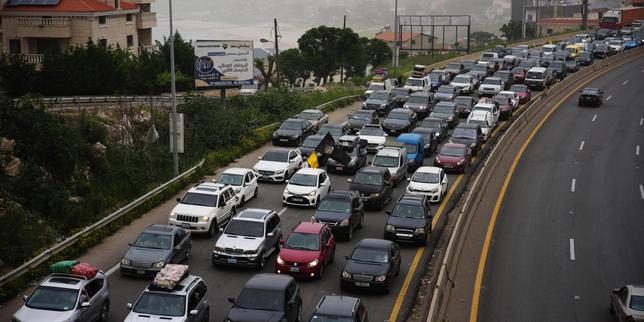
The footage is everywhere. Caravans of dust-covered SUVs, mattresses strapped to roofs, and families flashing victory signs as they stream south toward the Litani River. The mainstream media is selling you a narrative of "resilience" and "homecoming." They see a humanitarian triumph.
They are dead wrong.
What you are witnessing isn't the resolution of a conflict. It is the beginning of a far more dangerous demographic and strategic squeeze. Watching thousands of people rush back into a landscape of unexploded ordnance and leveled infrastructure isn't a sign of stability; it’s a failure of long-term planning that will cost more lives than the initial bombardment.
The Myth of the "Safe" Return
The consensus view suggests that once the drones stop buzzing, the land is reclaimed. This is a lethal oversimplification.
I have spent years analyzing the aftermath of asymmetric urban warfare. When a civilian population returns to a "cleared" zone while the geopolitical triggers for the war remain active, they aren't returning to homes. They are returning to a buffer zone.
The competitor reports focus on the emotional relief of the displaced. They miss the mechanical reality:
- Infrastructure is a Ghost: You cannot sustain a population on sentiment. When the power grid is shattered and water pumping stations are craters, a mass return creates a secondary humanitarian crisis that the state—already a failed entity in Lebanon's case—cannot manage.
- The Proximity Trap: By filling these villages again, the civilian population effectively becomes a human shield for the next inevitable cycle of escalation. This isn't a "brave" return; it's a strategic blunder forced by economic desperation.
The Economy of Ruins
Stop pretending these people are moving back because they feel "safe." They are moving back because they are broke.
Lebanon’s economy was a corpse long before this latest round of violence. The displaced weren't staying in five-star hotels in Beirut; they were crammed into schools and expensive rentals they couldn't afford. The "return" is an economic necessity masquerading as a patriotic triumph.
Imagine a scenario where a family has to choose between starving in a Beirut basement or risking a localized strike in their ancestral village. They choose the village every time. This isn't a vote of confidence in a ceasefire. It’s a desperate flight from the crushing weight of a devalued currency and a vanished social safety net.
The Fallacy of the Litani Buffer
The international community loves to cite UN Resolution 1701 as if it’s a physical wall. It isn't.
The media claims the return of civilians signals a "normalization" of the south. In reality, it complicates the very security measures meant to prevent the next war. When you flood a combat zone with a quarter-million civilians within 48 hours of a pause in hostilities, you make it impossible for international observers to verify the absence of military hardware.
The logic is simple:
- Visibility: High civilian density masks insurgent movement.
- Constraint: It limits the tactical options of the opposing force, which sounds good on paper but actually ensures that when the next spark happens, the casualty count will be exponential.
We saw this in 2006. We saw it in 1996. The "victory" of the return is the precursor to the tragedy of the next displacement.
Logistics Are Not Optional
The articles you’re reading ignore the math of reconstruction. To actually "reclaim" Southern Lebanon, you need more than a convoy of cars. You need a $15 billion injection into a country that the IMF won't touch with a ten-foot pole.
Where is the cement coming from? The steel? The engineers?
The current return is creating a "shanty-town south." People are living in tents next to the rubble of their villas. This creates a permanent class of aggrieved, under-resourced citizens who are perfectly primed for radicalization. If you wanted to design a factory for the next thirty years of conflict, this is exactly how you would do it.
The Missing Nuance
The lazy consensus says: "The people are back, therefore the war is over."
The insider truth: "The people are back, therefore the stakes are higher and the next war will be bloodier."
We need to stop celebrating the movement of people into a vacuum. A real return requires a state that can provide security, electricity, and a judicial system. Lebanon has none of these. By encouraging or even just documenting this return as a "positive" development, the media is complicit in the next disaster.
Stop Asking if They Can Go Home
Start asking what "home" even means in a territory that is used as a geopolitical chessboard.
If you are looking for unconventional advice that works, it’s this: Stop treating Southern Lebanon as a localized issue. It is a regional pressure valve. The return of the displaced is just the valve closing. When the pressure builds again—and it will—the explosion won't just move people back to Beirut. It will shatter the remaining fragments of the Lebanese state.
The "return" is a tactical retreat by the civilians into a zone of high-risk uncertainty. It’s not a homecoming. It’s a relocation to the front lines.
The cameras will leave next week. The mattresses will stay in the ruins. And the countdown to the next evacuation has already begun.
Get out of the way of the "victory" narrative. It's nothing but smoke.