The ticker tape doesn't lie, but it certainly knows how to hold its breath. Wall Street is currently paralyzed, trapped in a high-stakes waiting game that most analysts lazily attribute to the smoke rising over the Middle East. While the missile exchanges between the United States, Israel, and Iran are the loudest variables in the room, they are merely the catalyst for a much deeper, structural rot. If you think a ceasefire or a sudden de-escalation in the Persian Gulf will send the S&P 500 back to its record highs, you are fundamentally misreading the board.
The market is stuck in limbo because the very pillars that supported the "everything rally" of the mid-2020s—limitless AI optimism, predictable Fed maneuvers, and domestic political stability—have all fractured simultaneously. This isn't a temporary dip caused by a news cycle; it is a fundamental repricing of risk in an era of controlled disorder.
The Hormuz Mirage and the Inflation Trap
The consensus view, championed by loud voices like Jim Cramer, suggests that the market’s primary anxiety is the Strait of Hormuz. It is a logical fear. Roughly 25% of the world’s liquefied natural gas and 20% of its oil flow through that narrow chokepoint. With Iran targeting the U.S. Fifth Fleet in Bahrain and shipping insurers pulling coverage faster than a panicked retail trader, oil has predictably spiked toward $90 a barrel.
However, the "war premium" on crude is a red herring. The real danger isn't the price of a barrel; it’s the duration of the spike. We are witnessing a "temporary stagflationary impulse" that threatens to derail the Federal Reserve’s long-promised soft landing. For years, the market operated on the assumption that inflation was a solved problem. The Iran conflict has shattered that delusion.
When energy costs rise, they don't just hit the gas pump. They bleed into every crevice of the economy. Transportation costs for consumer goods jump. Manufacturing margins shrink. Food prices follow suit. This creates a nightmare scenario for the Fed, which is now caught between a weakening labor market and re-accelerating prices. Investors aren't just afraid of war; they are afraid the Fed has lost its only remaining weapon: the ability to cut rates without sparking a 1970s-style inflationary spiral.
The Death of AI Inevitability
Beyond the geopolitical theater, a quieter but more devastating correction is taking place in the tech sector. For the last 24 months, "AI" was the magic word that justified astronomical multiples. If a company mentioned a Large Language Model in an earnings call, its stock went up 5%. Those days are over.
We have entered the "show me the money" phase of the AI cycle. The massive capital expenditures—like Amazon's staggering $200 billion infrastructure plan for 2026—are finally being scrutinized. Investors are no longer satisfied with "potential." They are looking at the massive electricity demands of data centers and the diminishing returns of traditional outsourcing models.
Recent reports, including a devastating analysis from Citrini Research, have triggered a mass exodus from Indian IT giants and domestic service providers. The fear is that AI isn't just a tool for growth; it’s a deflationary force that could cannibalize the very industries it was supposed to save. When the leaders of the "Magnificent Seven" trade sideways or lower despite beating earnings, the message is clear: the market has reached a ceiling on tech-driven euphoria.
The Trump Factor and Institutional Erosion
While the international conflict dominates the headlines, the domestic political landscape in the United States is injecting a level of "regime risk" usually reserved for emerging markets. The current administration's interventionist stance—from Venezuela to the Middle East—has unsettled global capital.
The market hates uncertainty, but it loathes unpredictability even more. The recent Supreme Court ruling declaring certain tariffs illegal, combined with a messy transition at the Federal Reserve, has created a vacuum of authority. Foreign institutional investors are no longer viewing U.S. Treasuries as the undisputed "safe haven." Instead, we see a massive tactical rebalancing into non-U.S. developed markets.
Capital is fleeing to places like Australia and parts of Europe, not because their economies are stronger, but because their political systems are currently less volatile. The "de-dollarization" theme, once a fringe theory, is gaining institutional traction as the U.S. weaponizes its financial system to a degree that makes global partners nervous.
Sector Rotation or Structural Collapse
In this environment, the traditional "buy the dip" mentality is a dangerous relic. We are seeing a brutal divergence in sector performance that reveals the market's true priorities.
| Sector | Outlook | Why? |
|---|---|---|
| Defense & Aerospace | Bullish | Escalating global conflicts and increased NATO spending. |
| Upstream Oil (XOM, OXY) | Bullish | Immediate beneficiaries of supply-side shocks and $100+ oil potential. |
| Consumer Discretionary | Bearish | Squeezed by energy-driven inflation and falling real wages. |
| Traditional Tech | Neutral | Facing "AI fatigue" and massive capex requirements. |
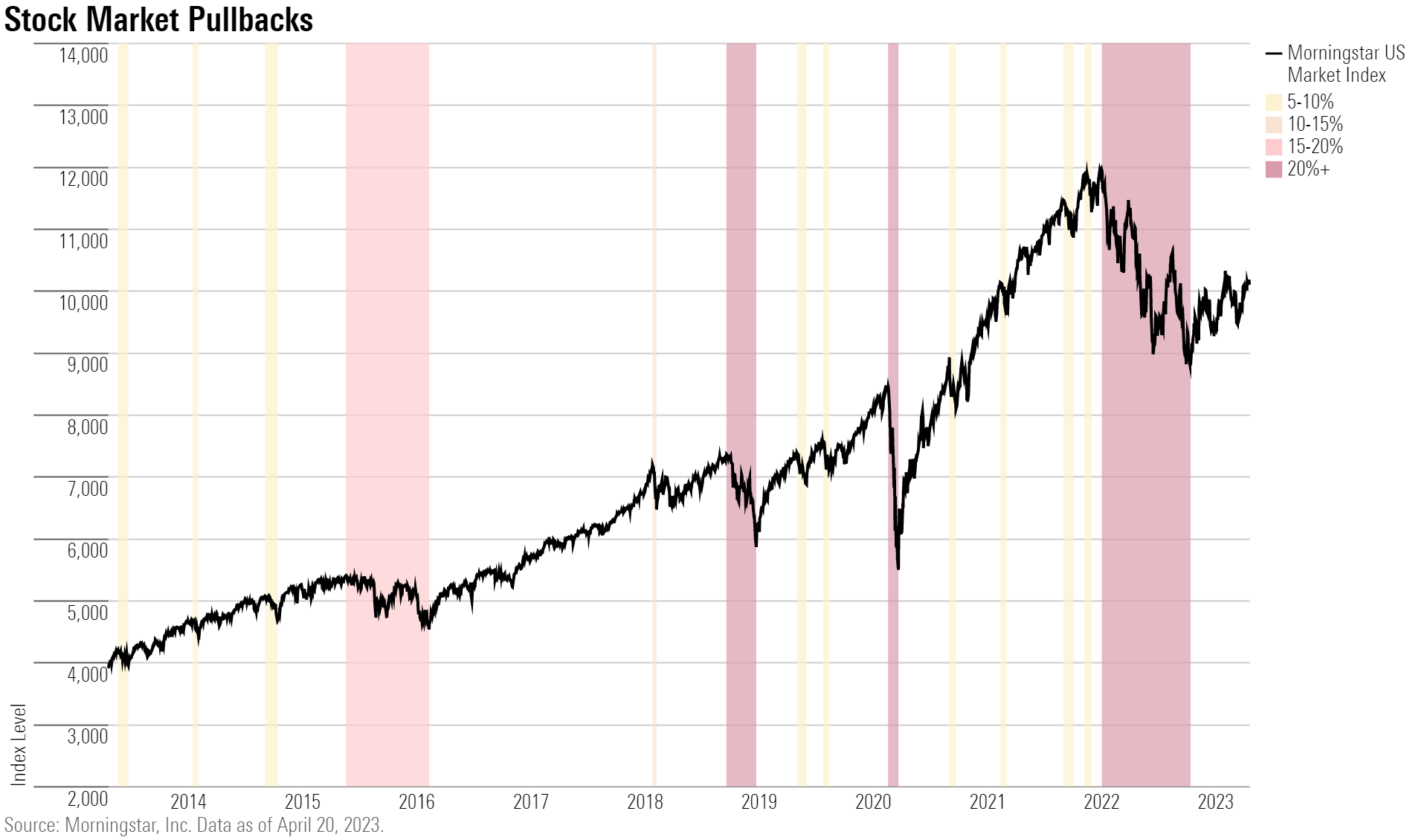
The Dow Jones Industrial Average has seen 1,000-point swings in single sessions, while the Nasdaq remains buoyed by a handful of tech behemoths like Alphabet and Amazon. This isn't a healthy market. It is a bifurcated one where the "average" stock is actually in a stealth bear market, masked by the weight of a few trillion-dollar outliers.
The Strategy for an Open-Ended Conflict
The most dangerous assumption an investor can make right now is that this "limbo" will resolve itself in a matter of weeks. President Trump has suggested a four-to-five-week timeline for the conflict, but history suggests that Middle Eastern wars are rarely dictated by Washington's schedule.
The closure of the Strait of Hormuz is not a "volatility event"—it is a systemic shock. If the disruption persists for more than 14 days, the global supply chain will seize up in ways that make the 2021 bottlenecks look like a minor inconvenience.
To survive this, the play isn't to chase the latest "hot" stock recommended on cable news. The play is resilience. This means moving into unlisted infrastructure, which acts as a hedge against geopolitical risk, and increasing exposure to gold, which has tested the $5,300 mark for a reason.
The market is stuck because it is finally realizing that the era of easy money and geopolitical stability is dead. We are now in a period of "controlled disorder." The winners won't be those who predict the end of the war, but those who position themselves for a world where war is a constant macro variable.
Audit your portfolio for energy sensitivity immediately.