The mist in the central highlands of Sri Lanka doesn’t just settle; it clings. It wraps itself around the emerald curves of the tea bushes, turning the rolling hills of Nuwara Eliya into a muted, ghostly green. For generations, the people who pick the leaves that fill the world’s teacups have lived within this damp embrace, often in "line rooms"—cramped, century-old barracks built during a different era. These are rooms where the walls sweat in the monsoon and the roof is a thin sheet of tin that drums relentlessly under the rain.
But look closer at the hillside today. Amidst the sea of green, there are new splashes of color. Bright orange masonry. Fresh white paint. Solid foundations.
When India’s Vice President, CP Radhakrishnan, stepped onto this damp earth recently, it wasn't just a diplomatic formality or a checkbox on a high-level itinerary. He was walking into the middle of a quiet revolution of brick and mortar. He was there to see the Indian Housing Project, a massive undertaking that is slowly, house by house, erasing the insecurity of the line rooms and replacing it with the dignity of a front door that locks.
The Weight of a Key
Imagine a woman named Meena. She is a hypothetical face of this transition, but her story is mirrored in thousands of eyes across the plantation districts. For twenty years, Meena’s life was defined by the transition from the field to the shack. Her "home" was a space she didn't own, on land she didn't possess, provided by a company for as long as she could work. To live in a line room is to live in a state of perpetual temporary-ness. You cannot plant a fruit tree you expect to harvest in ten years. You cannot easily pass down a legacy to your children. You are a tenant of the wind.
Then comes the day she receives a key.
It isn't a silver key on a velvet pillow. It is a simple, jagged piece of metal. But as she holds it, the invisible stakes of this geopolitical project become physical. This isn't just about bilateral relations between New Delhi and Colombo. It is about the fact that Meena’s children now have a desk in a dry room where they can study for their exams without the smell of damp kerosene filling their lungs.
Radhakrishnan’s visit to these beneficiaries was an exercise in witnessing this shift. When a high-ranking official sits in a living room that was, until recently, merely a blueprint, the "facts" of the project transform. We stop talking about the 60,000 houses pledged across the country and start talking about the smell of fresh plaster and the pride of a family hosting a guest in a home that belongs to them.
Building Beyond the Blueprint
The Indian Housing Project is one of the largest grant assistance programs ever undertaken by the Government of India abroad. It operates on a model that is deceptively simple: give the people the means to build, and they will build their own future. It isn't just about dropping pre-fabricated boxes onto a hill. It involves the community. It involves sweat equity.
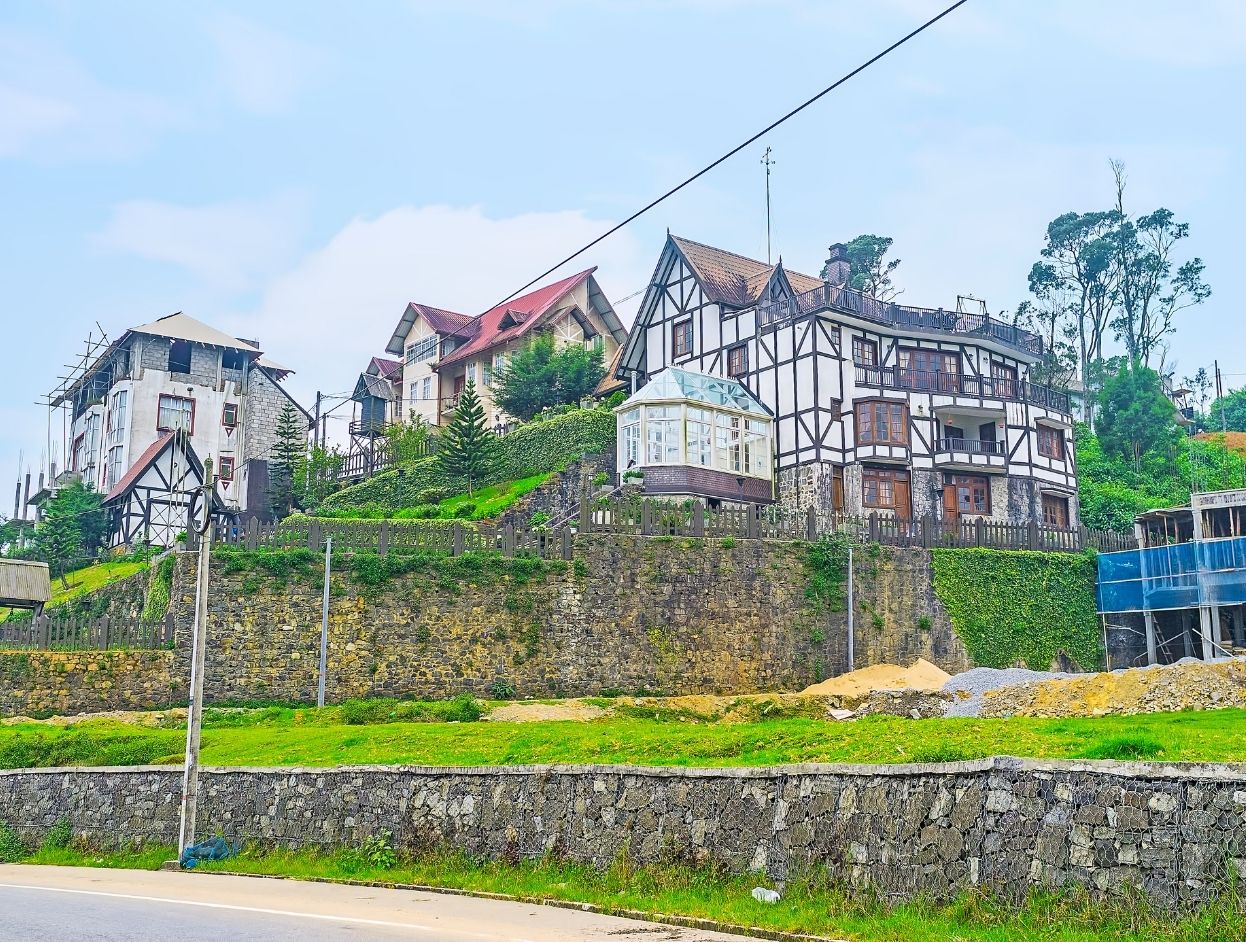
Consider the logistics. Nuwara Eliya is often called "Little England" because of its colonial architecture and biting cold, but for the workers, the beauty is a backdrop to hardship. Transporting construction materials up these winding, narrow roads is a feat of endurance. Yet, the houses stand. They are built with a specific "owner-driven" philosophy. This means the families themselves are involved in the planning and construction.
Why does this matter? Because when you help lay the stones of your own walls, you aren't just a "beneficiary" in a government ledger. You are an architect. You are a stakeholder.
Radhakrishnan’s presence in Nuwara Eliya was a signal that the bridge between these two nations is made of more than just high-level trade agreements or maritime security pacts. It is made of the very stuff of life—shelter. The Indian government has poured billions of rupees into this initiative, recognizing that the Tamil community of Indian origin in the hill country represents a deep, historical tether between the two lands. These are the descendants of those who crossed the Palk Strait over a century ago. For a long time, they were the forgotten laborers of the global tea trade. Today, they are becoming homeowners.
The Invisible Threads of Diplomacy
We often view international relations through the lens of cold, hard power. We look at GDP growth, military drills, and voting blocs. But there is a softer, more enduring form of power that comes from being the neighbor who helps fix the roof.
During his visit, Radhakrishnan didn't just look at the structures; he spoke with the people. He heard about the challenges of the plantation economy and the aspirations of the younger generation. The "Indian Housing Project" is a clinical name for what is essentially a massive act of historical repair. It is an acknowledgment that the stability of a region depends on the stability of its most vulnerable households.
But the real problem lies elsewhere, far from the polished halls of government. The problem is the sheer scale of the need. While thousands of homes have been handed over, the shadow of the old line rooms still looms over many hillsides. The transition is slow. It is expensive. It is prone to the whims of economic fluctuations. Yet, the momentum is undeniable.
A New Map of the Highlands
If you were to look at a map of Nuwara Eliya twenty years ago, the residential clusters were hidden, tucked away in the valleys where the workers wouldn't disturb the view of the lush tea estates. Today, the map is changing. New townships are emerging. These aren't just clusters of houses; they are seeds of a new middle class.
When a family moves out of a line room and into a standalone house with a plot of land, their entire psychological landscape shifts. They begin to invest in the local economy in different ways. They buy furniture. They plant gardens. They paint their doors vibrant blues and pinks, asserting their individuality in a landscape that once demanded they be invisible.
Radhakrishnan’s visit serves as a reminder that this is a long-game strategy. India isn't just building houses; it is building a memory of partnership. Years from now, a child growing up in one of these homes will not remember the specific details of a Vice President’s speech. They will, however, remember that their house was built through a hand reached out from across the water.
The Echo of the Hills
As the sun begins to set over Nuwara Eliya, the mist returns, thicker than before. The temperature drops sharply, sending people scurrying indoors. In the old line rooms, this is the time when the dampness starts to seep through the clothes. It is the time of huddling together for warmth.
But in the new houses, the lights are coming on behind glass windows. There is the sound of a heavy door clicking shut, sealing out the chill. There is the warmth of a space that is truly, legally, and permanently home.
The Vice President has moved on to the next leg of his journey, and the headlines will soon be replaced by newer, louder news. But the houses remain. They are silent monuments to a different kind of diplomacy—one that measures success not in column inches, but in the quiet, profound comfort of a family sleeping under a roof that doesn't leak, on land that finally feels like their own.
The walk home for a plantation worker in Nuwara Eliya has always been long, steep, and weary. Today, for many, that walk finally ends at a place where they are no longer just workers, but masters of their own hearth.