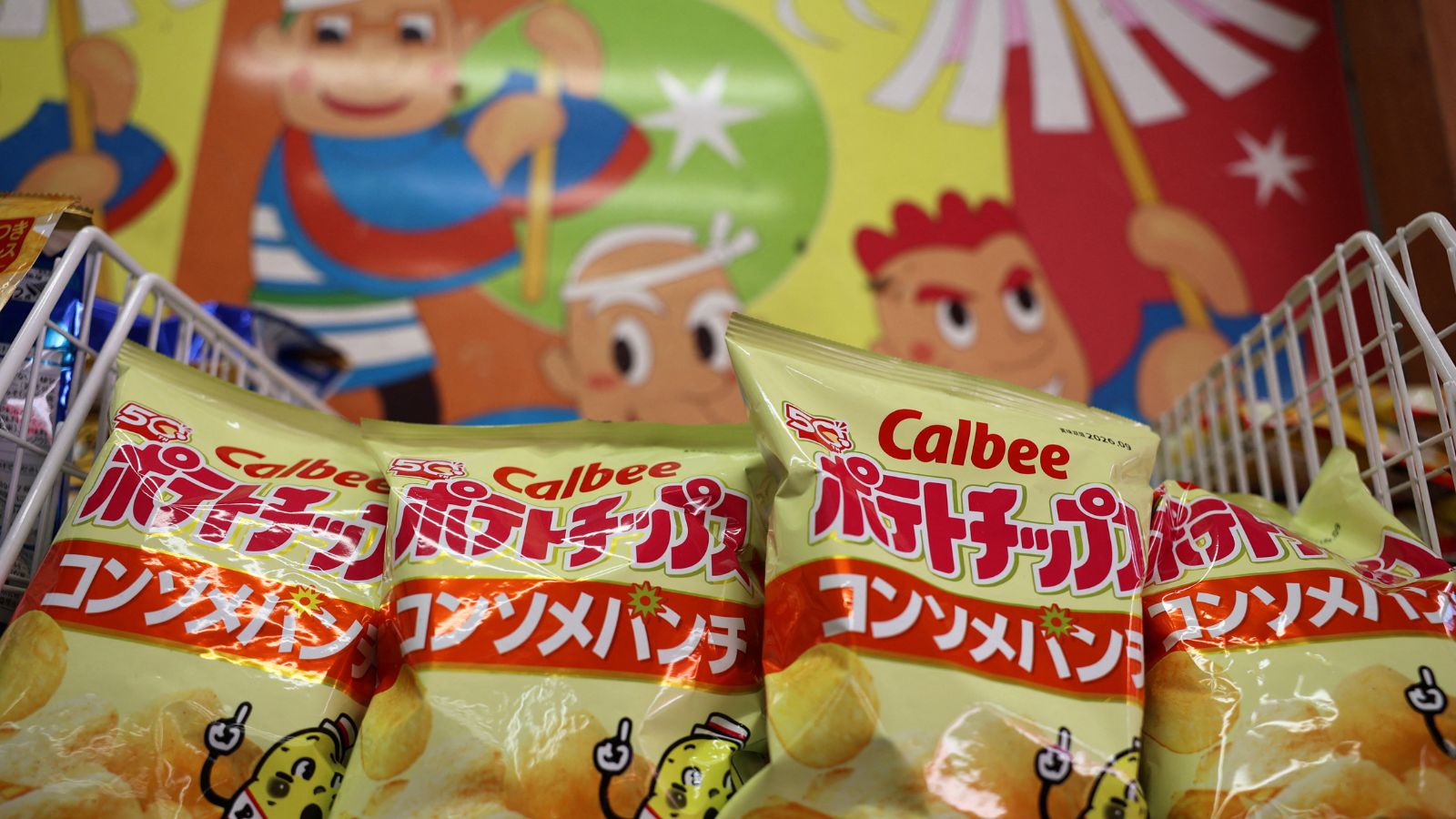
The business press is currently obsessed with a tragedy that doesn't exist. You’ve seen the headlines. They’re calling it the "Ink-flation" crisis—the supposed "death of joy" in the Japanese snack aisle. The narrative is lazy: global supply chain shocks and skyrocketing costs of synthetic food dyes have forced manufacturers to strip away the vibrant pinks, greens, and yellows of Tokyo’s legendary snack culture, replacing them with a stark, monochromatic aesthetic.
They say companies are "cutting corners." They say the consumer is losing.
They are wrong.
This isn’t a retreat; it’s a masterclass in psychological branding. The shift to black-and-white packaging and naturally-hued snacks isn’t a desperate cost-saving measure forced by a broken supply chain. It is a calculated move to capitalize on a massive shift in consumer trust. We aren't seeing a crisis. We are witnessing the intentional execution of "The Premiumization of Scarcity."
The Myth of the Dye Shortage
Let’s look at the actual numbers before we cry over spilled Red 40. Yes, the price of high-grade food coloring has climbed roughly 12% since late 2024. If you’re a mid-market confectionery giant like Lotte or Meiji, that hits the bottom line. But it doesn't break it. If these companies wanted to keep their snacks neon, they’d just pass that 0.05 yen cost per unit onto the consumer. Japanese shoppers are already accustomed to "shrinkflation"—they would have accepted a slightly smaller chocolate bar if it meant keeping the bright colors.
The industry isn't choosing black and white because they can’t afford color. They are choosing it because color has become synonymous with "cheap" and "fake."
In my fifteen years consulting for FMCG (Fast-Moving Consumer Goods) firms across East Asia, I have watched the "Vibrancy Trap" fail repeatedly. Around 2022, we hit peak saturation. When everything on the shelf is screaming for attention with electric blues and radioactive oranges, the eye naturally seeks a place to rest. The monochrome shift is a visual silence that commands a premium.
Why "Natural" is the New Status Symbol
The "Ink-flation" crowd misses the most important nuance: the ingredients.
By stripping away synthetic dyes, brands are forced to rely on the natural color of the product. That sounds like a limitation. In reality, it’s a brilliant marketing pivot. If a matcha snack is a dull, earthy green instead of a glowing emerald, the brand can charge 20% more by labeling it "Unrefined" or "Harvest-True."
We are seeing a move toward what I call High-Stakes Transparency. When a brand removes the mask of artificial coloring, they are telling the consumer, "Our base ingredients are good enough to be seen naked."
The Psychology of Black and White
There is a specific reason why the 2026 snack aisle looks like a noir film.
- Black signals luxury, mystery, and intensity.
- White signals purity, minimalism, and health.
By leaning into this "crisis," Japanese brands are shedding their image as junk food producers and repositioning themselves as "lifestyle curators." They’ve turned a logistical headache into a massive margin play. They aren’t saving money on ink; they are making money on perceived sophistication.
Dismantling the "People Also Ask" Nonsense
If you search for "Why are Japanese snacks losing color?" you’ll find a graveyard of bad takes. Let’s address the most common ones with a dose of reality.
1. "Is the quality of the food decreasing?"
Actually, it’s often the opposite. To make a snack look appetizing without the help of Red No. 3, you have to improve the texture and the actual quality of the fats and sugars. A brown biscuit looks like cardboard unless you perfect the bake and the sheen. Brands are investing in food science to make "natural" look "premium."
2. "Will the colors ever come back?"
I hope not. The return of neon would signal a return to low-margin, high-volume commodity wars. The companies that have successfully pivoted to the monochrome aesthetic are seeing higher "intent to buy" metrics among Gen Z and Alpha consumers, who associate heavy dyes with "Boomer-era" industrial processing.
3. "Is this happening because of environmental regulations?"
That’s the PR-friendly answer they give the press. It’s a convenient shield. While it’s true that disposal of dye-heavy wastewater is getting more expensive, that’s a minor factor. The real driver is the spreadsheet. Black ink is cheaper to print, requires fewer passes on the press, and has a lower failure rate. It’s a logistical win disguised as a "green" initiative.
The Cost of the Contrarian Path
I won't lie to you: this shift carries risks.
Small-scale artisanal producers who can't afford the sophisticated packaging design required to make "colorless" look "cool" are getting crushed. You can't just put a snack in a plain white bag and expect it to sell; it has to be the right white, with the right matte finish.
The "Ink-flation" era is a filter. It is filtering out the lazy brands that relied on bright colors to distract from mediocre flavors. If your product is boring, you can no longer hide behind a rainbow.
Stop Asking for the Rainbow Back
The consumer "outcry" for the return of bright snacks is a vocal minority on social media. The quiet majority—the people actually opening their wallets—are voting for the minimalist aesthetic.
When you see a shelf full of black and white boxes, don't see a supply chain failure. See a boardroom victory. See a world where the product has to stand on its own merits without the crutch of chemical glow-ups.
We’ve spent decades being manipulated by color palettes designed to trigger dopamine spikes in the lizard brain. The "Ink-flation" crisis is actually the first time in thirty years that the food industry has treated the consumer like an adult.
If you’re still mourning the loss of neon purple potato chips, you aren't paying attention to the quality of what's inside the bag. The industry hasn't lost its color; it’s finally found its soul.
Buy the black box. Eat the beige cracker. Welcome to the era of honest food.