The headlines are predictable. A 5.8 magnitude earthquake rattles the coast of Cuba, and suddenly every major news outlet is running a masterclass in fear-mongering. They focus on the Richter scale. They talk about "shaking felt in Miami." They interview a terrified tourist who felt their mojito ripple.
They are looking at the wrong map.
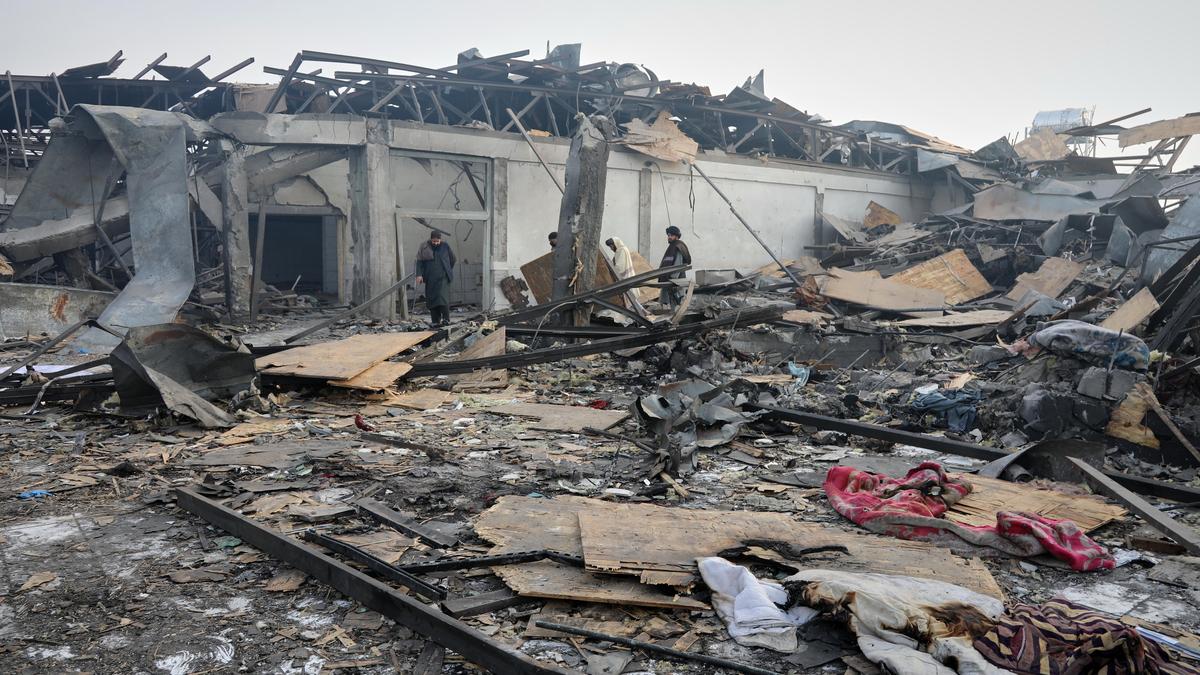
A 5.8 magnitude event is, in the grand geological scheme of the Oriente Fault zone, a loud sneeze. It’s not the "big one," and it isn't even particularly surprising to anyone who understands the tectonic tug-of-war between the North American and Caribbean plates. The real story isn't the seismic activity; it’s the absolute fragility of the infrastructure that earthquake just poked.
We are obsessed with the Magnitude, but we should be obsessed with the Response.
The Fault in Our Metrics
The media loves the Richter scale because it’s a big, scary number that sounds scientific. In reality, a 5.8 magnitude quake is a moderate event. If this happened in a Tokyo skyscraper or a modern Los Angeles office park, the workers wouldn't even pause their Zoom calls. They might adjust their monitors and keep typing.
The issue isn't the earth moving. It’s the fact that we’ve built a society on toothpicks.
In Cuba—and by extension, much of the aging Caribbean infrastructure—the "threat" of a 5.8 isn't the physical vibration. It’s the immediate, catastrophic failure of the electrical grid. When the ground shakes, the lights go out. Not because the quake was "devastating," but because the grid was already on life support.
I’ve watched energy companies dump millions into "earthquake-proofing" facilities while ignoring the fundamental rot in their distribution networks. They buy fancy sensors and build reinforced concrete walls, but the moment a transformer gets a dirty look from a seismic wave, the entire system cascades into darkness.
The Lazy Consensus of Tsunami Warnings
Every time a quake hits offshore, the immediate reflex is to scream "Tsunami." It sells papers. It gets clicks.
It’s also, in this specific geographic context, almost statistically impossible for a 5.8 to generate a destructive tsunami.
Physics doesn't care about your anxiety. To displace enough water to create a legitimate threat, you typically need a vertical displacement of the seafloor. The Oriente Fault is a strike-slip fault. This means the plates are sliding past each other horizontally. Think of it like two cars rubbing bumpers in a parking lot. They create heat, noise, and friction, but they aren't lifting the pavement.
To get a tsunami from a 5.8 on a strike-slip fault, you’d need a massive underwater landslide triggered by the shaking—a rare secondary event that hasn't materialized here.
People ask: "Should I be worried about a tsunami in Florida?"
The answer is a brutal "No."
You should be worried about why your insurance premiums are skyrocketing despite the lack of actual damage from these events.
Your Home is a Liability, Not a Sanctuary
Let’s talk about building codes. We treat "seismic retrofitting" as an optional luxury for the elite.
In the Caribbean, the problem is masonry. Concrete blocks and unreinforced mortar are the default because they are cheap and withstand hurricanes reasonably well. But earthquakes and hurricanes require diametrically opposed engineering philosophies.
- Hurricanes: Require weight and rigidity. You want to be heavy so you don't blow away.
- Earthquakes: Require flexibility and ductility. You want to bend so you don't snap.
When you build a rigid, heavy house on a fault line, you aren't building a fortress. You’re building a tomb. The "lazy consensus" says we need more aid for reconstruction. The contrarian truth is that we need to stop rebuilding the same failures.
If we don't switch to lightweight, flexible framing—even if it’s more expensive or goes against "tradition"—every 5.0 magnitude quake will continue to be treated like an apocalypse.
The Energy Black Hole
The most overlooked aspect of this earthquake is the Grid Decentralization Argument.
Cuba’s energy crisis is a preview of what happens when centralized power meets environmental instability. When a single quake hits the Oriente region, it shouldn't be able to flicker lights in Havana. But it does.
We are obsessed with "fixing" the grid. We should be obsessed with dismantling it.
The only way to survive a seismic-active future is through microgrids. If every neighborhood had its own solar-plus-storage capability, a 5.8 magnitude quake would be a news blip, not a national emergency. But microgrids don't allow for the same level of political or corporate control as a centralized utility.
I’ve seen engineers pitch decentralized solutions only to be laughed out of the room by bureaucrats who want to keep the power (literally and figuratively) in one central hub. They’d rather have a fragile, "robust" system they can control than a resilient, chaotic one they can’t.
The Data We Ignore
Let’s look at the math. The energy released by an earthquake increases by a factor of roughly 32 for every unit of magnitude.
$$E \approx 10^{1.5M + 4.8}$$
Where $E$ is the energy in Joules and $M$ is the magnitude.
A 5.8 releases roughly $6.3 \times 10^{13}$ Joules. To put that in perspective, that’s about the energy of the Hiroshima bomb. Sounds terrifying, right?
But that energy is dissipated through the earth's crust. By the time it reaches the surface, and especially by the time it travels across the water to Florida, it is a fraction of that intensity.
The real danger isn't the $10^{13}$ Joules in the crust. It’s the $0$ Joules in the power lines.
Stop Asking the Wrong Questions
The public asks: "When will the next one hit?"
The smarter question: "Why can't our systems handle the one that just did?"
We are treating earthquakes as "acts of God" to absolve ourselves of "acts of poor engineering." Every time we label a moderate 5.8 magnitude event as a "disaster," we are giving a pass to the people who built the fragile systems that failed during it.
The earthquake didn't break Cuba. Cuba’s reliance on 1950s-era infrastructure and centralized energy did.
The Cost of the Status Quo
There is a downside to my stance: it’s expensive.
Redesigning an entire region’s building codes and energy distribution isn't as cheap as sending a few crates of bottled water and some blankets. It requires a fundamental shift in how we value long-term resilience over short-term political optics.
We’ve become a society that prefers the drama of the rescue over the boredom of the prevention. We’d rather watch a helicopter lift someone off a roof than watch an engineer install a solar microgrid or a steel-moment frame.
But if you’re still checking the tsunami buoys after a 5.8, you’re looking at the wrong horizon. The water isn't coming for you. The inefficiency of the world you’ve built is already here.
Buy a battery. Reinforce your walls. Stop trusting the grid.
Would you like me to analyze the structural vulnerability of specific Caribbean urban centers compared to modern seismic codes?