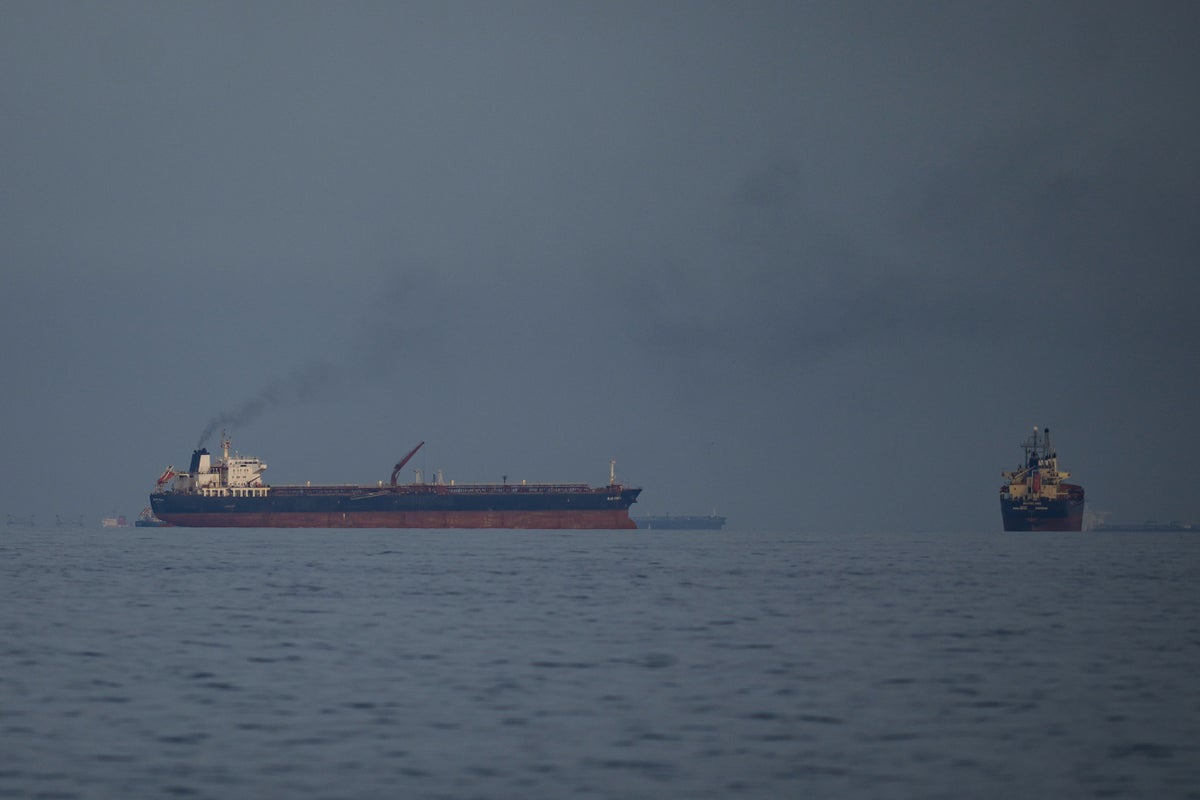
Sending multibillion-dollar destroyers to play sheepdog for oil tankers in the Strait of Hormuz is the geopolitical equivalent of using a Ferrari to deliver pizza in a war zone. It’s expensive, it’s inefficient, and it fundamentally misunderstands the math of modern conflict.
The prevailing narrative—the "lazy consensus" pushed by the usual crop of think-tank hawks and echoed in the latest presidential demands—is that a grand coalition of naval steel can "reopen" the world's most congested chokepoint. They point to the 1980s Operation Earnest Will as the gold standard. They are wrong. They are nostalgic for a maritime era that died the moment a $2,000 drone became capable of blinding a $2 billion ship.
The current push for a multinational naval task force isn't a solution; it’s a massive subsidy for the insurance industry and a target-rich environment for the very asymmetric forces it claims to deter. If you want to secure global energy, you don't send more ships. You change the game entirely.
The Asymmetry Math That Kills Navies
The logic of "safety in numbers" fails when the cost of offense is three orders of magnitude lower than the cost of defense. We are currently witnessing a "cost-exchange ratio" collapse.
Imagine a scenario where a high-end Aegis-equipped destroyer fires a $2 million interceptor missile to down a $20,000 Shahed-series drone. The math is brutal. Iran doesn't need to sink the U.S. Navy; they just need to make the U.S. Navy go bankrupt or run out of magazines. In the first two weeks of the March 2026 escalation, we've seen saturation waves of over 1,000 drones. Even a 95% interception rate—which is heroically high—leaves 50 drones hitting targets. In a waterway only 21 miles wide at its narrowest, that is a statistical guarantee of chaos.
Naval escorts provide a false sense of security while offering "fat" targets. Large hulls are easy to track via open-source satellite data and cheap maritime sensors. By bunching tankers into escorted convoys, we aren't protecting them; we are creating "target blocks" that allow an adversary to achieve higher kill probability with unguided or low-cost munitions.
The Coalition Delusion
The call for China, Japan, and South Korea to "do their fair share" is a populist talking point that ignores the reality of command and control. "Coalition" sounds professional in a press briefing; in the water, it’s a linguistic and tactical nightmare.
I’ve seen how these "partnerships" actually function. Every nation brings its own Rules of Engagement (ROE). If a French frigate sees a suspicious fast-attack craft but doesn't have the legal authority to fire unless fired upon, while a U.S. ship is under a "preemptive" order, the resulting hesitation is where people die.
Furthermore, the idea that China will join a U.S.-led mission to protect its own oil is a strategic fantasy. Beijing understands that the U.S. Navy in the Strait is a double-edged sword: it protects the oil today, but it can cut off the supply tomorrow. China’s "muted response" isn't hesitation; it's a calculated refusal to validate a U.S. security architecture that they view as a potential blockade mechanism against them.
The "Dark Fleet" and the Sanctions Loophole
While the mainstream media focuses on the "closure" of the Strait, the reality is a de facto bifurcation of the sea. "Dark fleet" activity—vessels turning off AIS transponders and engaging in deceptive shipping—has spiked by 200% since the hostilities began.
The status quo strategy attempts to force these ships back into the light so they can be "protected." This is exactly what the operators don't want. Many of these tankers are moving "sanctioned" or "grey-market" crude. They prefer the shadows. By flooding the zone with naval police, we are actually disrupting the only remaining, albeit shady, flow of energy.
Stop Protecting the Water, Start Protecting the Infrastructure
The obsession with the Strait of Hormuz itself is a distraction. The Strait is just a hallway. If you want to fix the problem, you look at the rooms at either end.
- The Pipeline Bypass Myth: Pundits love to talk about Saudi Arabia’s East-West pipeline or the UAE’s Fujairah bypass. Here is the truth: they lack the capacity to handle even 40% of the lost Hormuz volume. More importantly, these pipelines are fixed, static targets. A drone that can hit a moving ship can hit a stationary pumping station with 10x the accuracy. Protecting the water while the pipelines are vulnerable is tactical theater.
- Insurance as the Real Gatekeeper: The Strait isn't "closed" because of mines; it’s closed because Lloyd’s of London said so. When war-risk premiums exceed the profit margin of the cargo, the "freedom of navigation" becomes a moot point. No amount of naval escort will bring those rates down as long as the threat of a "lucky" drone strike exists.
The Disruptive Alternative: Distributed Maritime Defense
Instead of a centralized naval "wall," we should be moving toward a distributed, autonomous defense model.
- Modular Escort Drones: Instead of a $2 billion destroyer, we should be deploying swarms of semi-autonomous, low-cost interceptor boats. These "expendable" assets can absorb hits, provide 360-degree sensor coverage, and engage threats at a 1:1 cost ratio.
- On-Vessel Point Defense: We should be incentivizing (or mandating) that commercial tankers carry their own modular, containerized electronic warfare and point-defense systems. Turn the "sheep" into "porcupines."
- Direct Bilateral Deals: The "grand coalition" is a bureaucratic anchor. Individual nations should be making direct, tactical arrangements with regional players (including the "adversaries") to secure specific corridors. It’s messy, it’s un-American in its lack of "leadership," but it’s how trade actually moves in high-risk zones.
The era of the "Global Policeman" patrolling the waves with massive carrier strike groups is over. The technology has shifted the advantage to the small, the cheap, and the many. Continuing to demand that our allies send more "targets" to the Gulf isn't a show of strength—it's a confession that we haven't read the manual on 21st-century warfare.
The Strait is a graveyard for old strategies. Stop trying to "police" it with 20th-century steel.
Would you like me to analyze the specific electronic warfare capabilities required for containerized tanker defense?